Form Follows Fantasy
Les Espaces d’Abraxas
Form Follows Fantasy
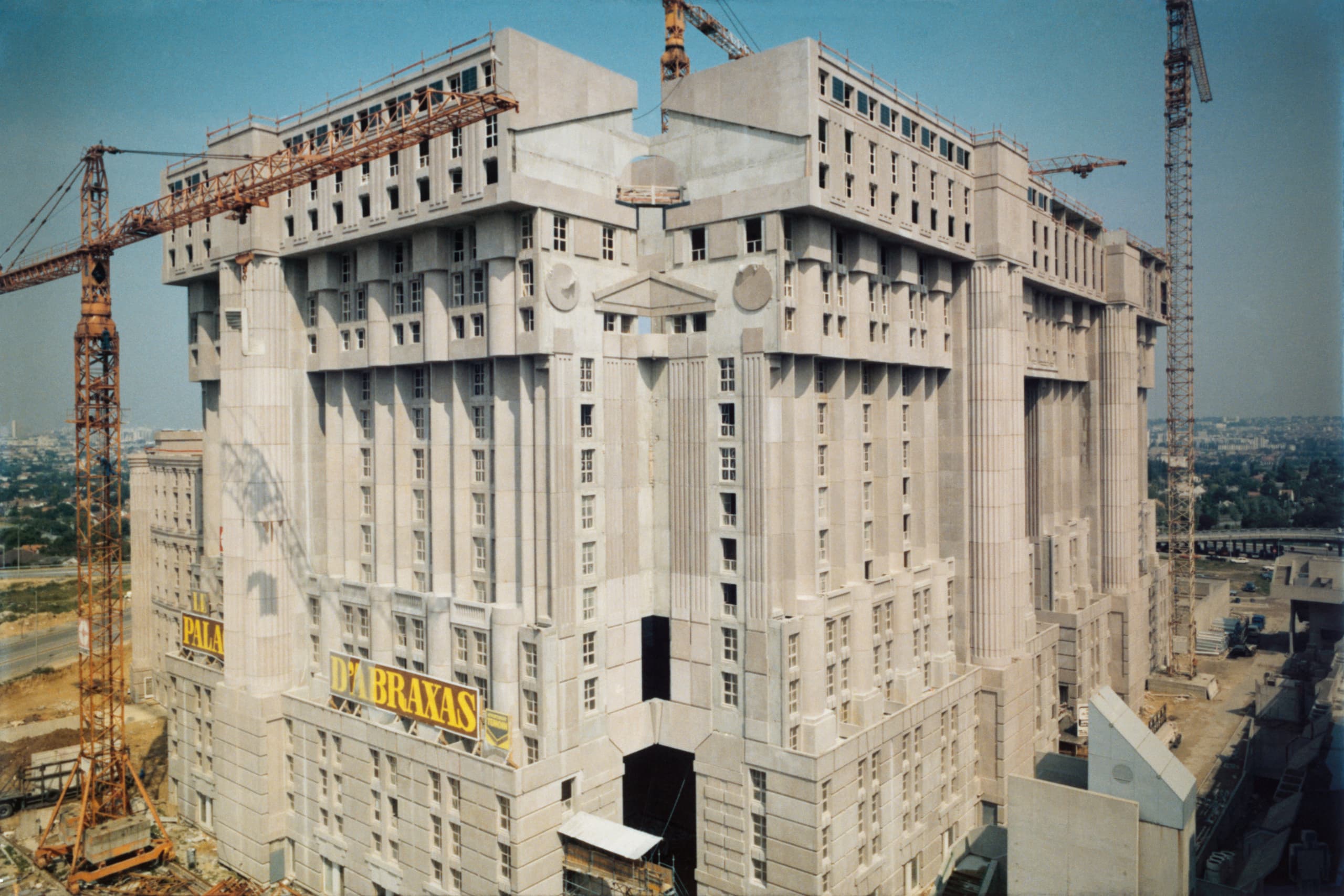
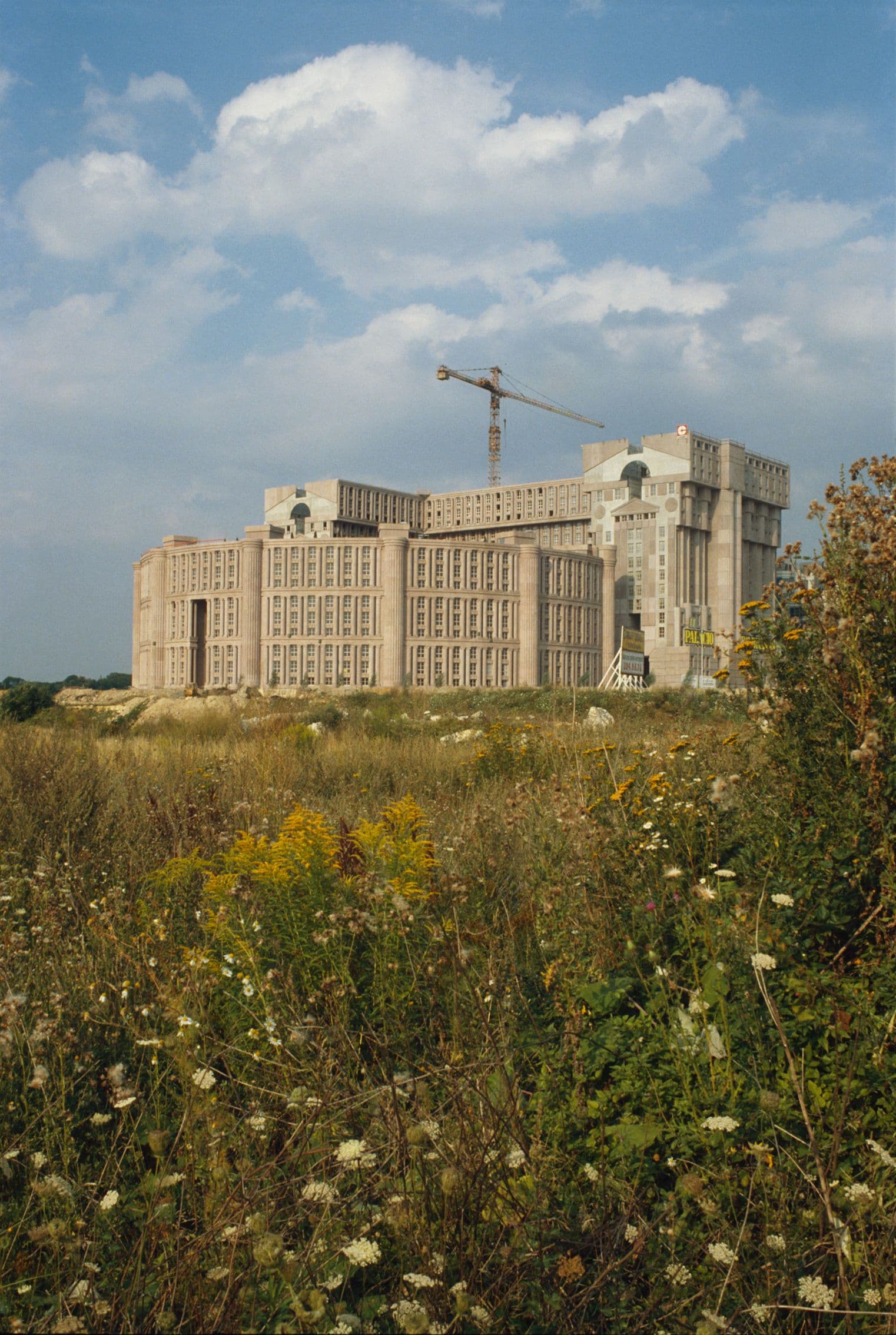
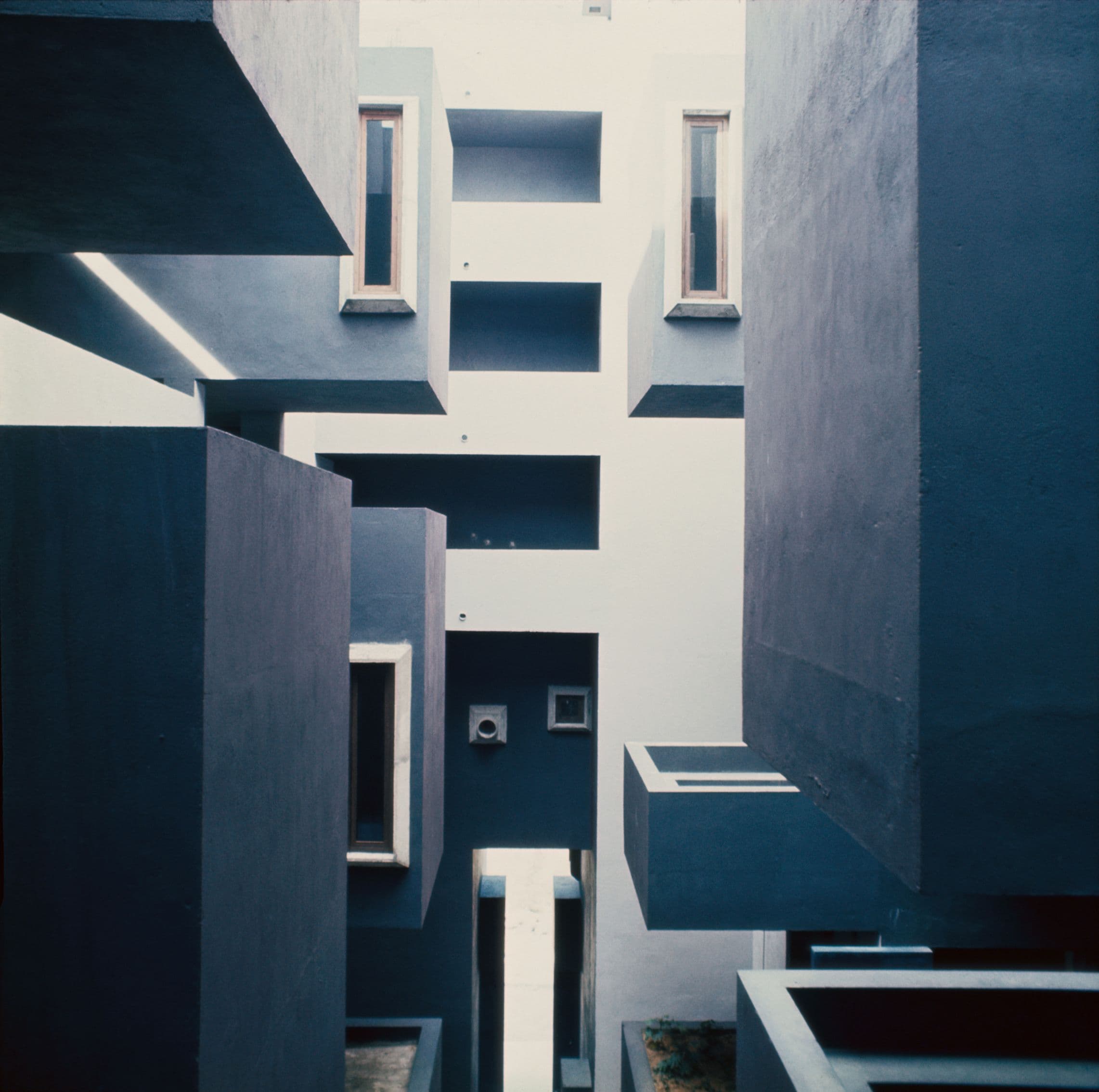
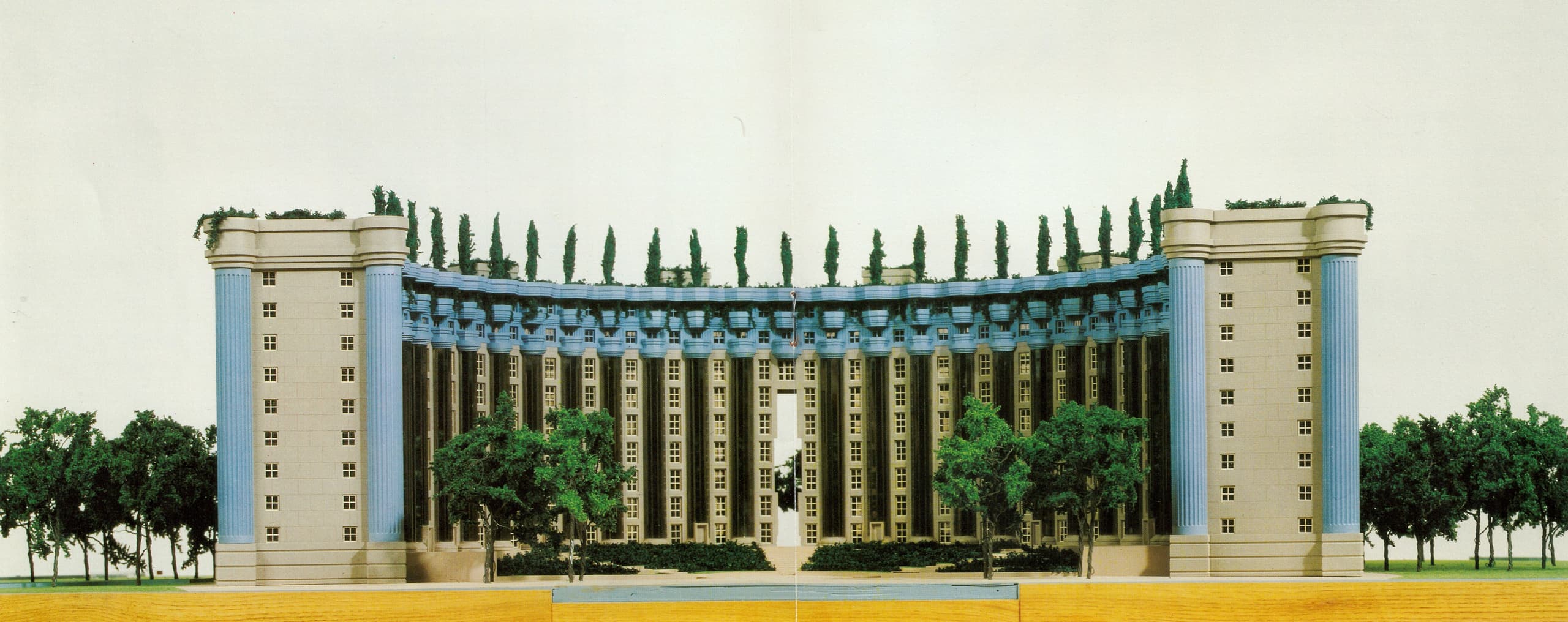
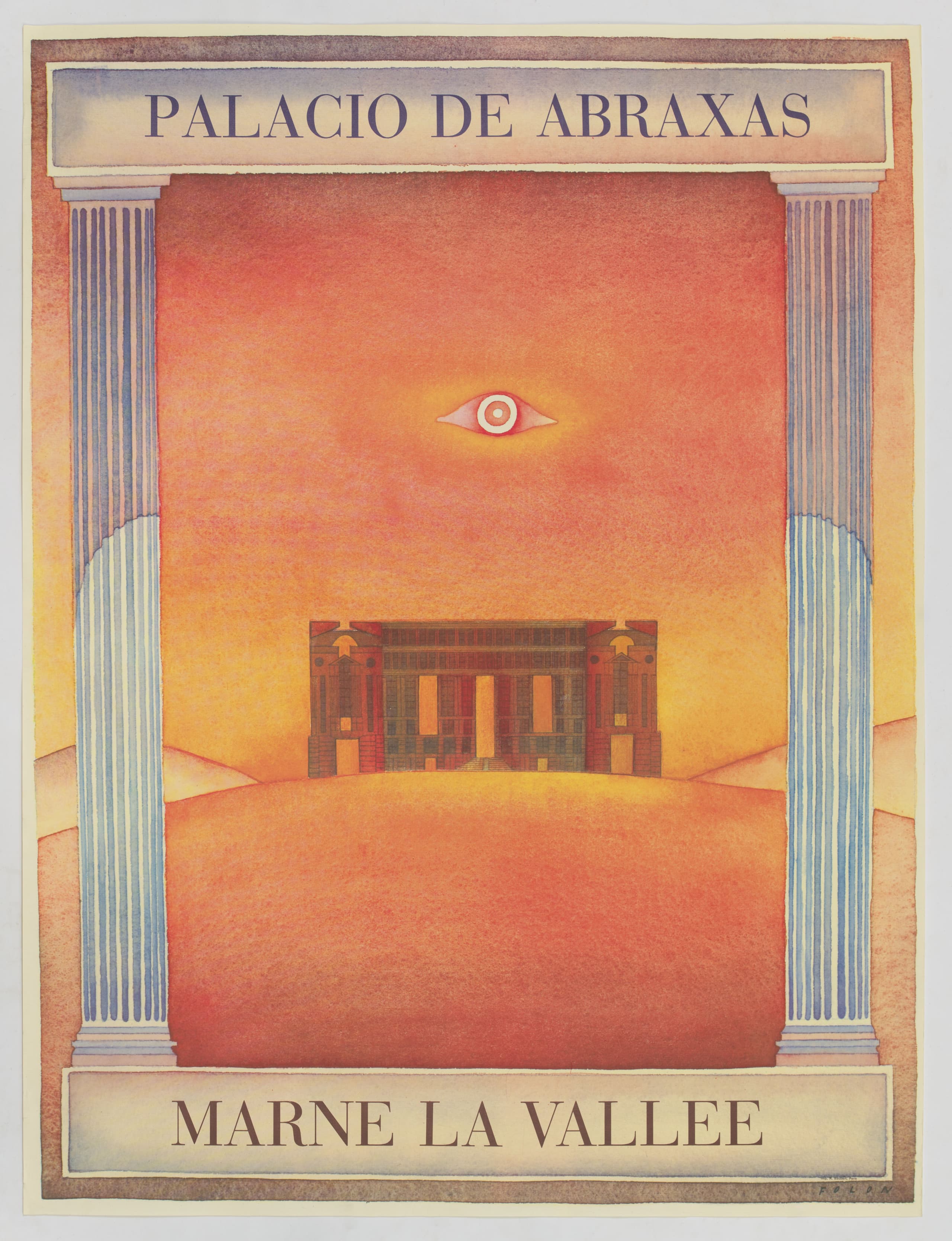
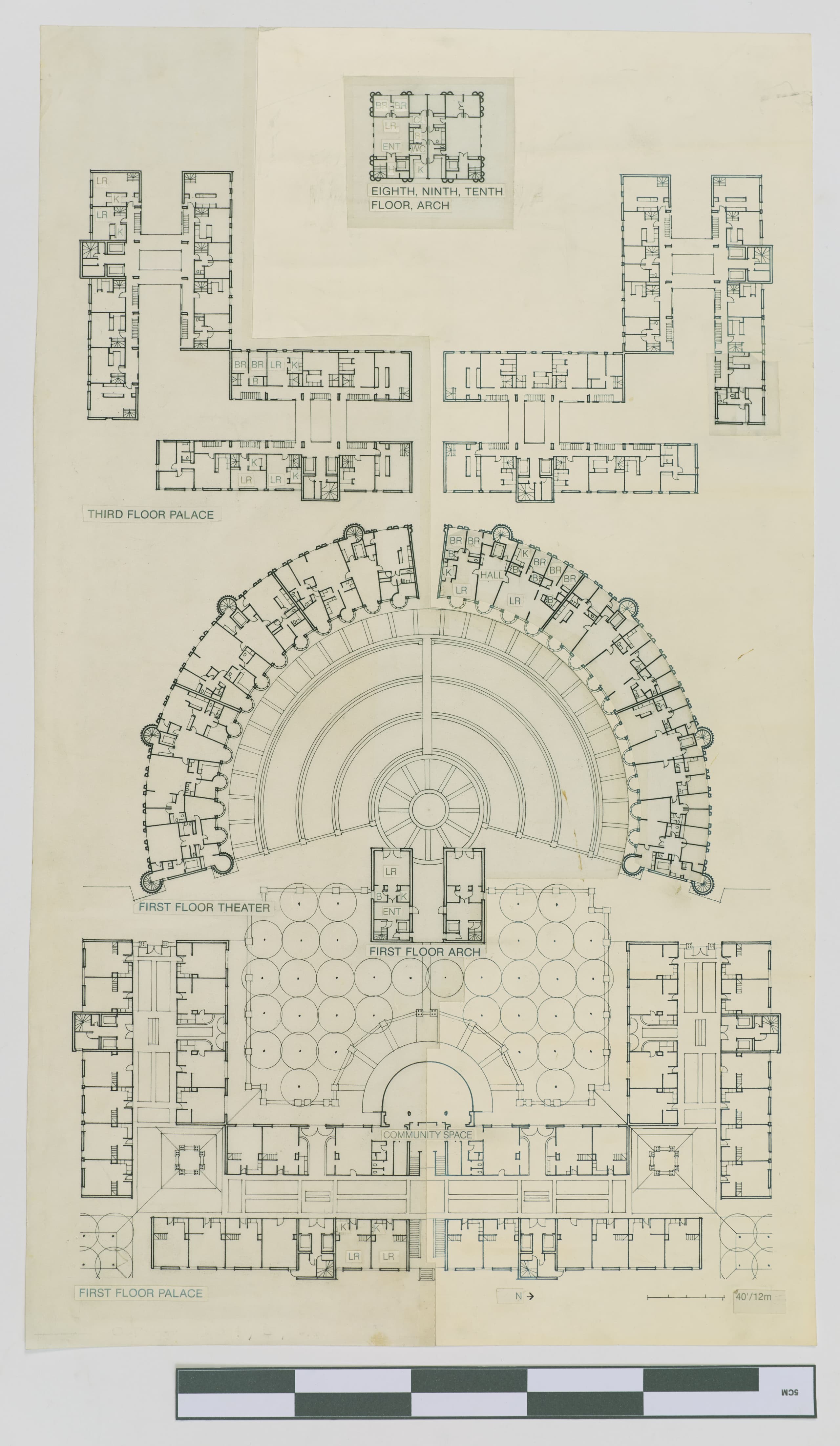
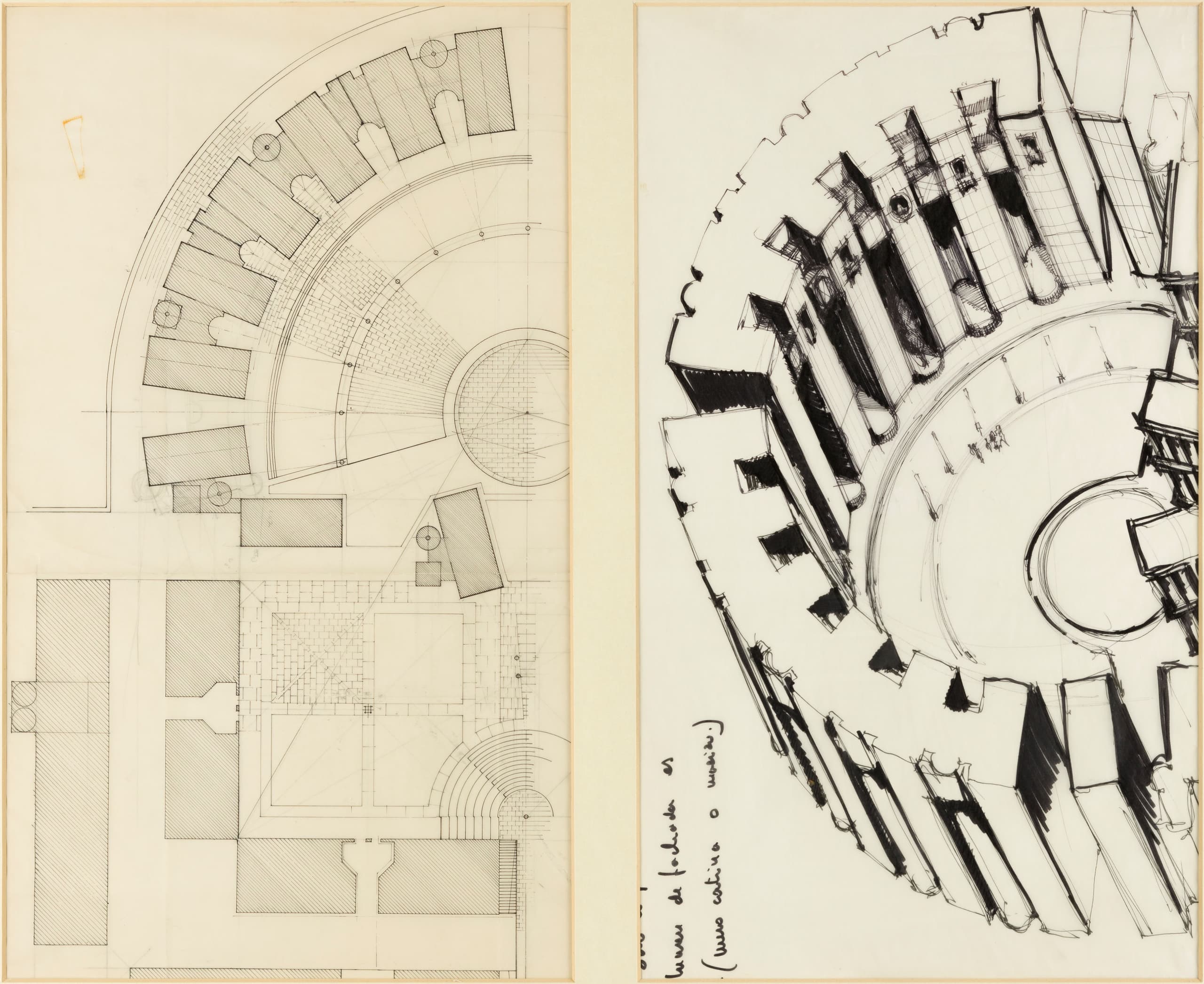
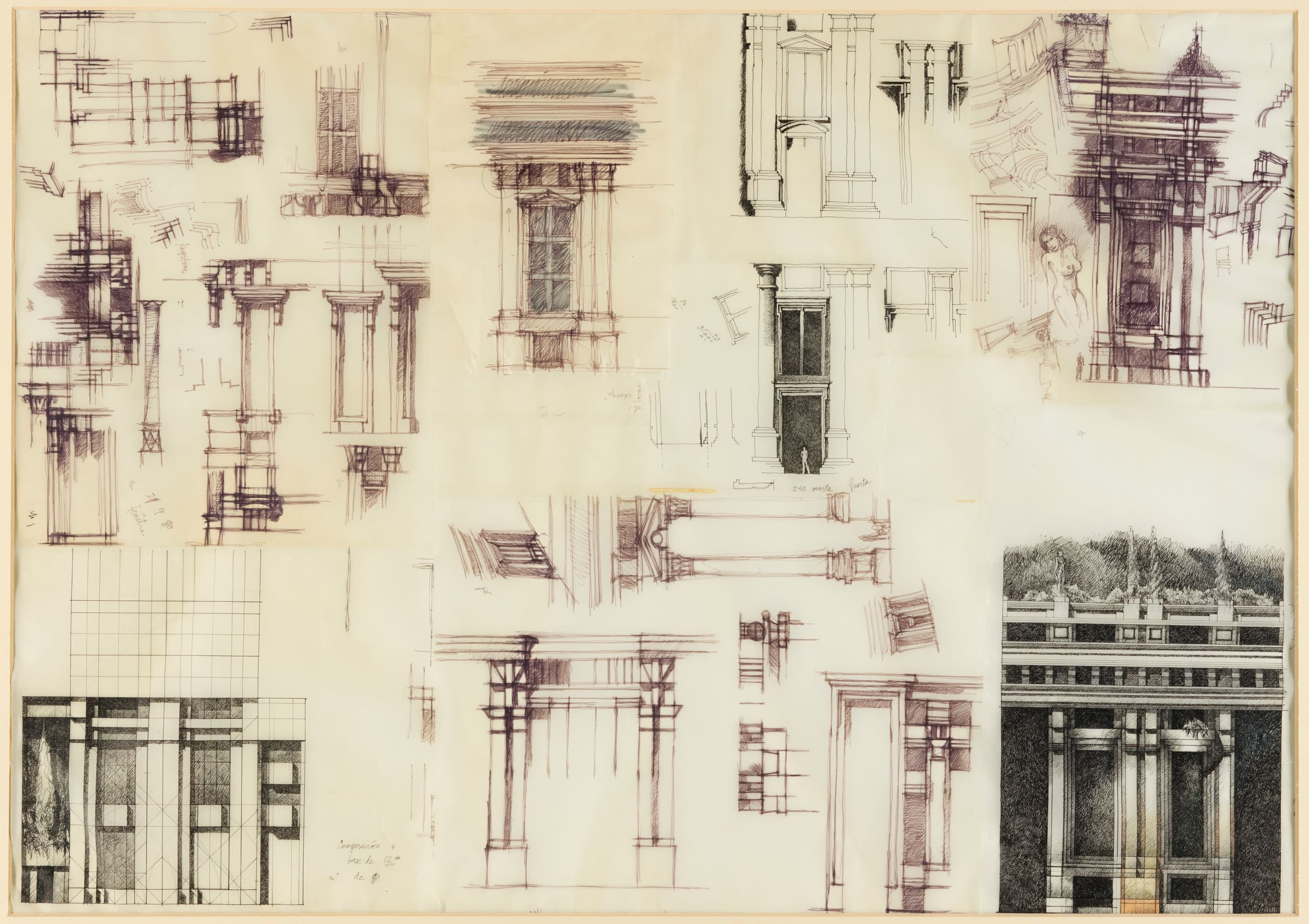
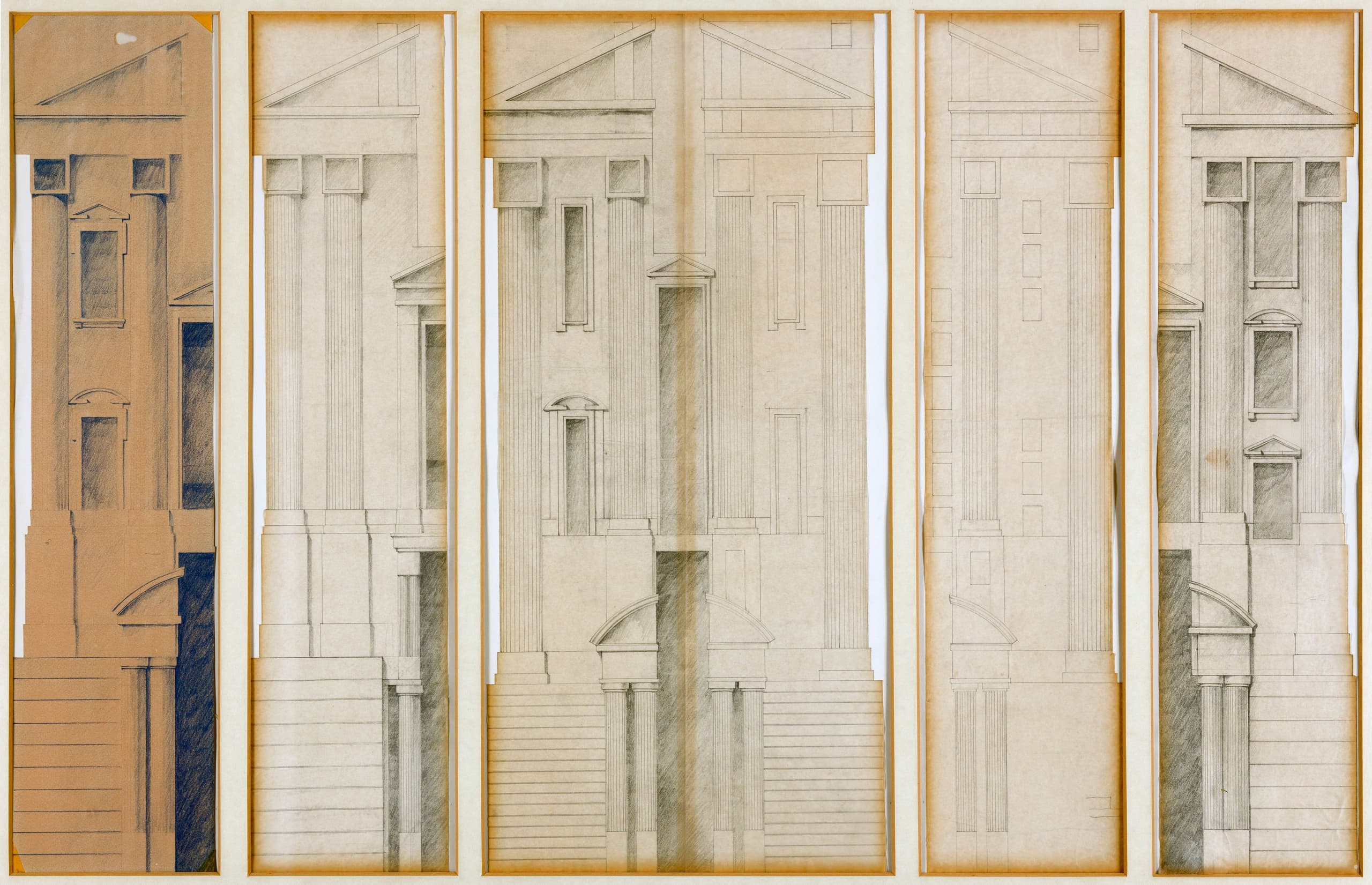
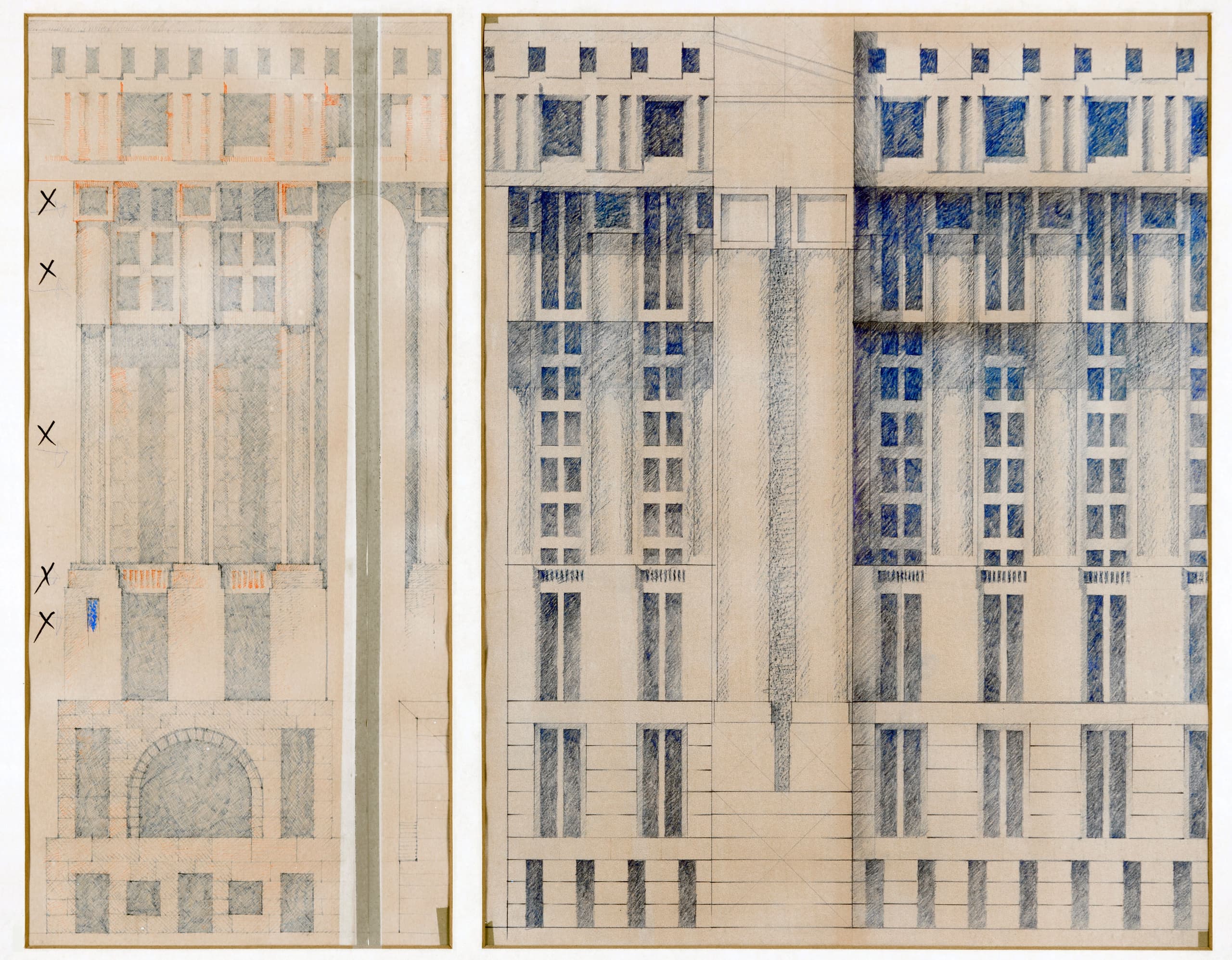
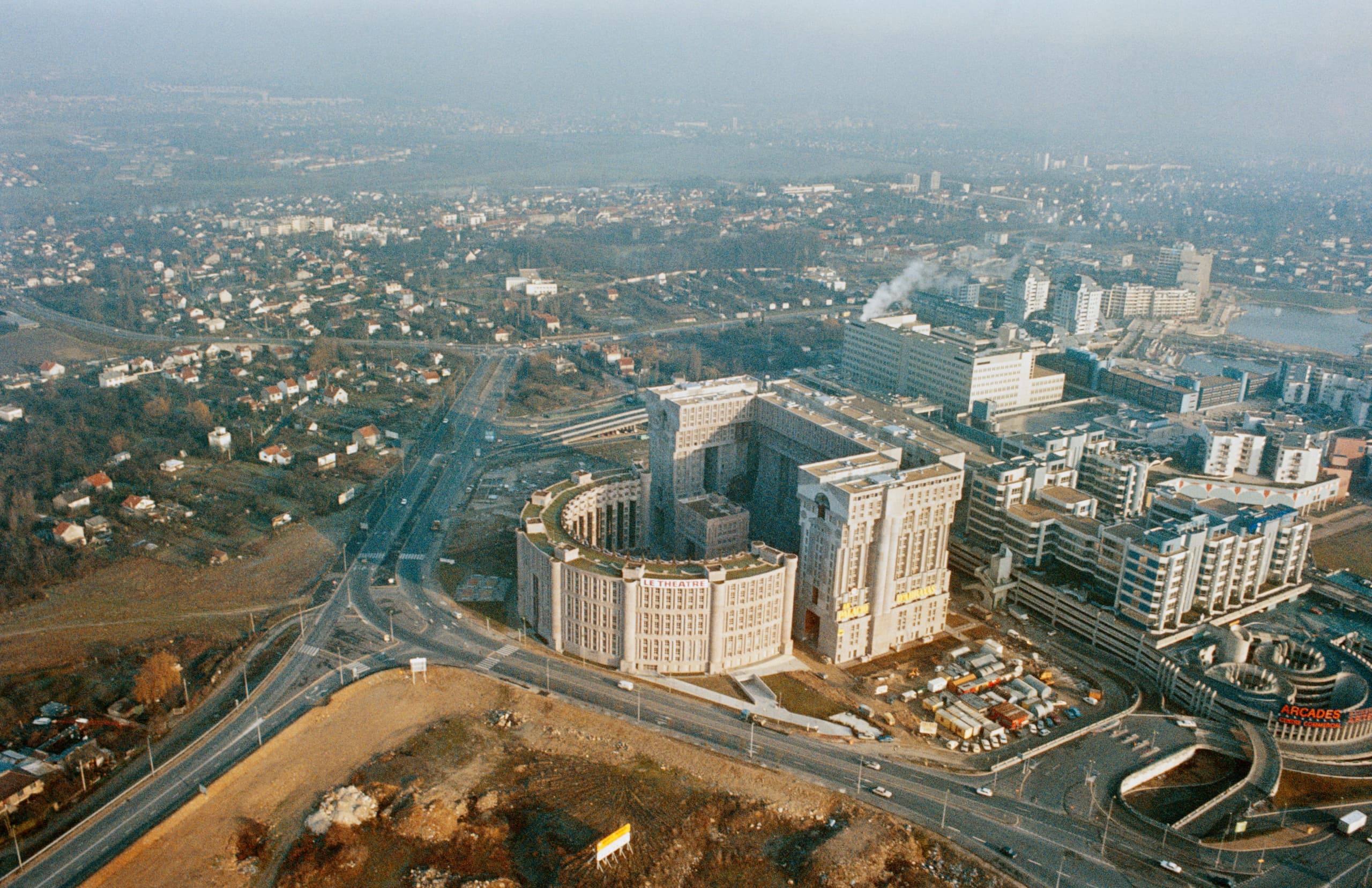
To mark the Journées nationales de l'Architecture 2024, one of the studio apartments at Les Espaces d’Abraxas opened its doors to the public for the first time, transformed into a gallery presenting a selection of original documents from the Taller’s archives alongside material from the local municipality. On view were drawings, photographs, film clips, advertising posters, sales brochures, and personal memorabilia, illustrating the project from its beginnings in the 1970s through to its prominent status in pop culture today – with appearances in films such as Brazil (1985) and The Hunger Games (2015). The exhibition was accompanied by the following text exploring the myth of Abraxas.
The Abraxas floating around the popular imagination is somewhat different from the one that Ricardo Bofill and the Taller de Arquitectura believed they were creating. For many minds, it has come to signify the opposite idea. These two images of Abraxas can in essence be characterised by antonyms: utopia and dystopia, emancipation and oppression, triumph and failure. And while there are many more interpretations blurred and in-between, these same two readings have been made repeatedly and consistently through the years. One in largely architectural literature, the other in mass media; professed by the architects and their supporters, or understood by the people; during the design process, then once the project was constructed. Of course, neither of these Abraxases represents the actual experience of the residents, which is something ineffable; it cannot be transmuted into the written word or the screen. And so, in that way, the tales told about Abraxas in magazines and by television have become more pronounced than the facts about the built work.
Where did these mythologies come from? Why are they so exaggerated? Could it be the sheer bigness of the buildings? Or does the symbolism within the walls invite fanciful writing about them? Then, if the architecture of Abraxas does speak an unspoken language, why is it continuously and terribly misconstrued? Is this confusion of meaning part of the normal slippage that takes place between an architect and the people? Or is there something about the culture swirling around Abraxas, or the internal logic of the complex, that caused this to happen?
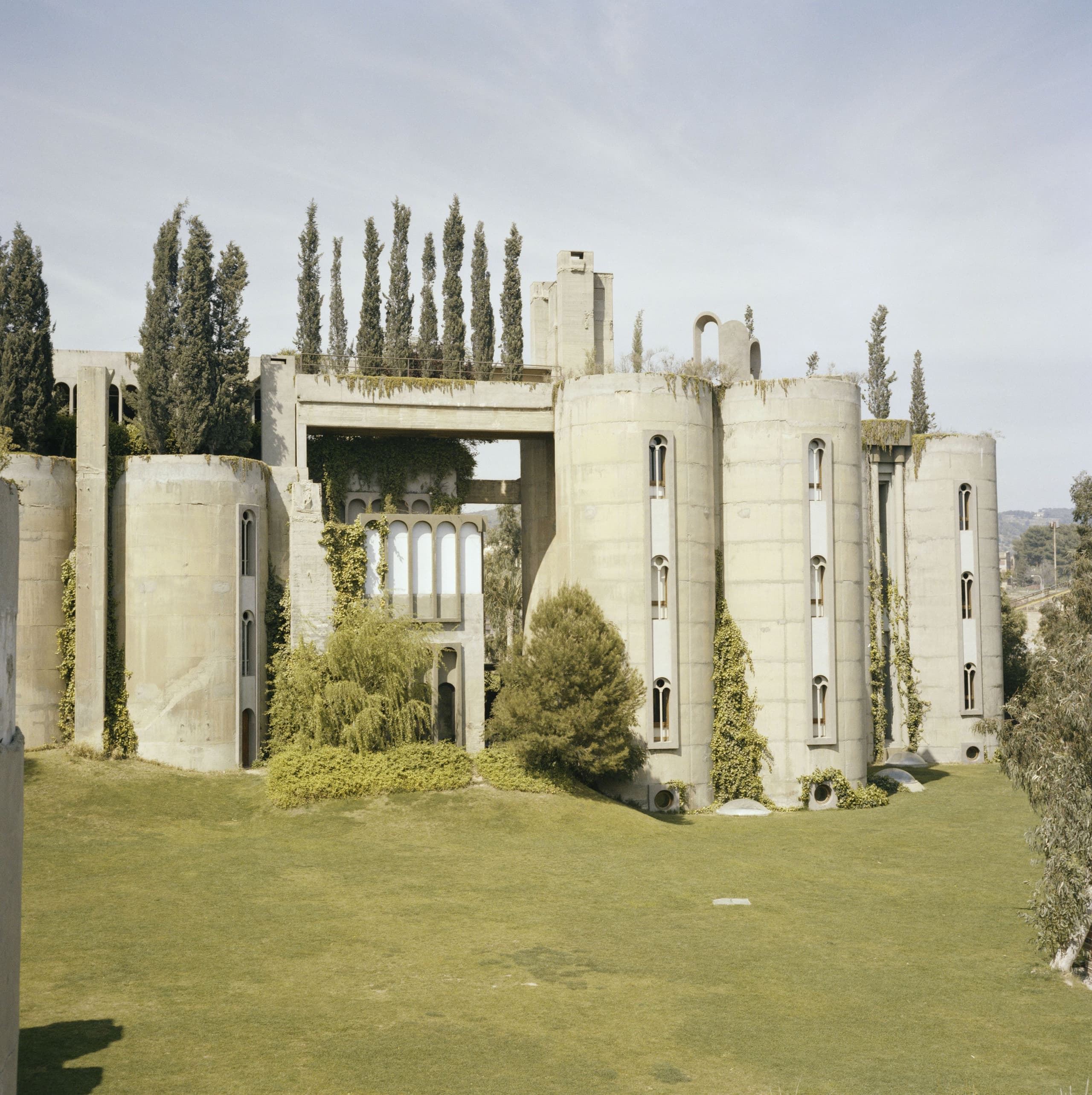
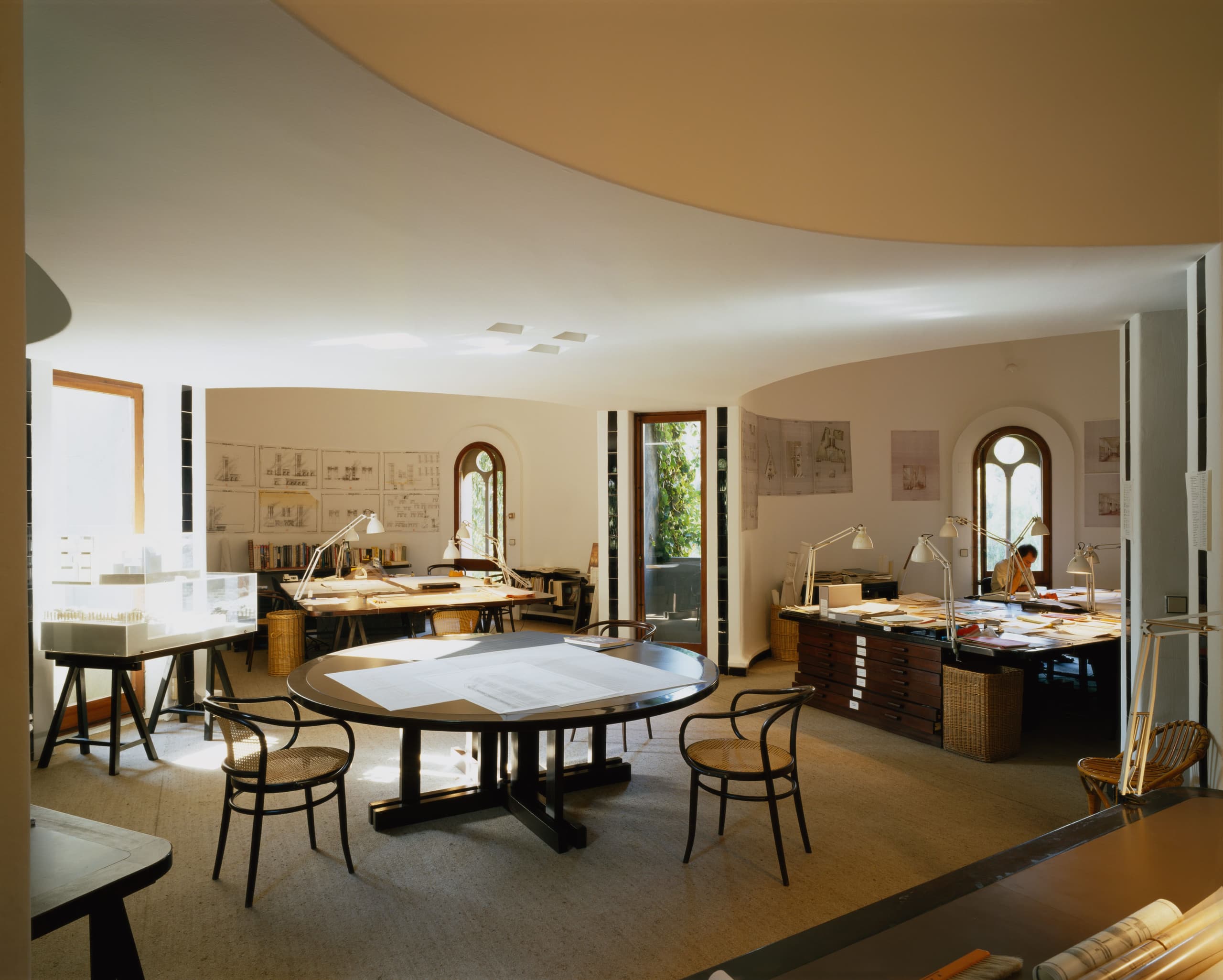
Understanding the story – or indeed, the stories – of Les Espaces d’Abraxas has meant delving into a rich range of sources: drawings, photographs, and writings by members of the Taller kept in the tunnels of archives beneath La Fábrica; a folder jammed full of scribbled notes and cuttings at the Cosmic House (Charles Jencks was during the 1980s perhaps the foremost architectural critic and champion of the Taller’s work); digitised articles and films; and conversations with some of those connected to the project. These people are Peter Hodgkinson and Annabelle d’Huart, crucial to its design and presentation respectively, and still close to the Taller (others played important roles at different moments, including Anna Bofill-Levi, Jean-Pierre Carniaux, Xavier Llistosella, Patrick Dillon, and later Ramón Collado, Hilario Pareja, and Thierry Recevski); the sitting mayor of Noisy-le-Grand, Brigitte Marsigny, who has been instrumental in the recent revival of and additions to facilities on the estate; and the head archivist at the municipality, Claire Péronnet, whose retrospective of Abraxas is extensive.
To begin to tell this story, it is helpful to zoom back to the period following the Second World War and fly through a brief history of housing architecture, as well as the broader social and political context into which Abraxas would arise decades later. This takes us to France in the late 1940s, where several million families had been displaced in urban areas badly damaged by bombing, and immigrants from former colonies were also in need of accommodation. The scale and urgency of this situation, and the consequent task confronting French architects was forcing them to approach design in an intensely pragmatic way: how to house as many people as possible, as quickly as possible, with the limited state resources available.
The machine logic established earlier in the century by the Modern Movement suited the challenge of reconstruction, and its materiality and aesthetic therefore prevailed into the 1950s and 1960s. However, the moral and functional principles that had once motivated this “style” were now increasingly being watered down and sterilised by the pressure to simply supply roofs over heads. Buildings of this era often reproduced the formal language of Modernism but lacked the social objectives at its core. Masses of plain, concrete “slab block” apartment buildings were poured around the French capital, people were successfully housed, but overwhelmingly they found their homes austere and impersonal.
It is poetic to imagine that the experience of the war, and the inhumanity it implied, played a part in the less expressive, more utilitarian architectural language that dominated the years that followed. It is more probable, however, that the mechanisms funding the construction of the “Grands Ensembles”, as the state recovered post-war and the liberal economy expanded to include increasingly private commercial interests, were overwhelmingly responsible. Under this system, financial considerations replaced all others, and design features that might have contributed to the more “frivolous” aspects of architecture – meaning, sense of place, and quality of life… – were cost-engineered or squashed. Architects, whose work makes these invisible forces somewhat visible and material, were associated with a broader capitalist shift in French society and were often held responsible for conditions over which they had very little or no control.
The extent to which public discourse (and distaste) at that time revolved around architecture and the city can be seen in the role these subjects played in the events of May 1968, including in its literature. In anticipation of the unrest, the catalysing figure Henri Lefebvre published The Right to the City, arguing that people should participate in the production of architecture where the current model had failed them. His became a seminal text. And though Lefebvre drew a distinction between architecture and the political and economic forces that produce it, the focus of his writing was clear: change in the built environment was a necessary part of the coming revolution, and an alternative should be sought.

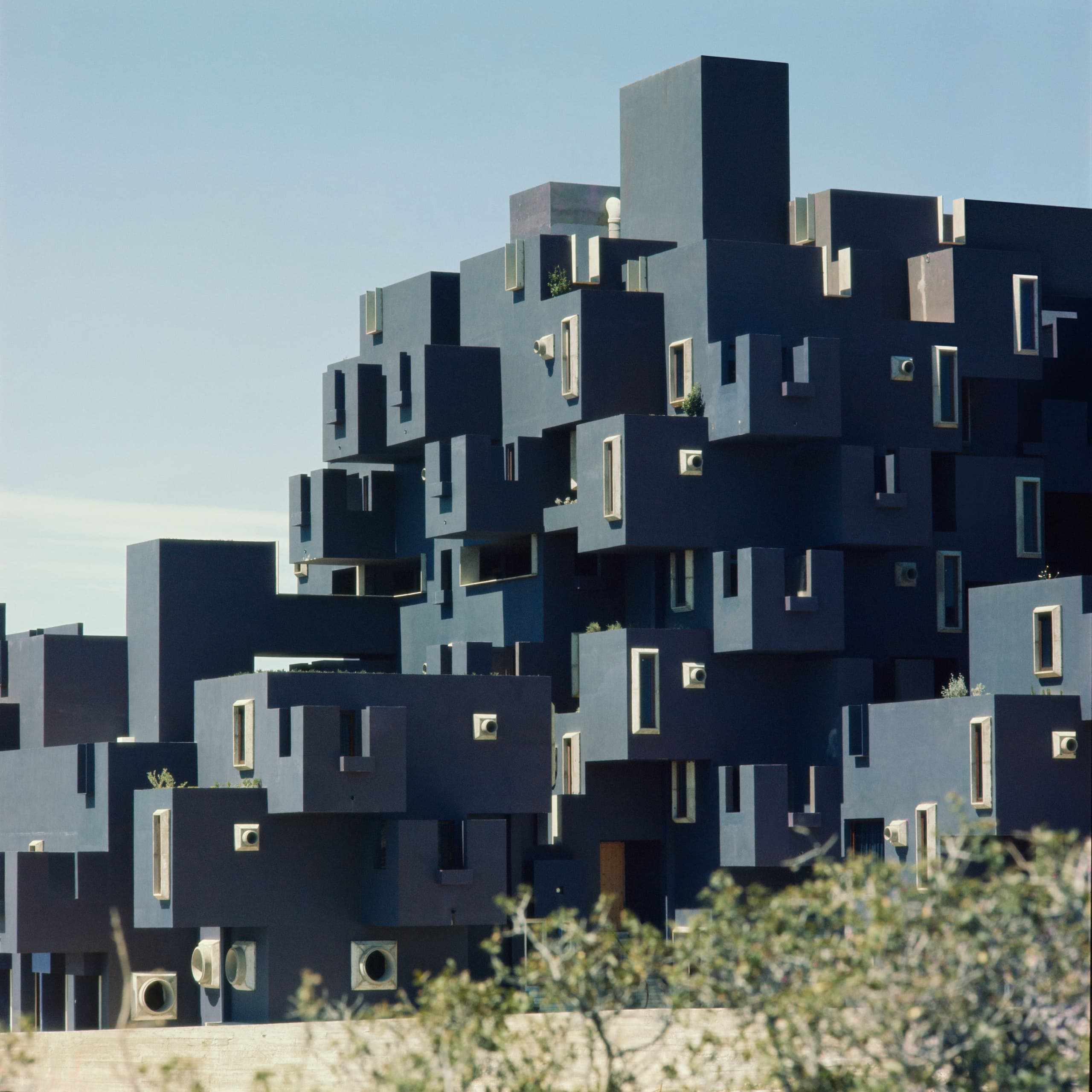
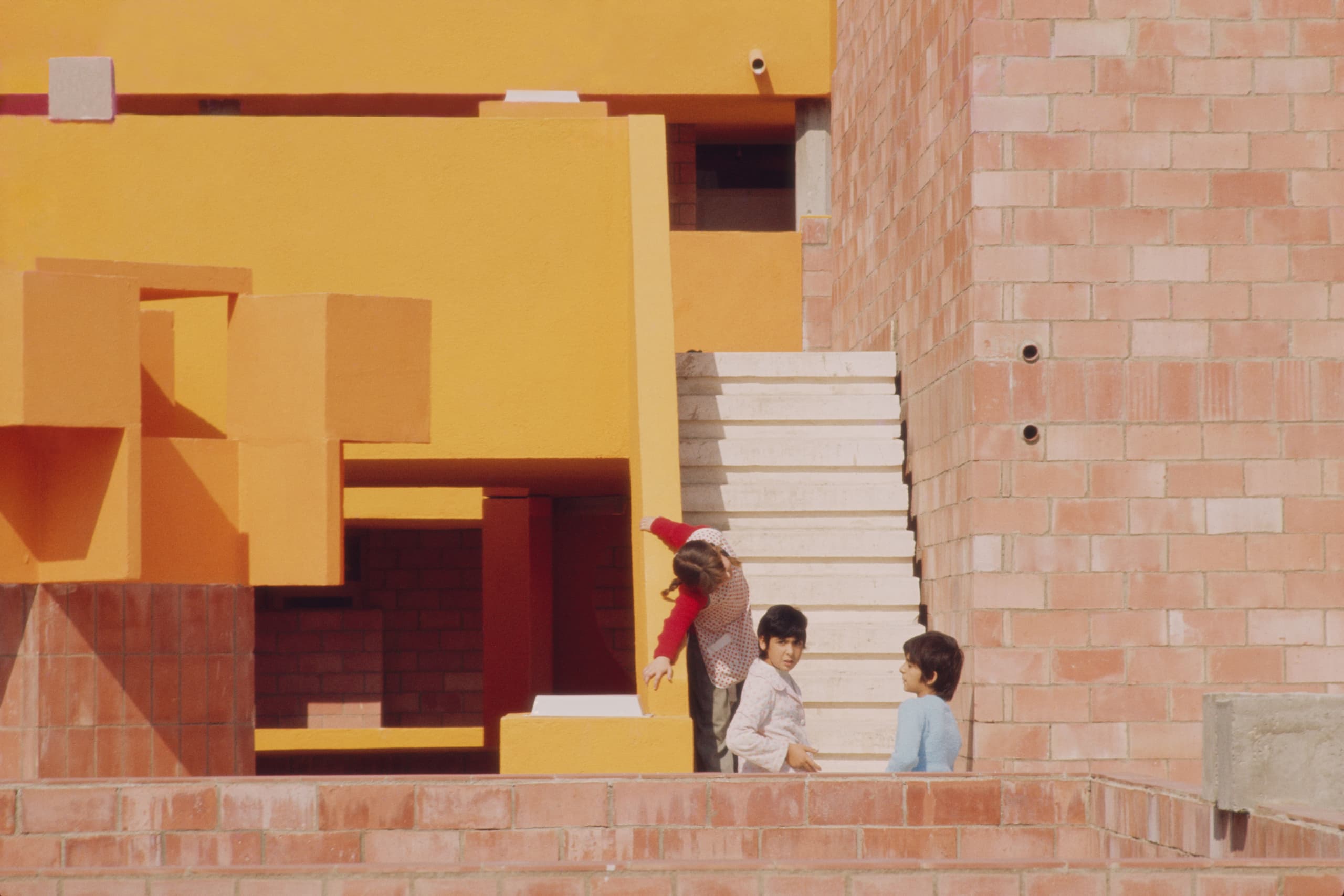
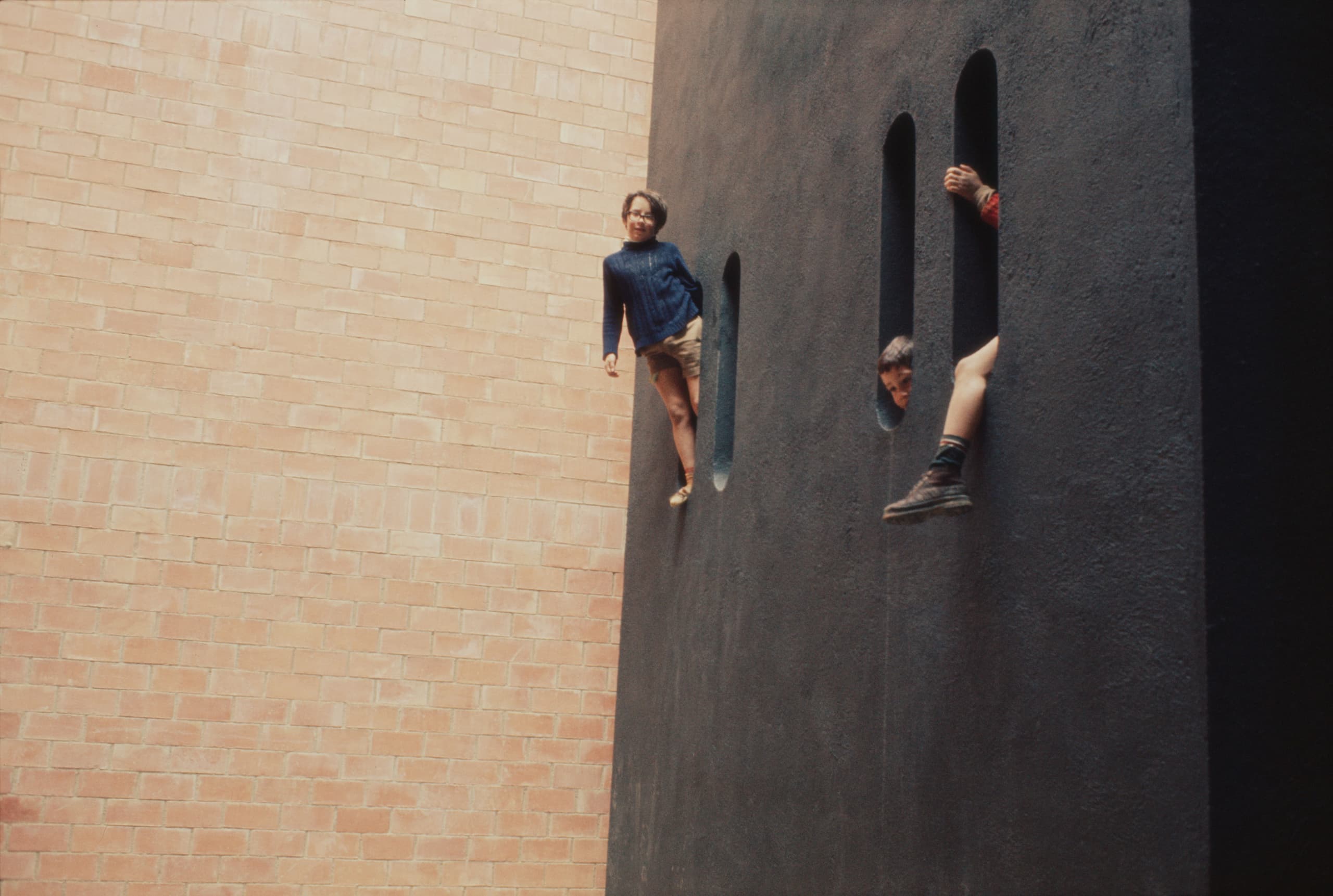
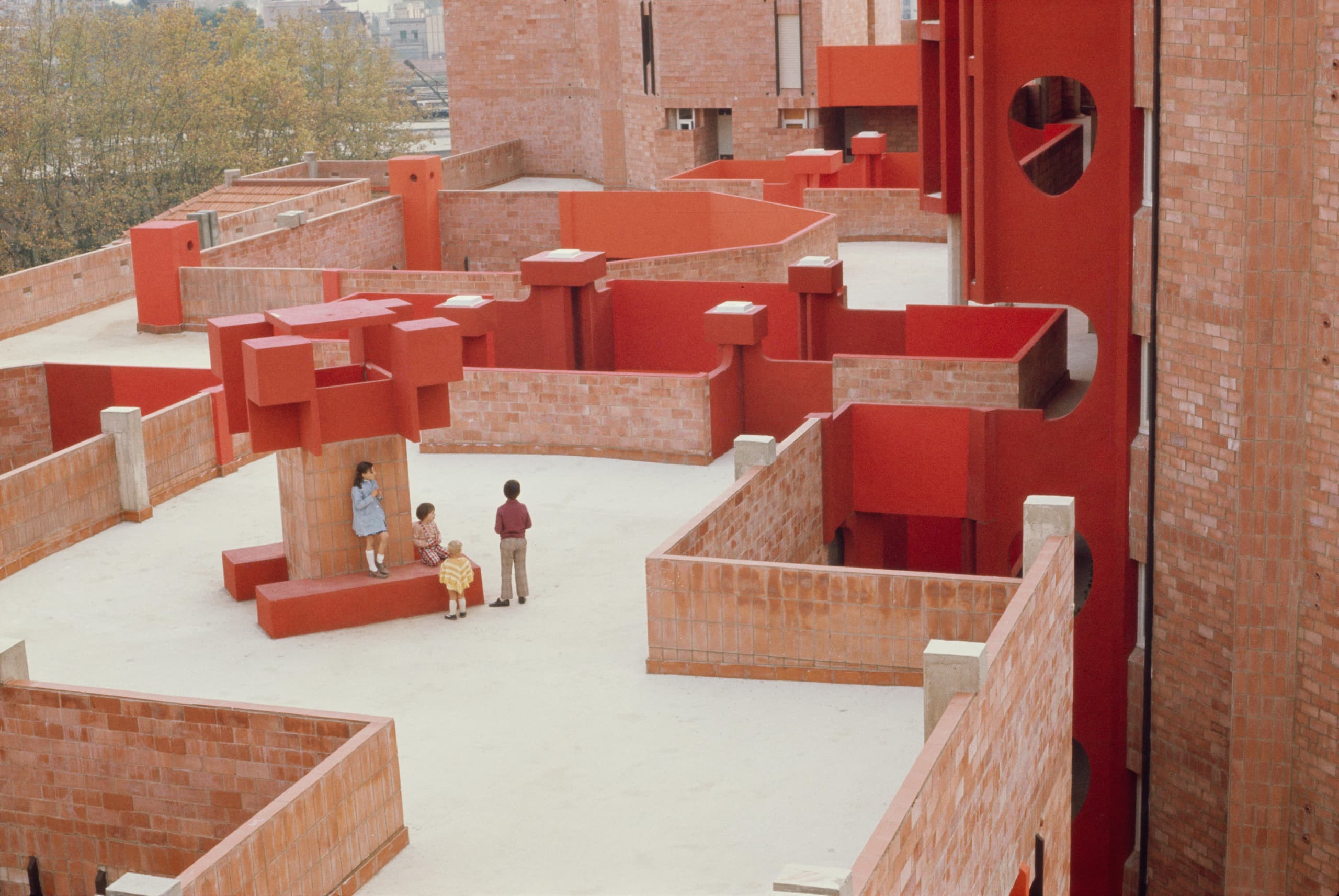
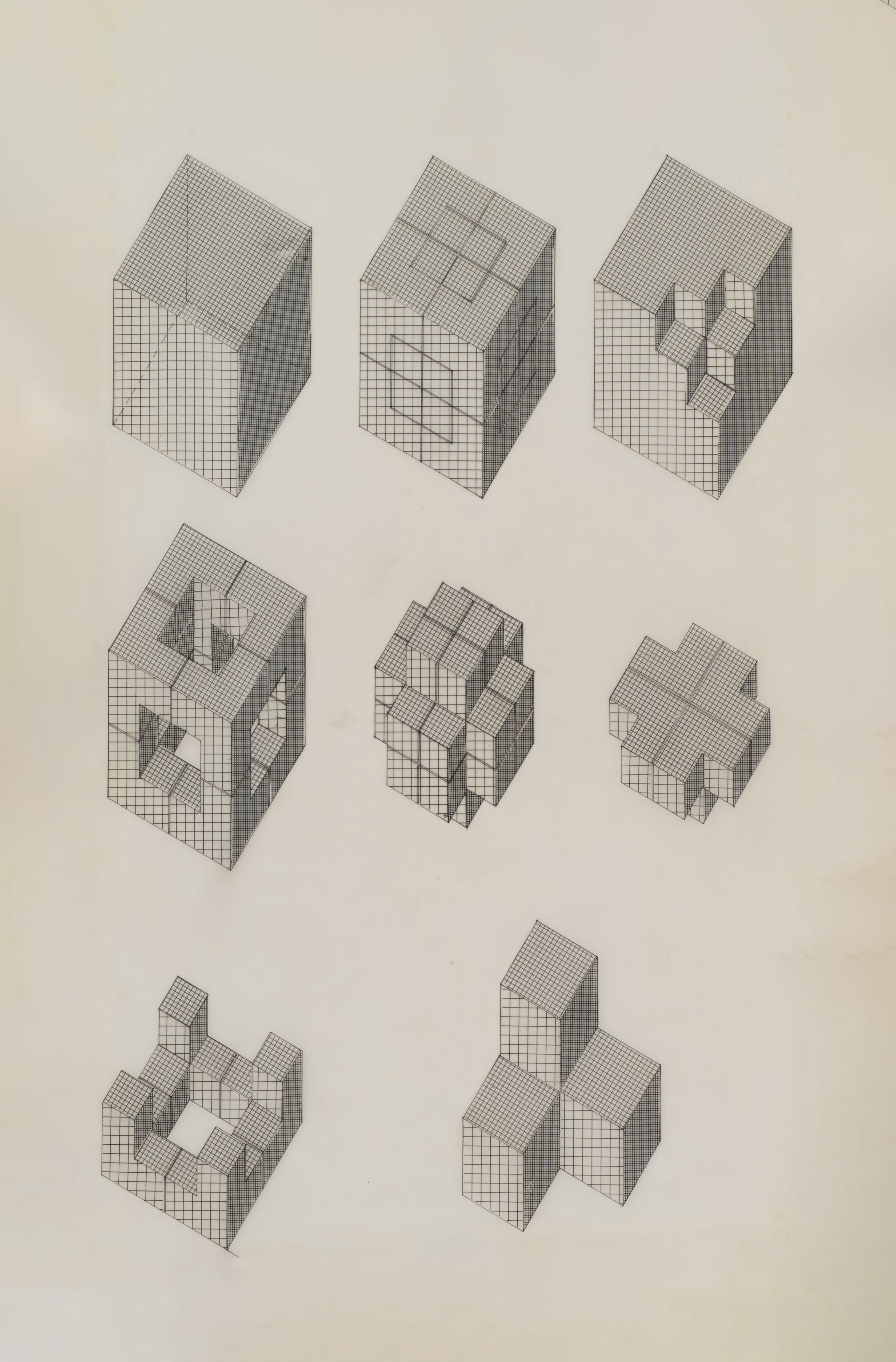
Across the southern border in Barcelona, during these same years, the Taller de Arquitectura was advancing its own position against the post-war architecture that had spread around Europe and into Spain. The group published a manifesto in 1968 too, Towards a Formalisation of the City in Space, which, like Lefebvre, was concerned with the public ownership of space and ensuring its quality. They set out a methodology for building large, city-like structures raised above the ground, composed of prefabricated cubic volumes assembled to produce layered squares, streets, and stairways around the apartments. The intention was to resuscitate the urban qualities of typical Mediterranean villages, and to execute them using cheap, modern, industrialised construction techniques, allowing the apartments to be sold as affordable or government-allocated social housing. A clever pairing of shared historic signs and virtuoso technique, without sacrificing either social or economic requirements.
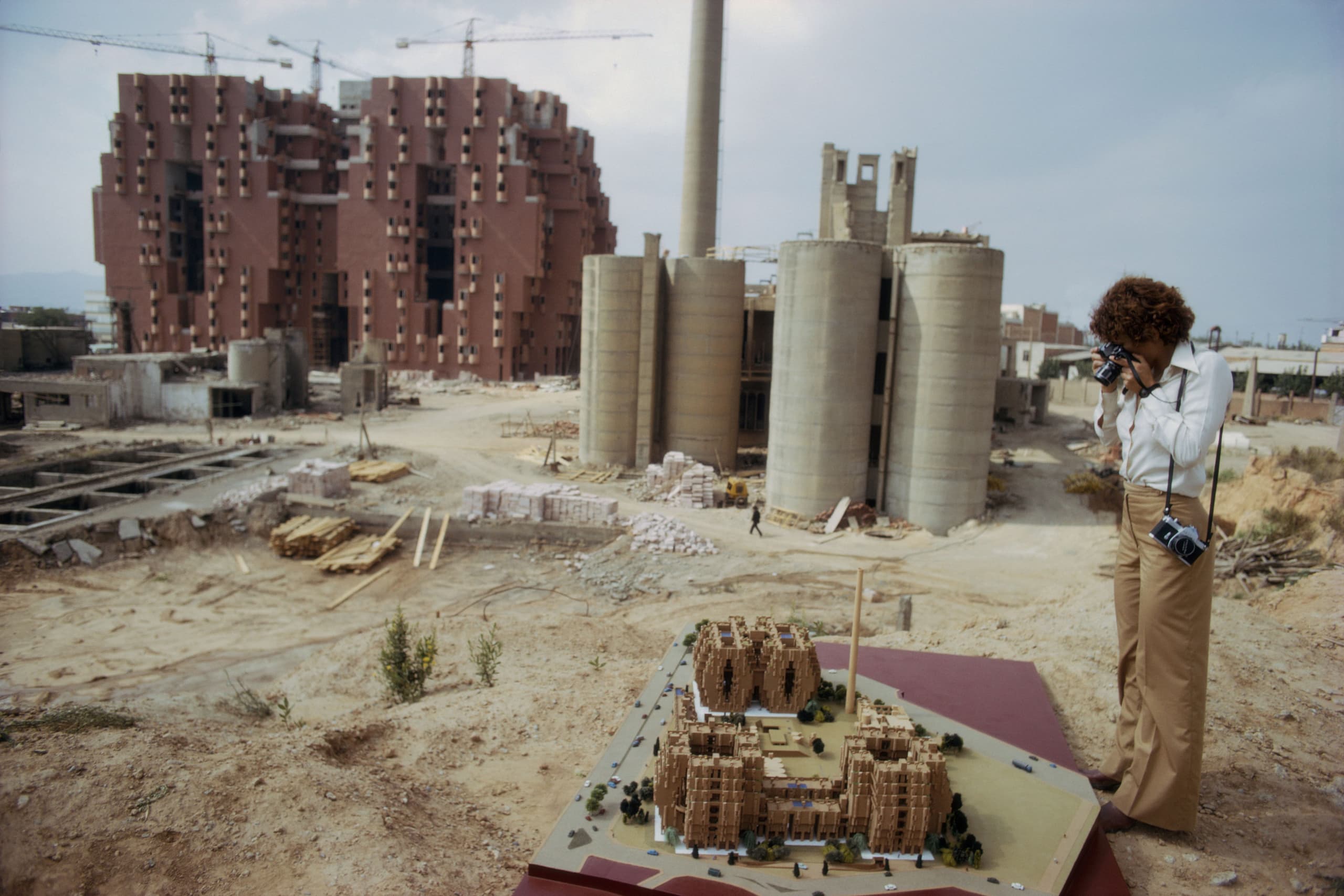
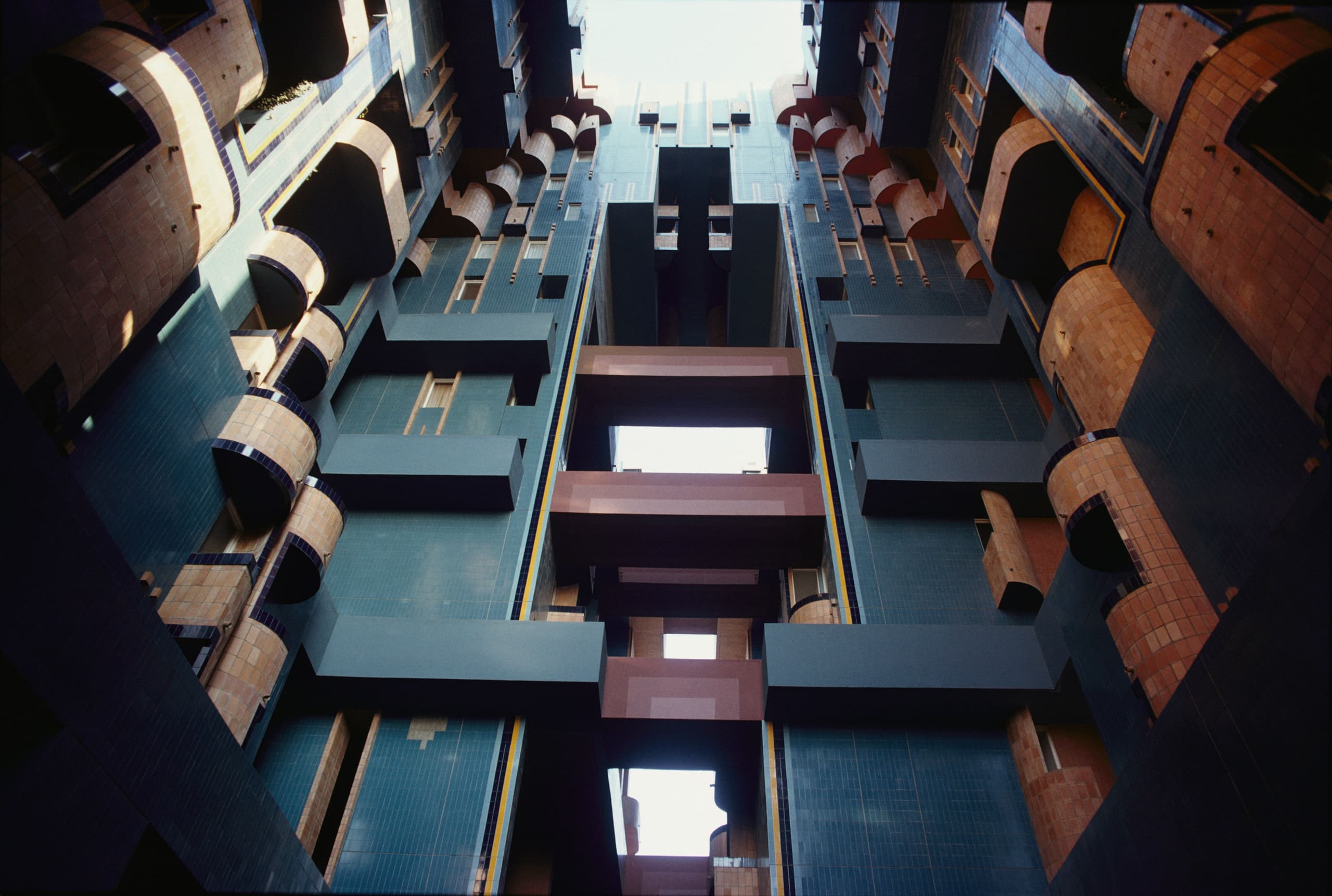
By the time it was released in pamphlet form, the City in Space had already been demonstrated in practice. A number of “prototypes” were constructed along the Spanish coast, including projects such as Barrio Gaudí, Kafka’s Castle, Xanadú, and La Muralla Roja, each design an incremental improvement on the last, with certain themes consistent throughout the series. Perhaps the most relevant lesson learnt from these experiments was how traditional patterns of social life, when translated into new methods of construction, still managed to encourage residents to better identify with their homes than they would standard housing of the epoch. Residents were instinctively more likely to associate each with another and thus to form a greater sense of community. This was a hopeful alternative to the standard housing model, and it started to attract the attention of others overseas who wanted to find the same.
Never mind the social success of these projects – the sheer volume of built output alone made the Taller an anomaly in architectural circles, particularly when the 1970s proved to be a decade of relatively little construction. A tremendous energy and hype surrounded the Taller, especially considering their youth and the peculiar mix of architects and non-architects within the group. The City in Space projects had been published in heaps of acclaimed international architecture journals, in more mainstream magazines, and even in depth in newspapers (it is hard to imagine such public interest in new architecture today). Many of these printed features circulated in France, where the work resonated perhaps more deeply than in any other country. This may well have been due to the spirit of anti-totalitarianism Ricardo shared with the then national mood in France, his born of a lifetime under dictatorship: Franco came to power in 1938; he was born in 1939. Ricardo had indeed been a member of the illegal Spanish Communist Party and been imprisoned multiple times for his politics. He also counted Lefebvre as a good friend in those days, receiving a visit from the French philosopher at La Fábrica. So it is not at all surprising that the political left took to heart the message of the Taller and adopted Ricardo as a spokesman for the new society they hoped to create. Though the media did celebrate him as a great architect producing great architecture, appointing the Taller seemed to be as much a cultural signal as a design decision.
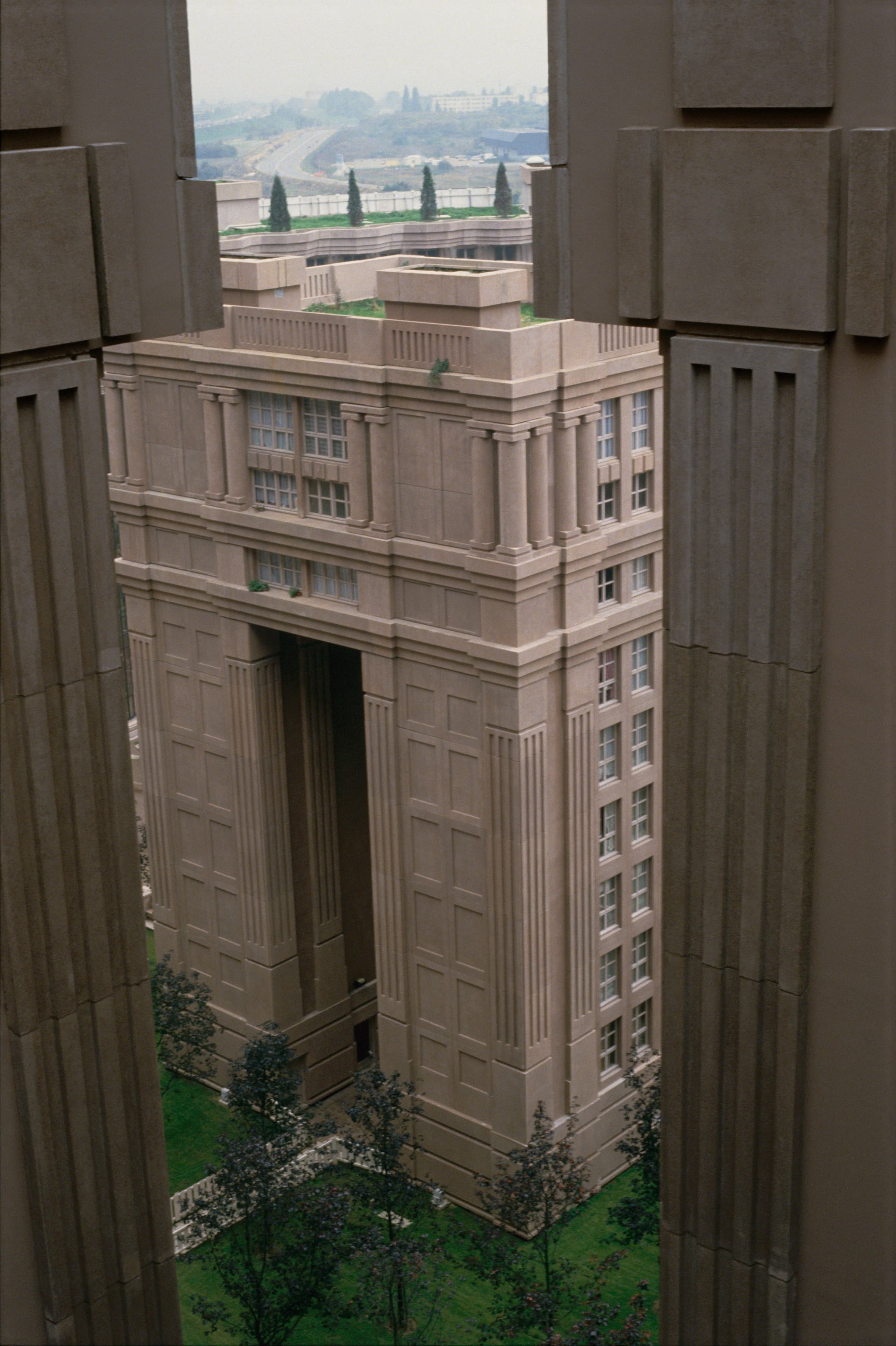
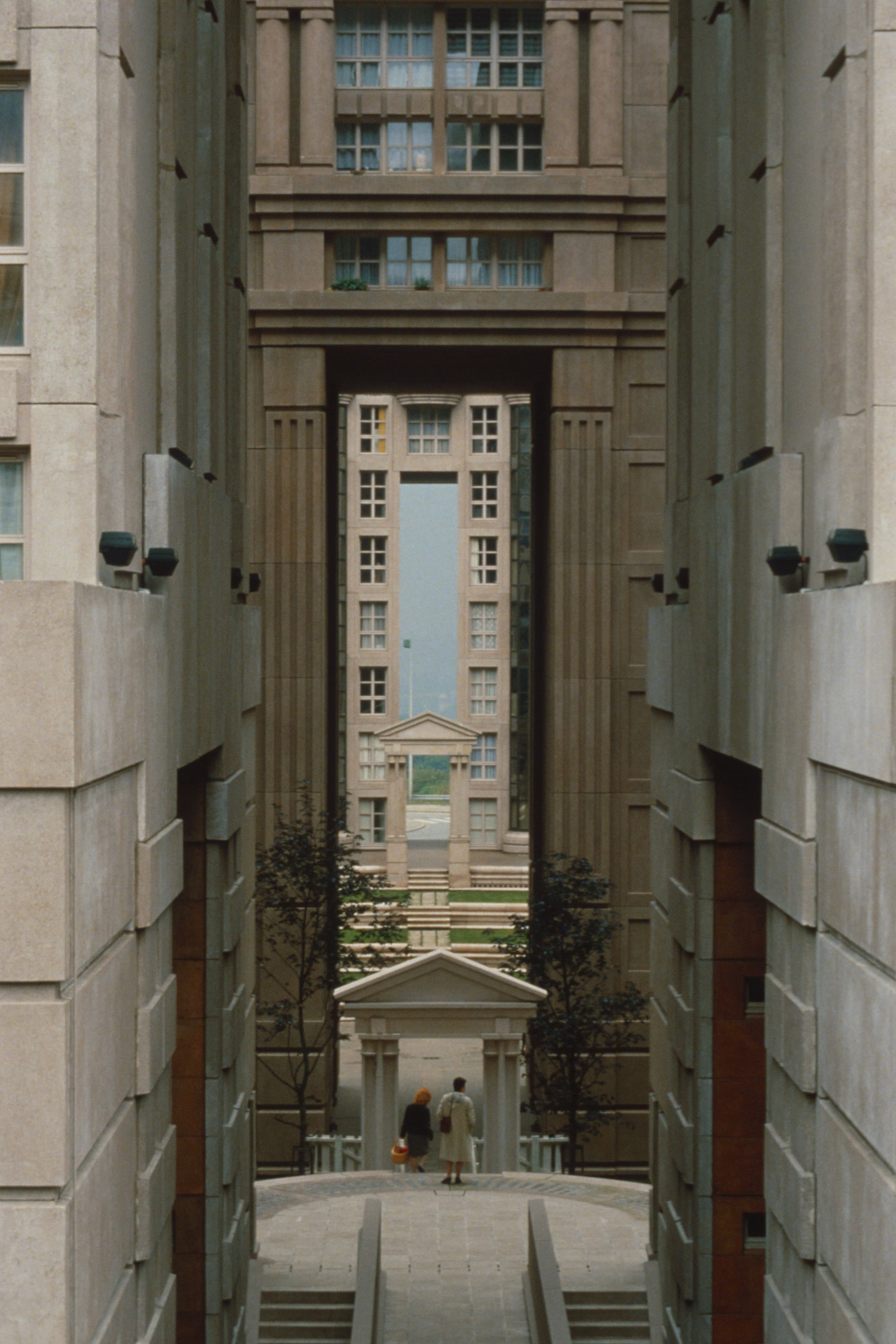
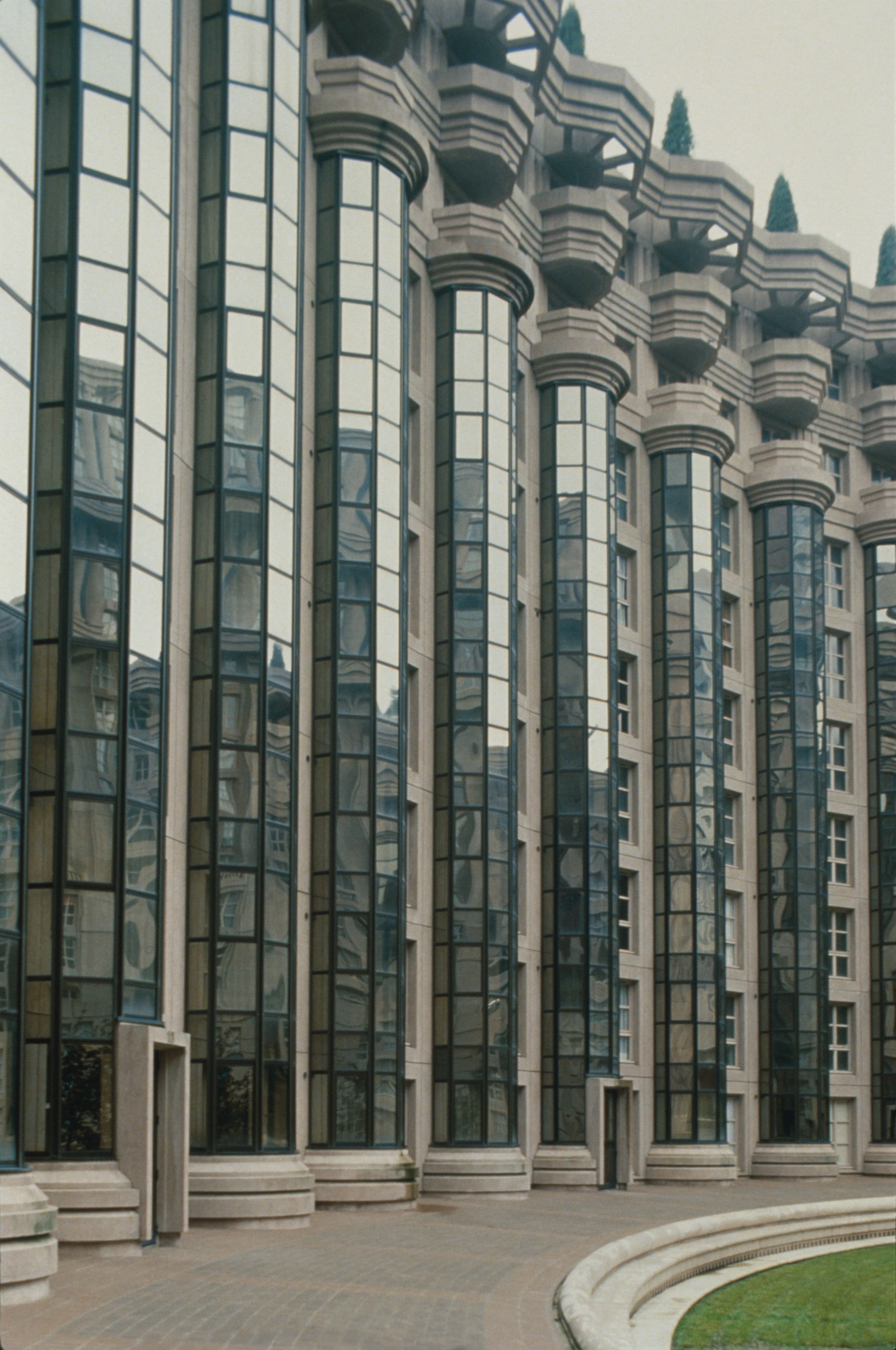
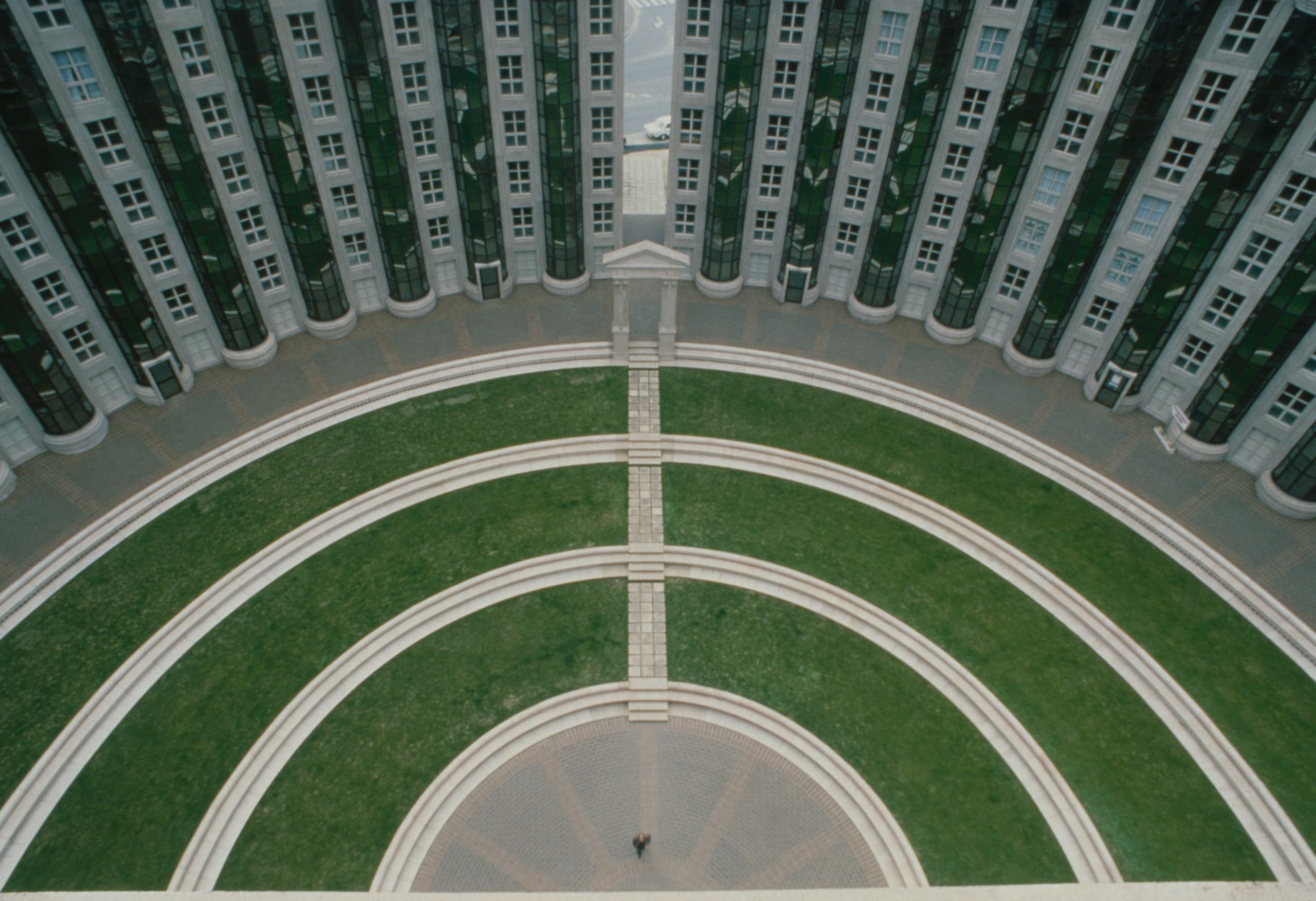
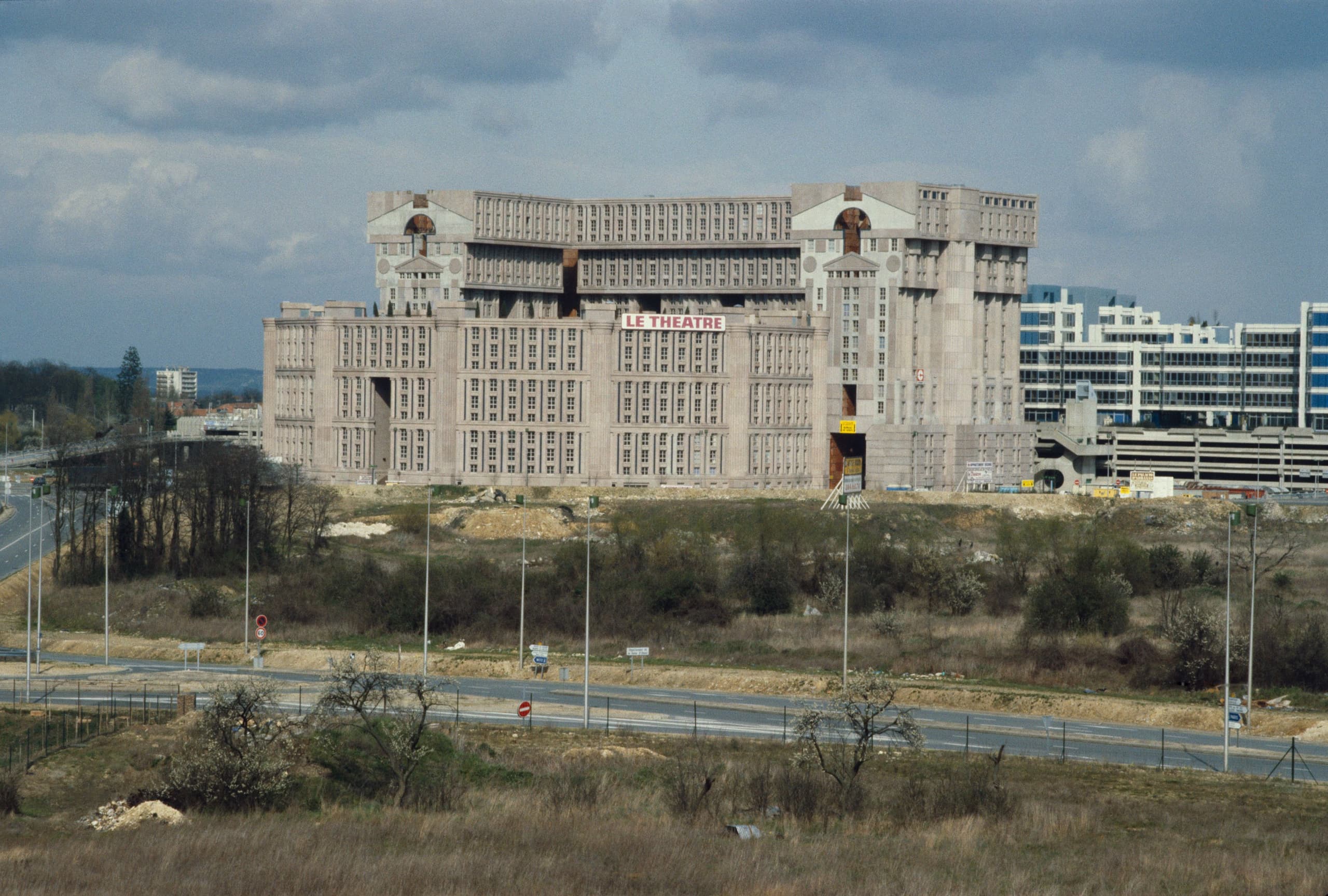
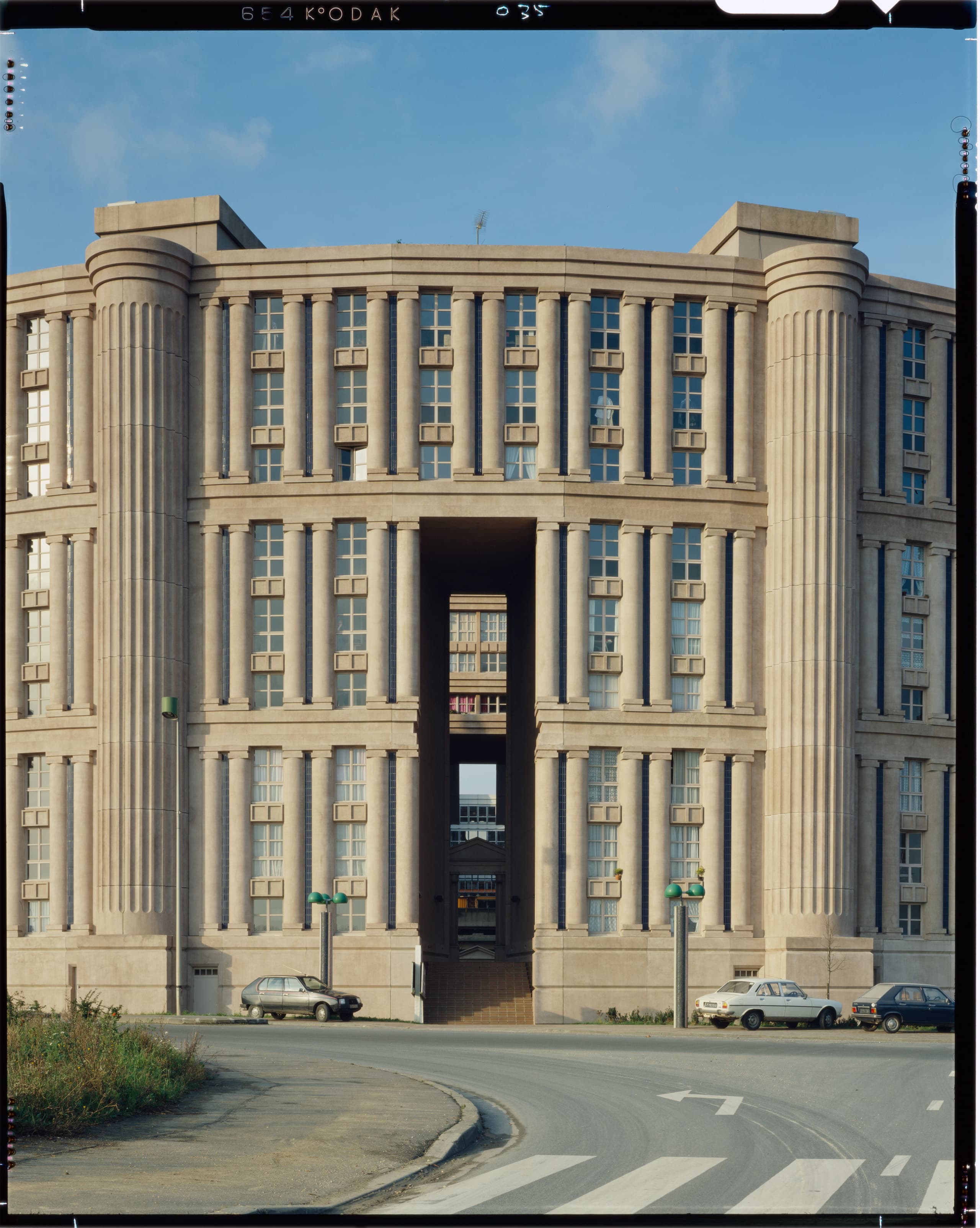
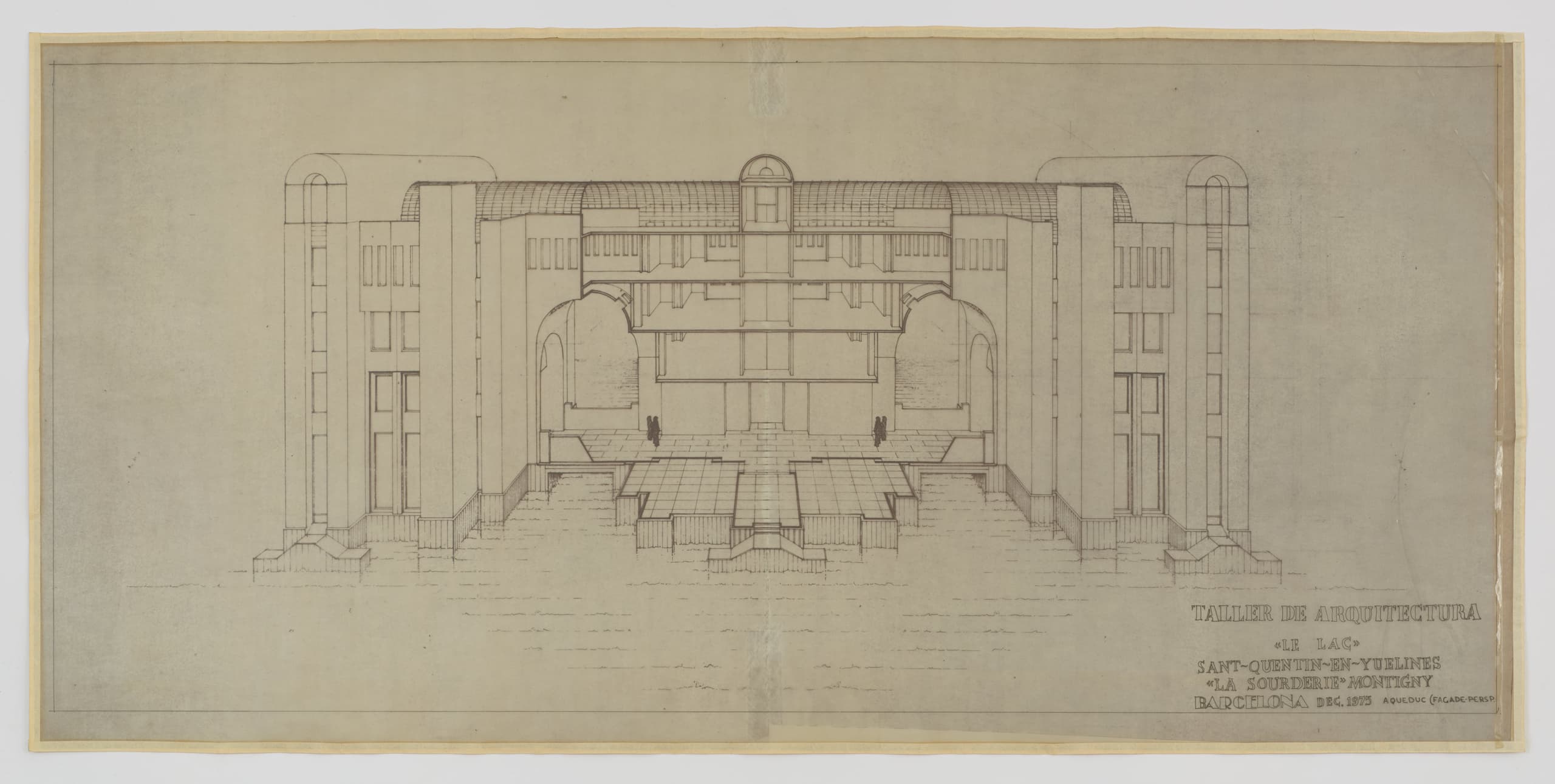
Given the specialism the Taller had developed through the City in Space, it was natural that the group were called upon to help conceive the new towns emerging around the edge of Paris. The first commission was for Cergy-Pontoise: La Petite Cathédrale, led by Peter Hodgkinson until the project was blocked by an apparently conservative-minded national government minister. But the socialist new town directors persisted and in Marne-la-Vallée another design was commissioned, which would become Abraxas. The original designs for these two new-town projects shared much in common: both appeared tall and elegant; both developed the concept of the City in Space; both stacked cubes and employed set-backs to form the same X and O configurations found in, for example, Walden 7; and, just as the buildings in Spain integrated familiar Mediterranean sensibilities, both drew on architectural precedents embedded in the local architectural psyche. Familiar details from French Gothic, Romantic, and Baroque architecture were revived in the building exteriors, while a more global reference to the national tradition was evident in the gestures the buildings made across the landscape: axes, symmetries, colonnades, and courtyards.
When the Taller came to Marne to pin up the designs for Abraxas, no doubt their many nods to French history would have put smiles on the faces of the town council members, while the body of Spanish work that had originally caught their eyes was still palpable. However, from anecdotes and the popular press, there is definitely a sense that the council had limited criteria – which was hardly something the architects complained about, because they had carte blanche. In fact, local groups and individuals attending the meeting did raise concerns over matters of the design such as height, massing, and materiality. Still, the designs were approved unanimously.
The justification that the council just plainly and passionately believed in this proposal would possibly have been plausible, were it not for the substantial changes made to it midway through the design process. Those changes were accepted seemingly without question – such was the unshakeable faith the council had in the Taller, and perhaps the importance attributed to the “meaning” of the project over its practical realities. Anyhow, this second design was what went ahead: a gigantic transformation, multiplying the buildings from the initial single block to the now recognisable three, increasing the number of floors, and radically changing the language of the facades.

It is hard to pinpoint the precise moment of the switch from the initial soft French influence to the heroic Neo-Classicism that stands constructed today. One notable event around the same time is Ricardo returning from working in Algeria. This had involved designing new villages, intended to integrate the agricultural population into the post-revolution Socialist economic system – also hoped to provide a degree of financial security and continuity for the Taller. When these projects fell through, Ricardo came back to Barcelona to find a severely reduced office and a significant shortage of work. In this sense, Abraxas and the other French schemes arrived as a welcome opportunity, but the timing also meant that they automatically carried the expectation that had once rested on the Algerian works: ostensibly, to save the Taller from collapse. And so it seems there was everything for the group to gain by going big.
The declaration of a monumental new language for Abraxas certainly rested with Ricardo, who was an impresario by nature, but it had by no means been his decision alone. (Nor was it agreed upon by everyone, it must be said.) Over the preceding decade, there had been a growing interest amongst members of the Taller in the European architectural tradition, with many of them making the journey to Rome, Florence, and Venice to study ancient and Renaissance buildings. They were sometimes accompanied by the critic Christian Norberg-Schulz, with whom the Taller maintained a close relationship, and whose books like Genius Loci were shaping international architectural thought on place-making at the time. Palladian principles were studied in detail on these pilgrimages, and discussions of proportion, harmony, music, and humanism are said to have been constant back at the Taller.
Time was also spent more casually in Paris, thanks to the growing number of new-town commissions, which allowed the Taller to observe the local condition of housing and importantly identity. It was noted that when someone in the centre of the capital was asked where they lived, the answer was often the name of a monument – Étoile, Panthéon, and so on – because these references carried the greatest symbolic weight and recognisability. The Taller came to believe that, if the new towns were to resonate in such a way with their own residents, they should draw upon an equivalent sense of scale and dignity. Thus the buildings and landscapes of André Le Nôtre and various eighteenth-century utopian architects, such as Boullée, Ledoux, and Lequeu, were visited as a result.
The research and reengagement with Classicism at the Taller was somewhat representative of the overall, global shift then happening within the profession. While economic austerity and recession had stifled construction opportunities during the 1970s, they had also redirected much of architectural culture towards theory. And it turned out that publics around the world were warring against the current state of architecture; architects could agree that their problem was universal and critical, but not on the alternative. They fought it out in academic journals and at international conferences over concepts called pluralism, structuralism, humanism, radical eclecticism, historic contextualism, and the wider revival of Classicism that the Taller was foregrounding. So varied were these ideas that Charles Jencks, in an attempt to create some coherence, would introduce the term “Post-Modernism” in 1975, which of course meant “after” Modernism, but was employed more as “other than”; while Post-Modernism propelled architecture beyond the limits of the current style, this did not stop it from looking backwards towards earlier traditions.
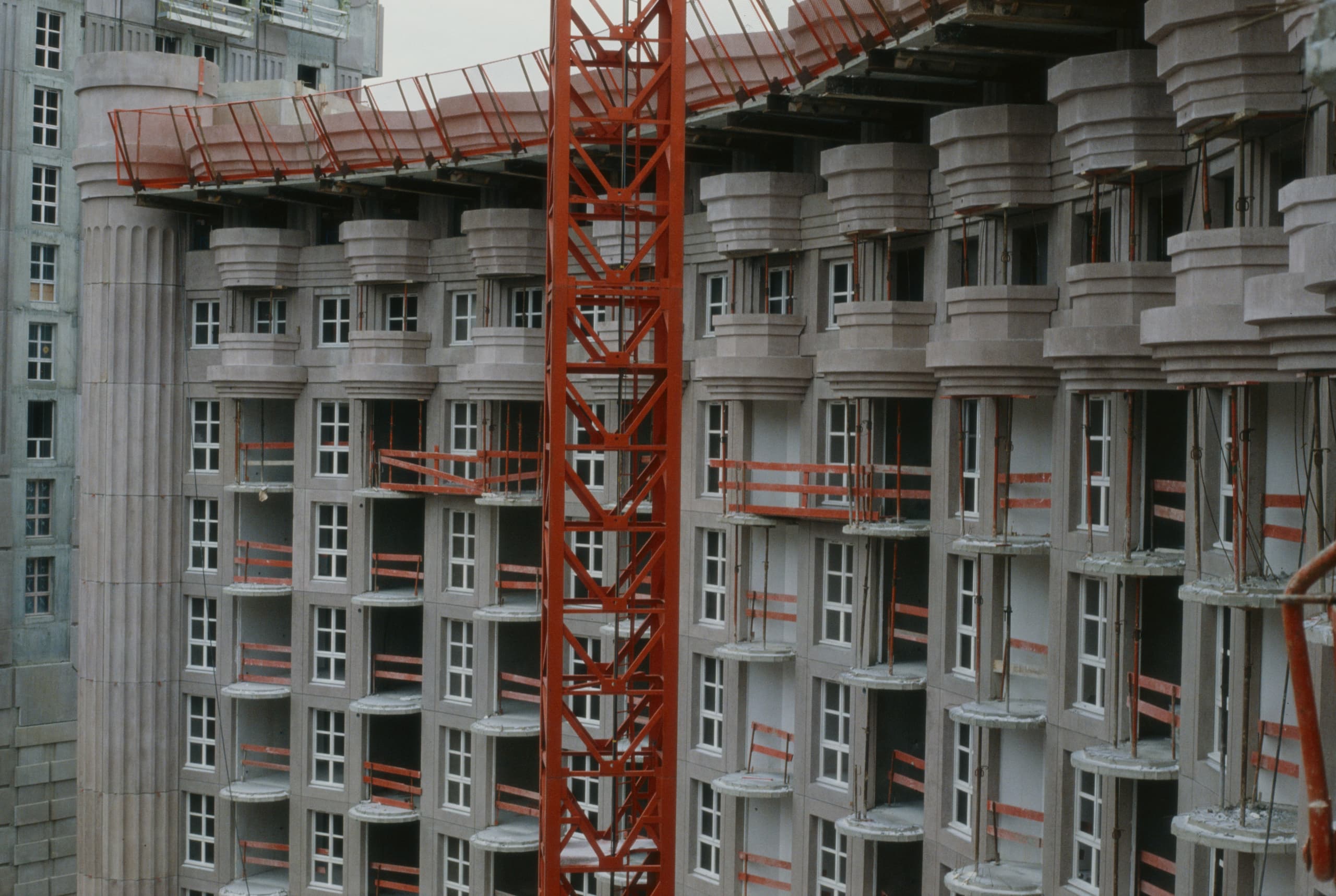
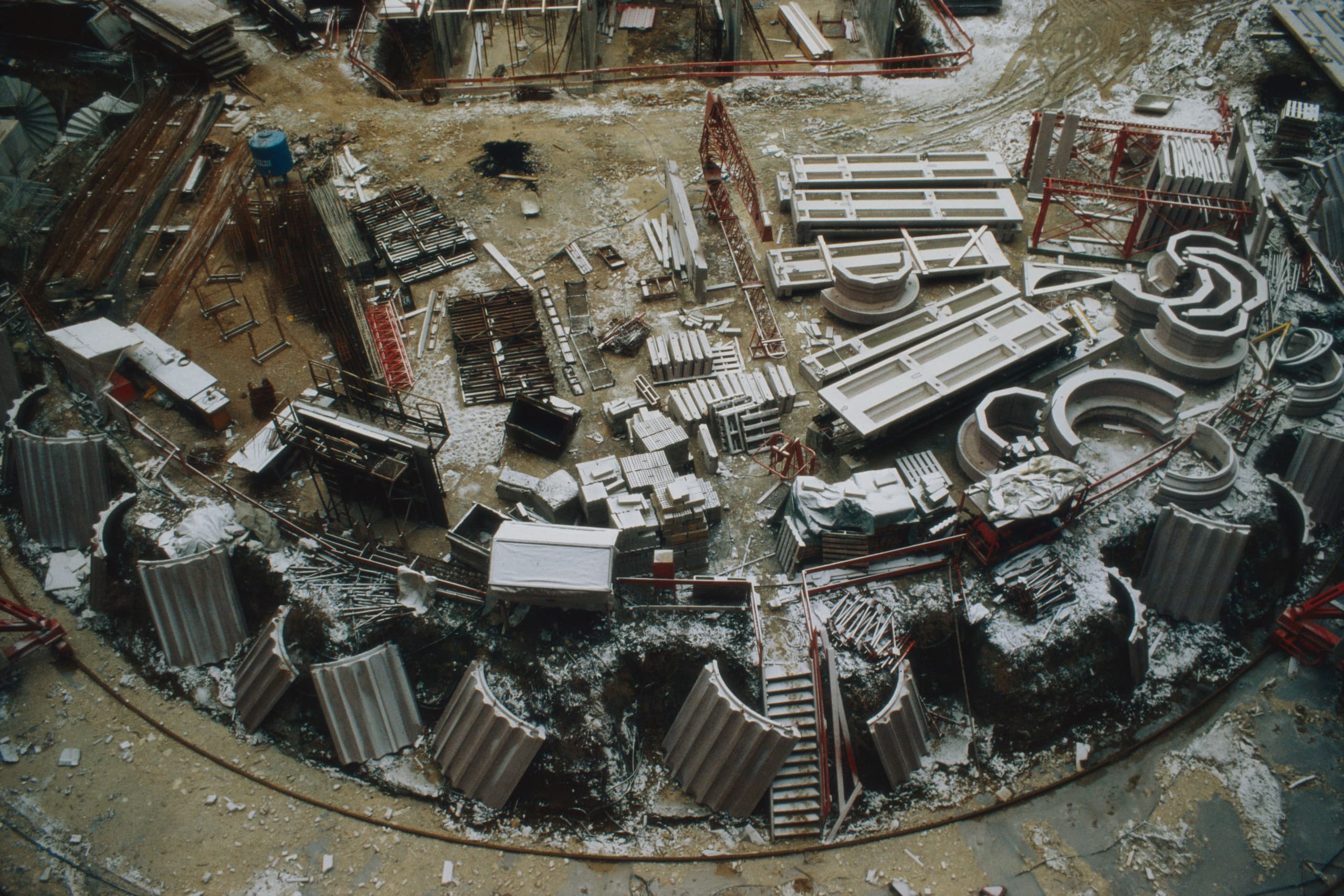
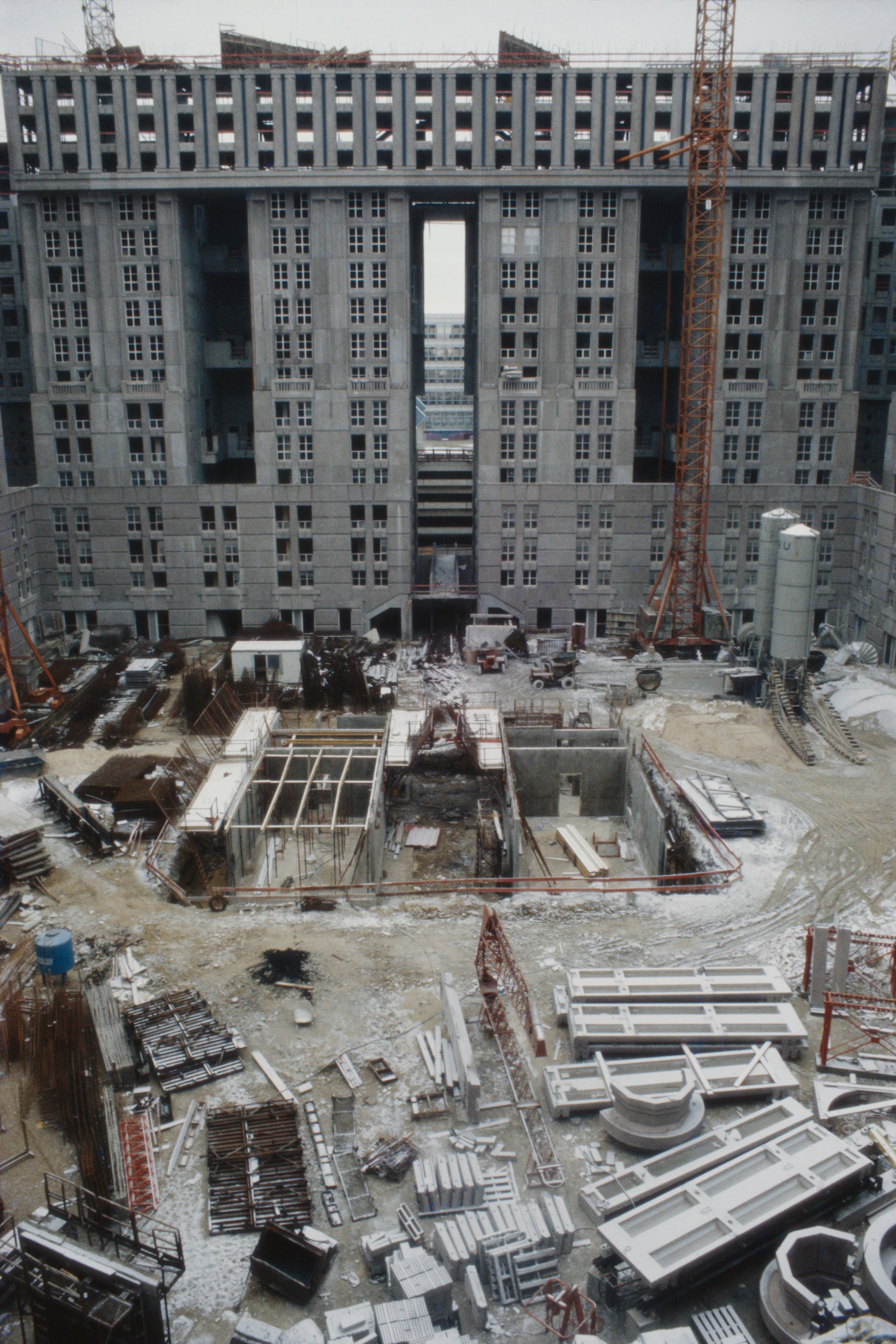
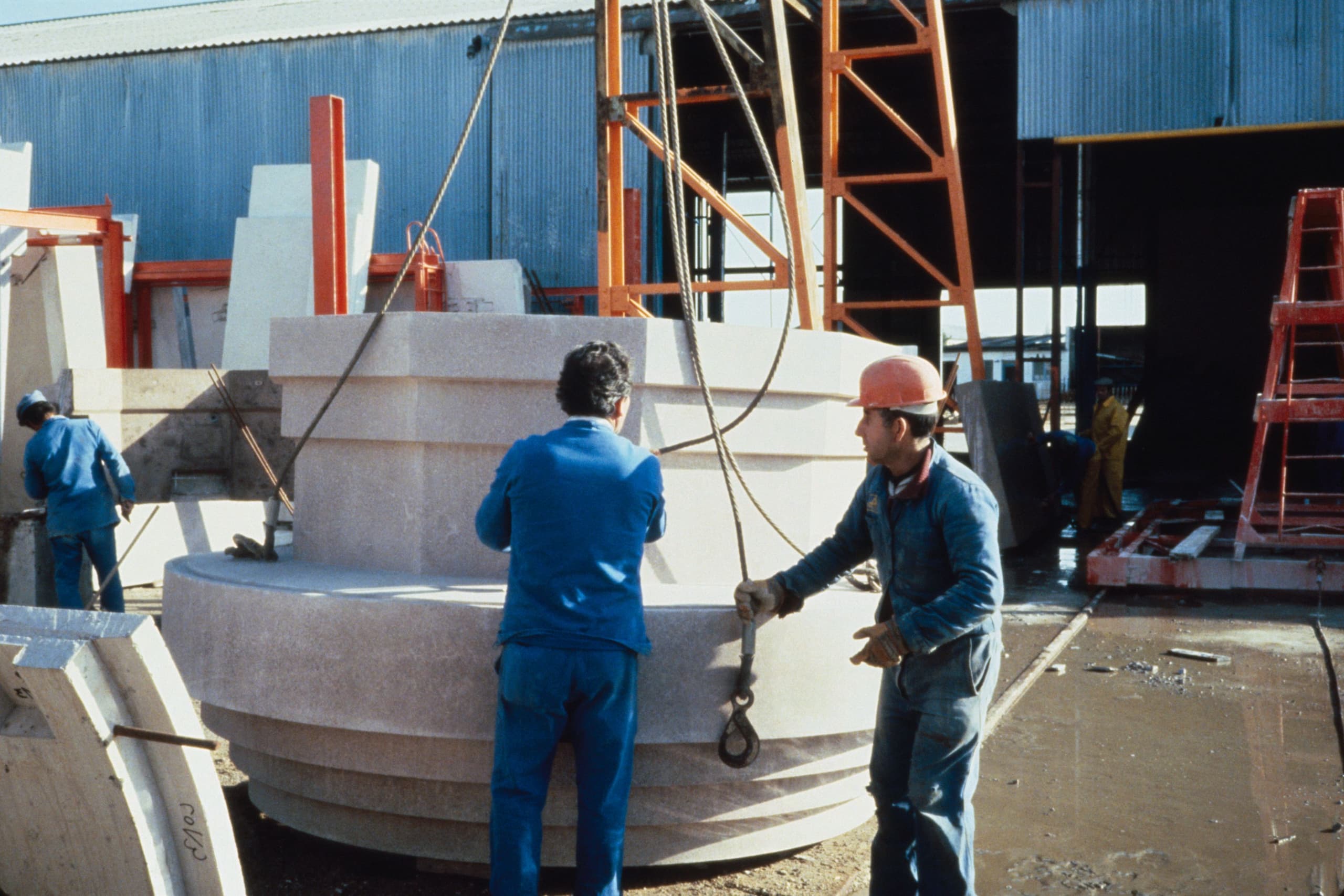
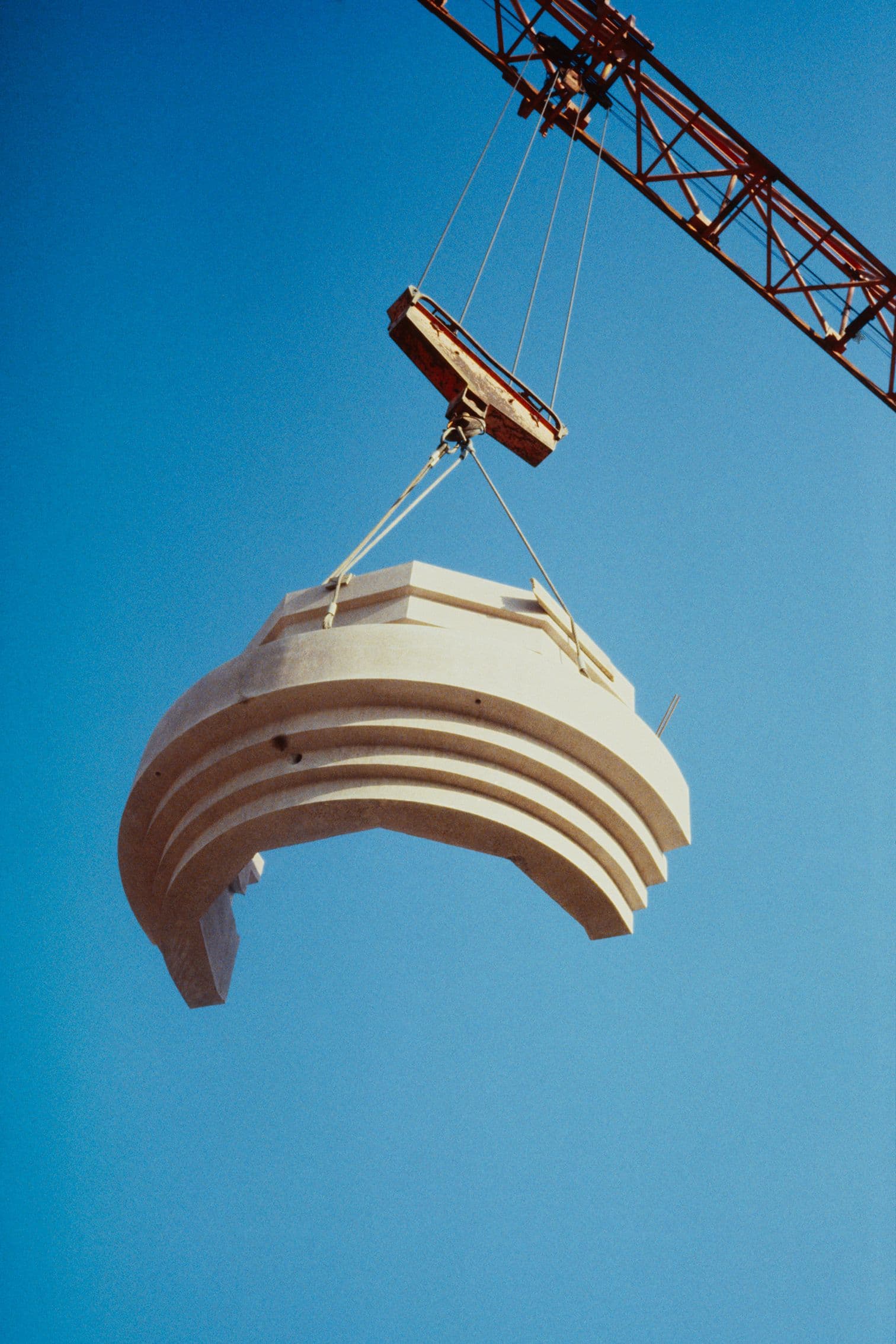
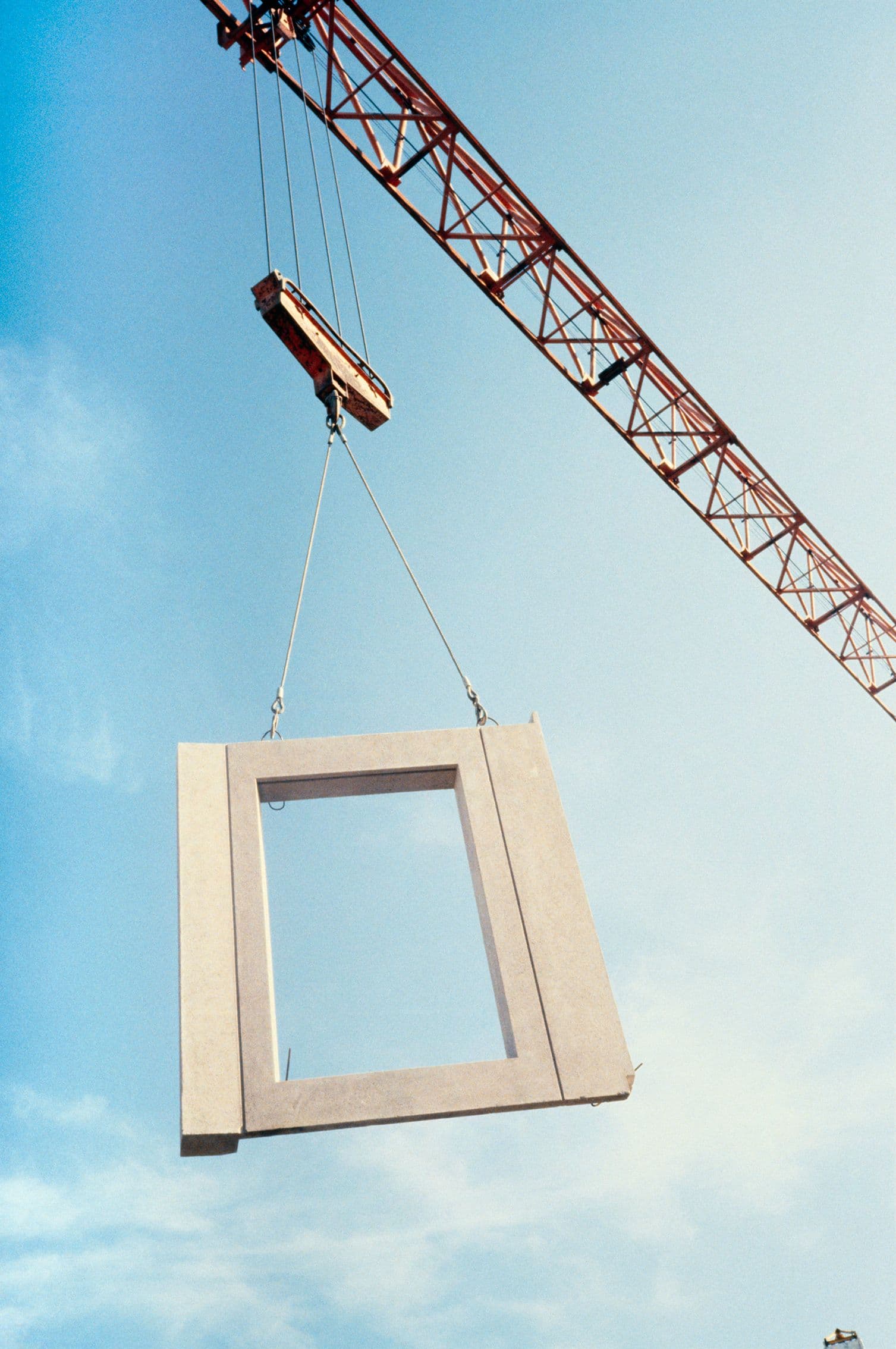
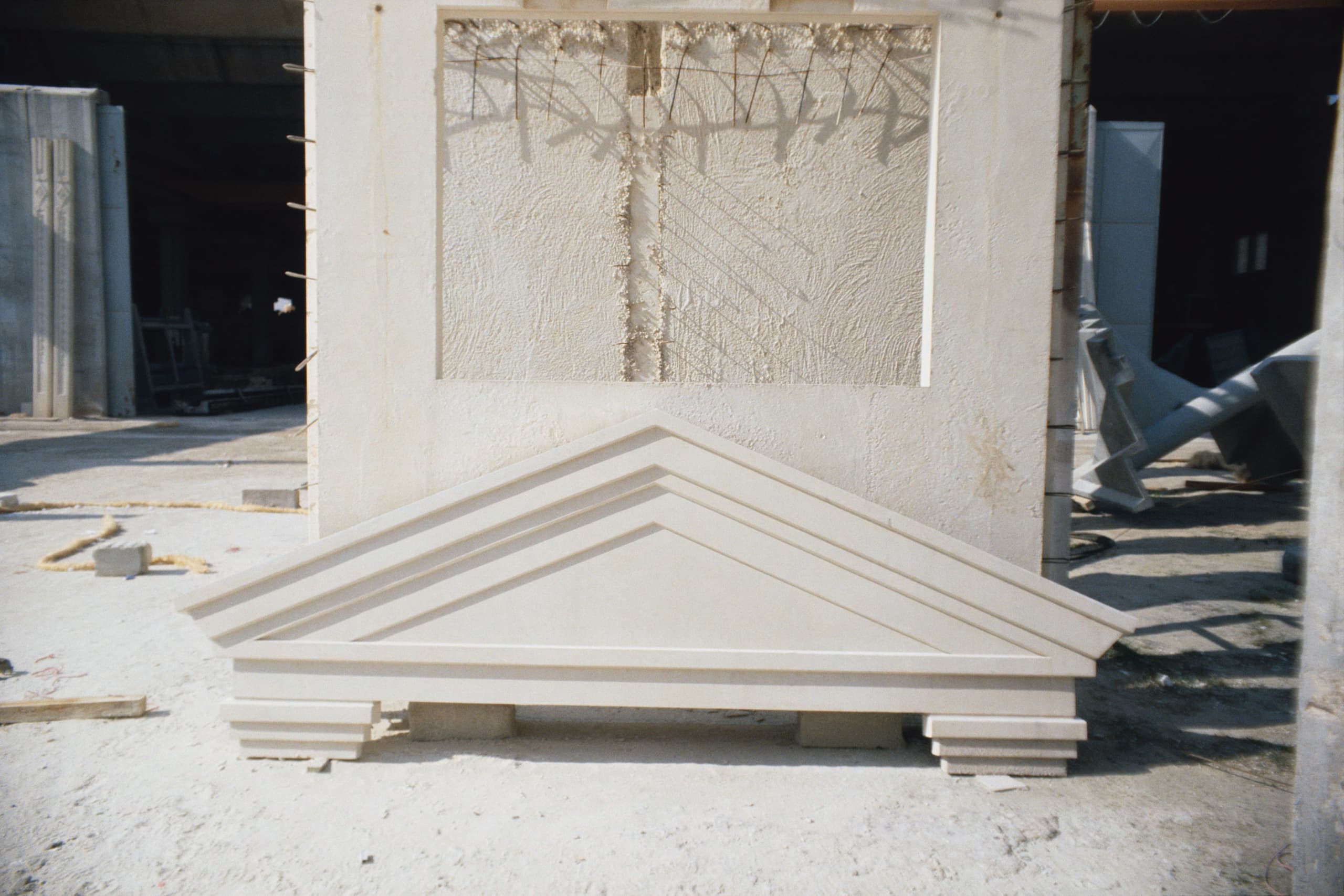
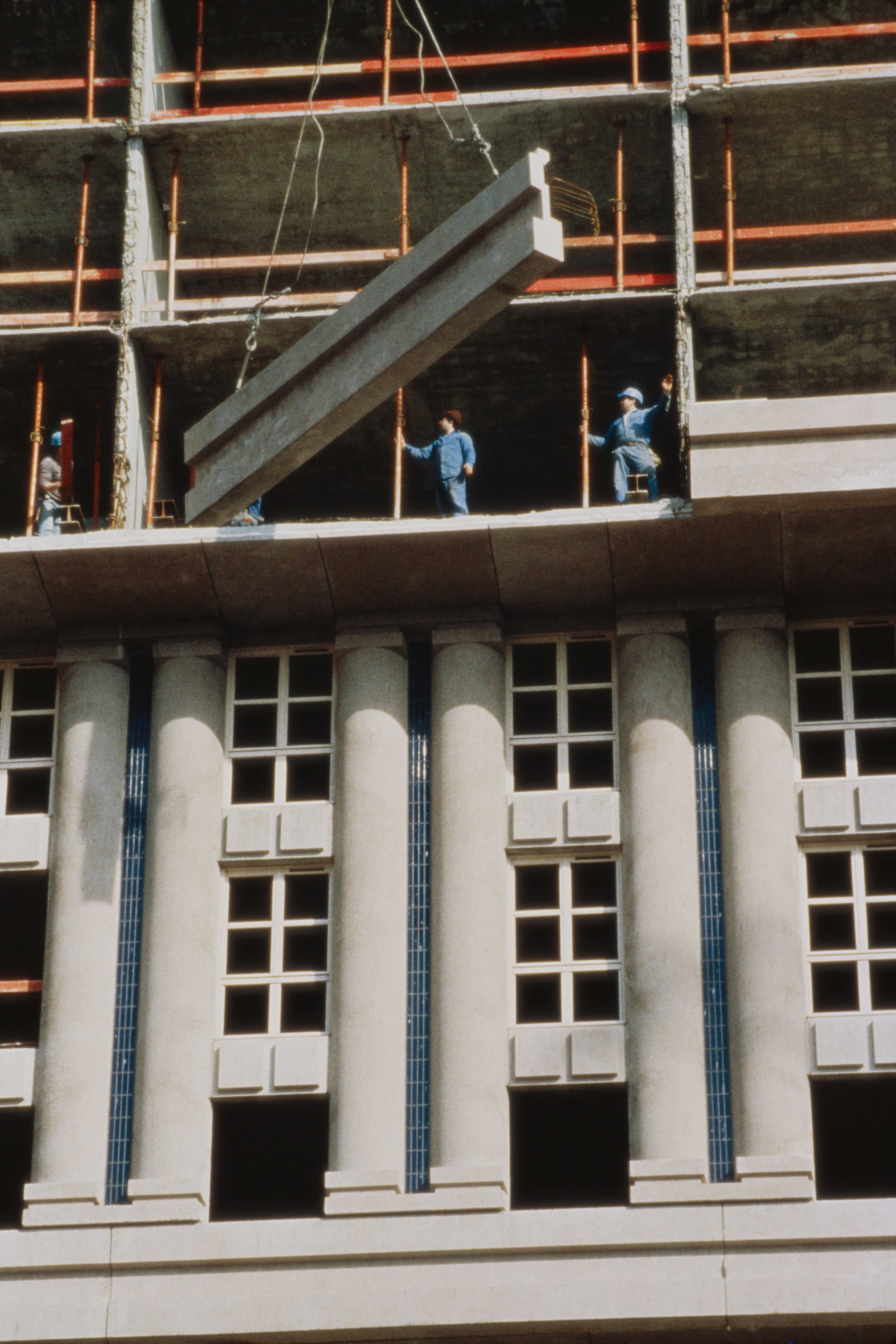
In an interview published in the Architectural Review in 1981, once Abraxas was under construction, Peter advocated for what he dubbed a “reinterpreted technological Classicism” that was “immediately identifiable on a popular level, bringing architecture back into the cultural language of the people”. Peter frequently wrote on behalf of the Taller, at that time outlining its philosophy while working on its various French projects, which he talks about designing with distinct Classical models in mind, and about which he was incredibly motivated. The style he described was unlike most Post-Modern Classicism – a “fad pretending to relate to the past”, whereas Abraxas was really related to the future. Indeed, the technology they developed for the facades was genuinely revolutionary in the way it treated concrete: as a kind of liquid stone, achieving much the same effect as the carved mineral despite having been cast in a fraction of the time. Such industrialised Classicism also offered economy through its repetition of a limited number of forms – it is relatively inexpensive to create moulds for a family of shapes. Great big components could be produced in a factory, brought swiftly to site, then lifted by cranes and swung directly into place (there exist some spectacular photographs).
The Taller understood the potential of public relations and was very good at them. Amongst its members were speakers of multiple languages, more than one accomplished writer, and many persuasive orators, not least Ricardo himself – numerous videos show him speaking eloquently and with heart on French national television in these years. Not to diminish the group’s work, but to emphasise the star power of its publicity: it is fair to suggest that this charm and competence contributed to the Taller exhibiting solo at the Architectural Association, the Beaux-Arts school, and the first Biennale of Architecture during the early 1980s.
For Venice, Charles Jencks and its other curators had invited the Taller to participate in The Presence of the Past. The group was allocated a spot on the “Strada Novissima”, a street of facades each fronting a renowned architect’s exhibition. There the Taller replicated a facade from Abraxas, while Annabelle d’Huart assembled a large-format book about the project with the publisher Electa Books in Milan. On one of the earlier Rome trips, she had seen a book on Palladio that led her to compare and combine shapes in the Abraxas book, in order to strengthen the project’s argument. The book was beautiful and methodical, exploring the line, the point, the square, the circle, and the ellipse, while weaving together references from utopian cities, ideal-city projects, and other historical sources: an engraving of a church by Borromini, Baroque details; a taste for Surrealism and Romanticism, and for the undefined, for ruins, decay, and so on.
All of this exposure would help elevate the Taller and its projects to real prominence within quite an elite international architectural scene. There was of course some kick-back to the fanfare – notably during a discussion at the AA, which Jonathan Glancey characterised in the Architects’ Journal (January 1981) as “words volleying backwards and forwards in a sometimes heated discussion”. Nevertheless, the very occurrence of the exhibitions is evidence enough of the Taller’s international standing in those years, and the Biennale as a whole attests to the role its architects played in advancing the Post-Modern Movement. Not too long after these events, when construction of the project completed, Jencks exclaimed Abraxas was the “ultimate romantic transformation – of the working class into an aristocracy” and was not alone in his admiration. Critics and journalists alike attested to “Cement Palaces” (Building Design, January 1981), “Versailles for the people” (French critic Bernard Huet), and “Edifices for Everyman” (Pan Am Clipper, May 1989), amongst other epithets.
One way or another, the reviews called Abraxas a class revolution by architectural means, and Ricardo, as the face of the Taller, a kind of Robin Hood, who by giving the people the architectural style of those highest in society, had bestowed upon them its qualities. (In Glancey’s AJ piece, the comparison is to the idealistic Don Quixote.) In their minds these qualities were implied by the typologies of the buildings, which were familiar to the French public: perhaps enrichment, drama, and occasion in the palace, theatre, and the triumphal arch. This was, they believed, what had been lacking in post-war architecture, what the French people wanted, what the student protests had been all about, and it had been achieved not through a nostalgic but a futuristic vision. “Come and live in a palace, another triumph from Ricardo Bofill”, read advertisements pasted around Marne-la-Vallée.

In the following weeks, this air of excitement made possible an open-house day at Abraxas. Ricardo had said often that a person should live in homes that reflect them, and for the event Annabelle envisioned that person as a dancer: someone who would go to the opera to perform but would also need to practise at home. A barre and a mirror were installed in the living room; the bedroom was decked out in postcards, many of them reproductions of Piero della Francesca’s Legend of the True Cross, to recall the frescoes of Arezzo; a library of books was gifted by Christian Bourgois, who was directing the progressive publishing house Collection 10/18; songs by Nico played; there were also humble pieces of furniture, as everything was done as economically as possible. It was a concept that expressed an idea of individual freedom within a communal system: residents could bring their own personalities to the pared-back spaces, yet still feel part of the community contained and united by Abraxas’ Classical exterior.
Soon after the flats opened to the public, attention turned to their interiors and was often negative. Writing in the Sunday Times (1 May 1983), Deyan Sudjic observed that “the interiors of the Palacio d’Abraxas are less than triumphant”, noting in particular the “shoe-box-shaped bedrooms”; such responses in the mainstream press often engaged more directly with everyday spatial conditions than the architectural press or the more dramatic interpretations that later appeared in film. Then, still within two years of occupation by residents, the complex also began to appear on screen. Kill the Referee (1984) was amongst the first films to use Abraxas as an Orwellian sort of setting, followed by Brazil (1985), where it formed the backdrop to an impersonal bureaucratic system, and decades later The Hunger Games: Mockingjay – Part 2 (2015), this time a dystopian game in which children are forced to fight to the death for the entertainment of high society.
Obviously, the cultural language the architects believed would speak to the people had not done so as they had expected. Perhaps, despite the popular demand for a new style, the imposition in both the speed and scale of this architectural change exceeded what the public was prepared for. Perhaps there was an overreliance on the conviction that a single architectural language could be universally understood in the first place. Or perhaps there was too much dependence on rhetoric in every sense. But perhaps the greater observation to make is about the effect architecture is believed to have over society.
There are of course real testimonies of anti-social and dangerous behaviour within Abraxas, but how much of this has to do with Abraxas, and how much with the wider social context, is not a question that architecture alone can answer. The reach of architecture’s influence is overstated a lot of the time, because it is easy to do: building a new physical reality suggests the infinite possibility of constructing other, new layers of reality. Definitely, a shared courtyard can encourage gathering, and morning sun through a window may draw someone from bed. But the courtyard-to-residence ratio may have been set by a distant housing committee, and the panes may let through a chill because the budget for double glazing ran out. For change to occur, the conditions in which society and architecture meet must first be acknowledged. Architecture is often quite a simple product of its conditions, and those conditions frequently constrain it. Even the most commanding buildings cannot escape the context that produces them…