On Site at UM6P
Photography by Gregori Civera
On Site at UM6P
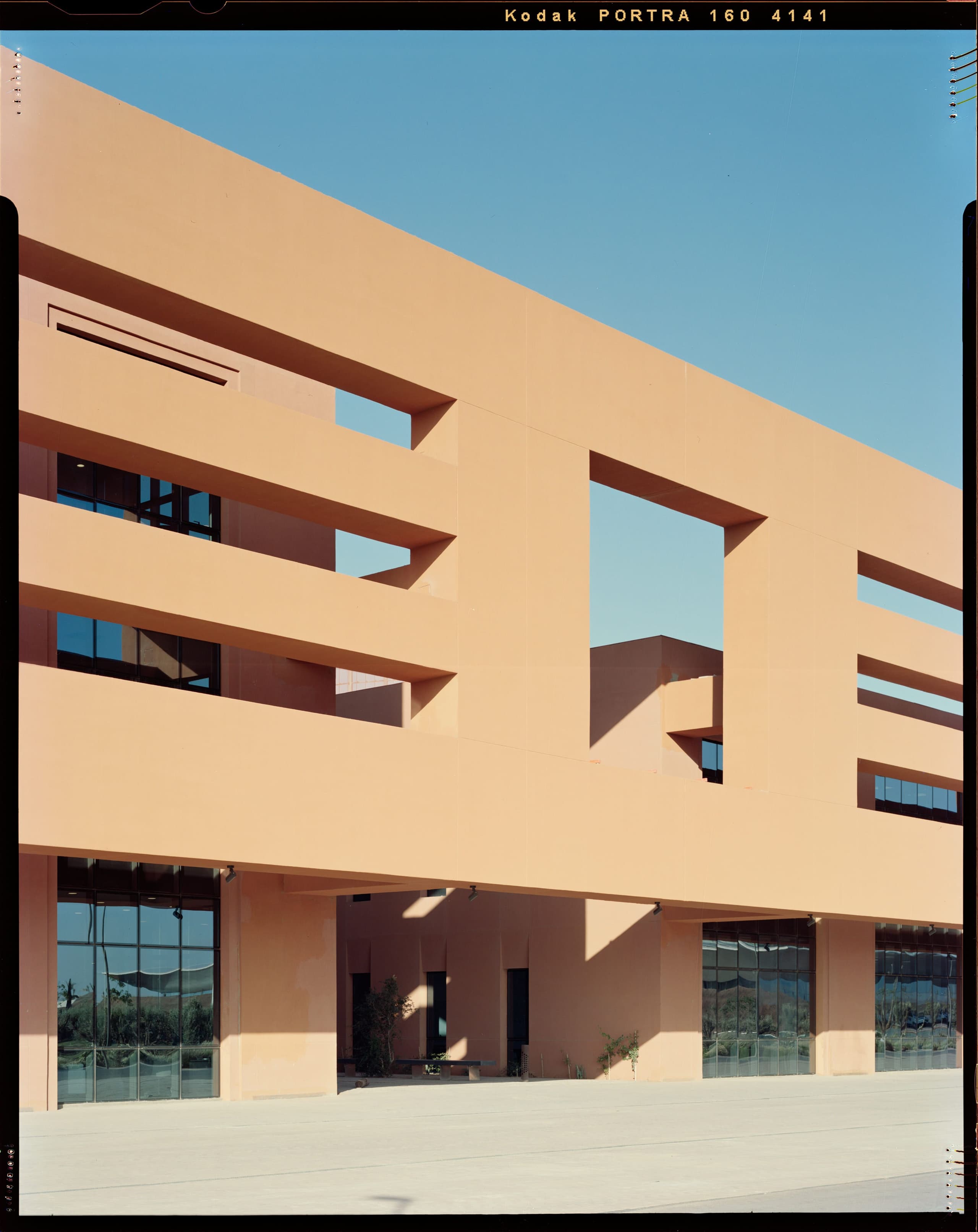
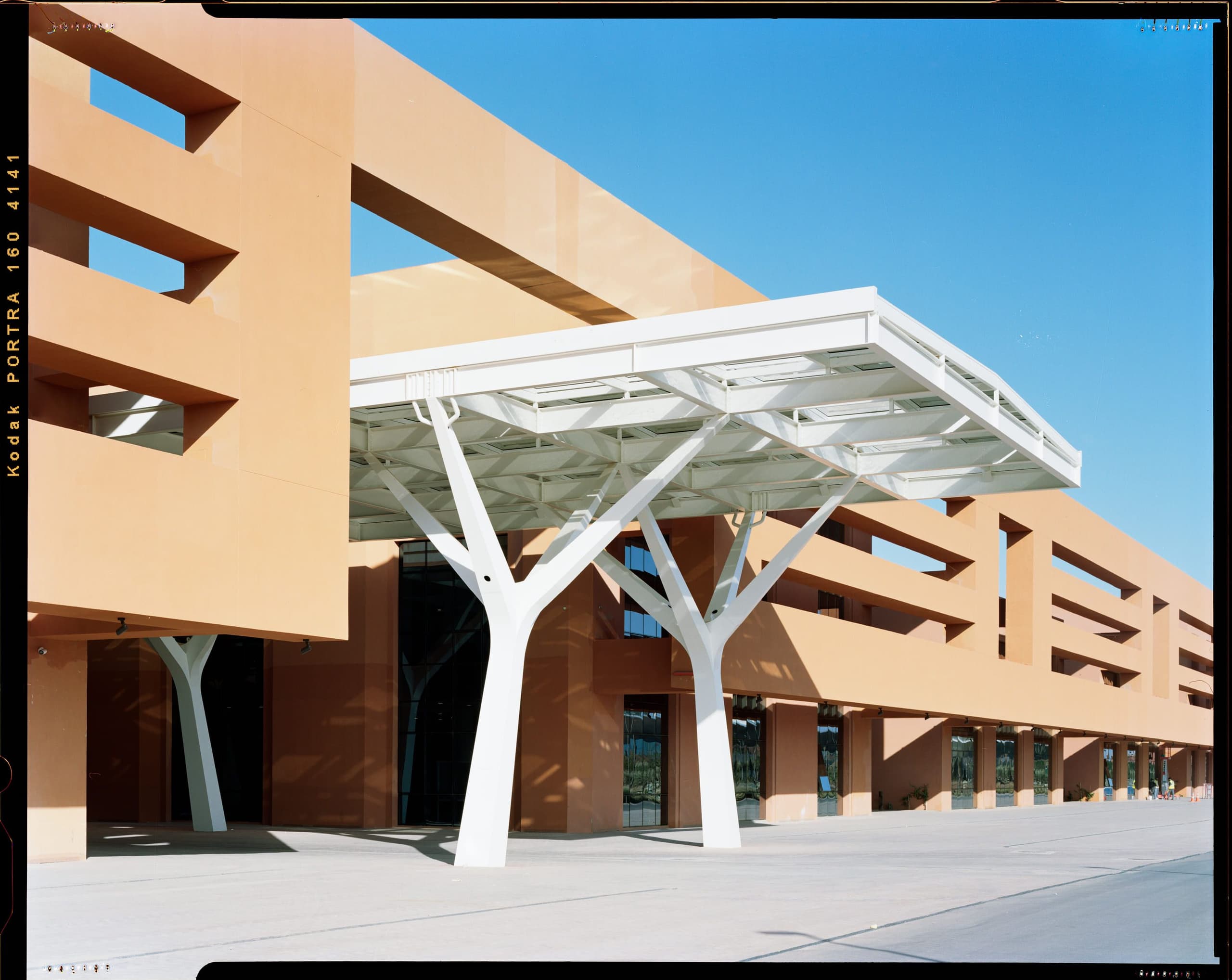
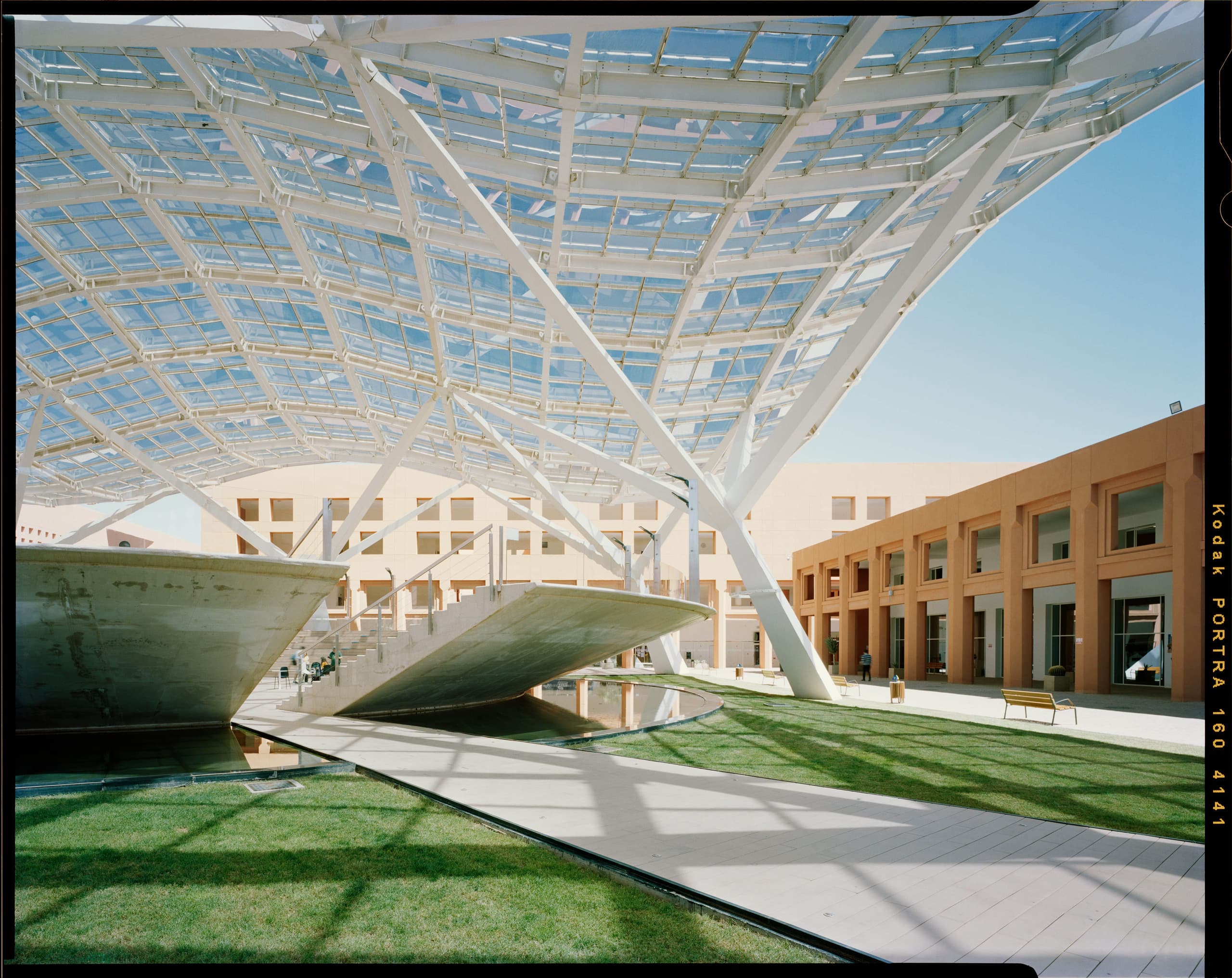
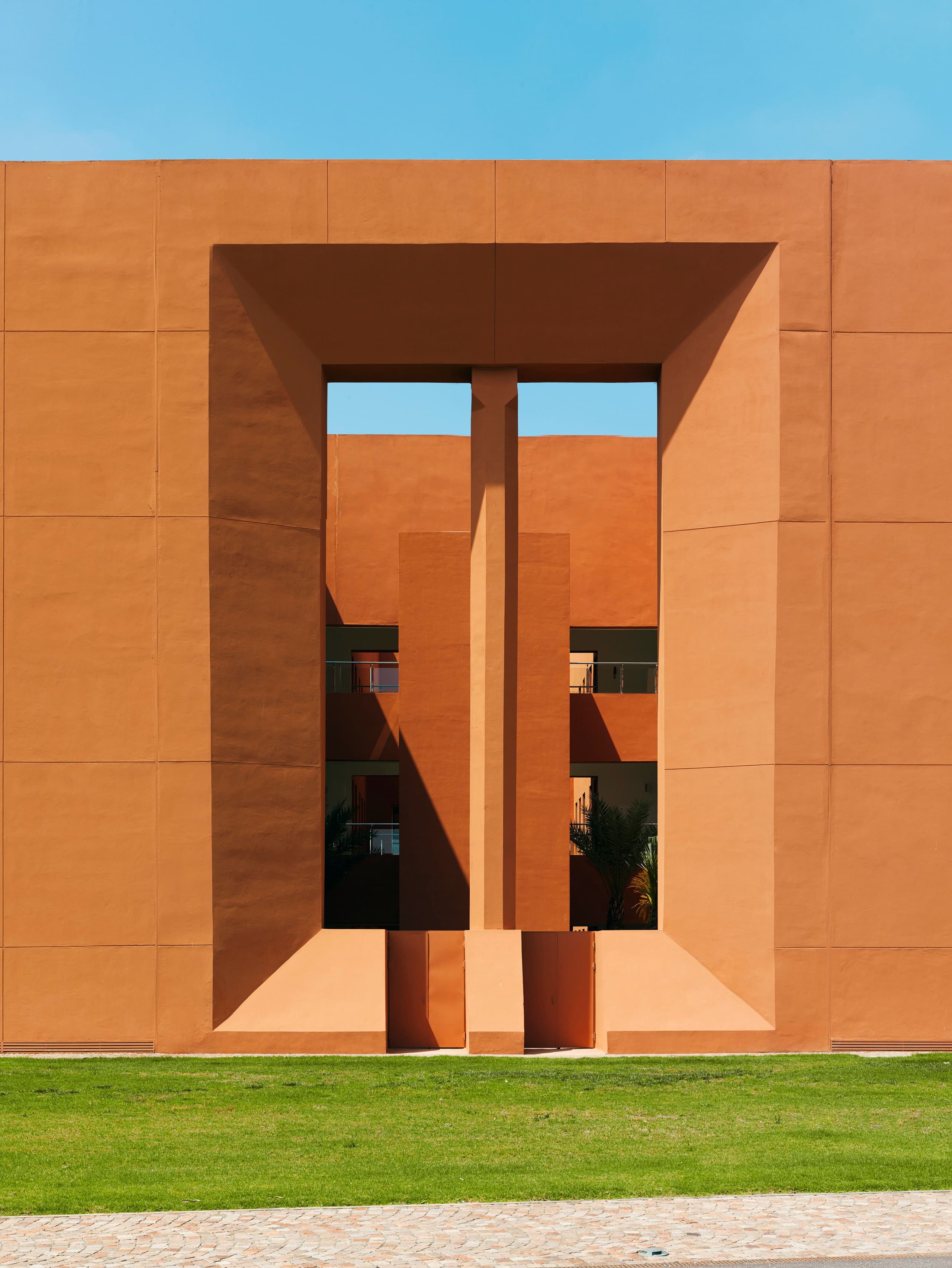
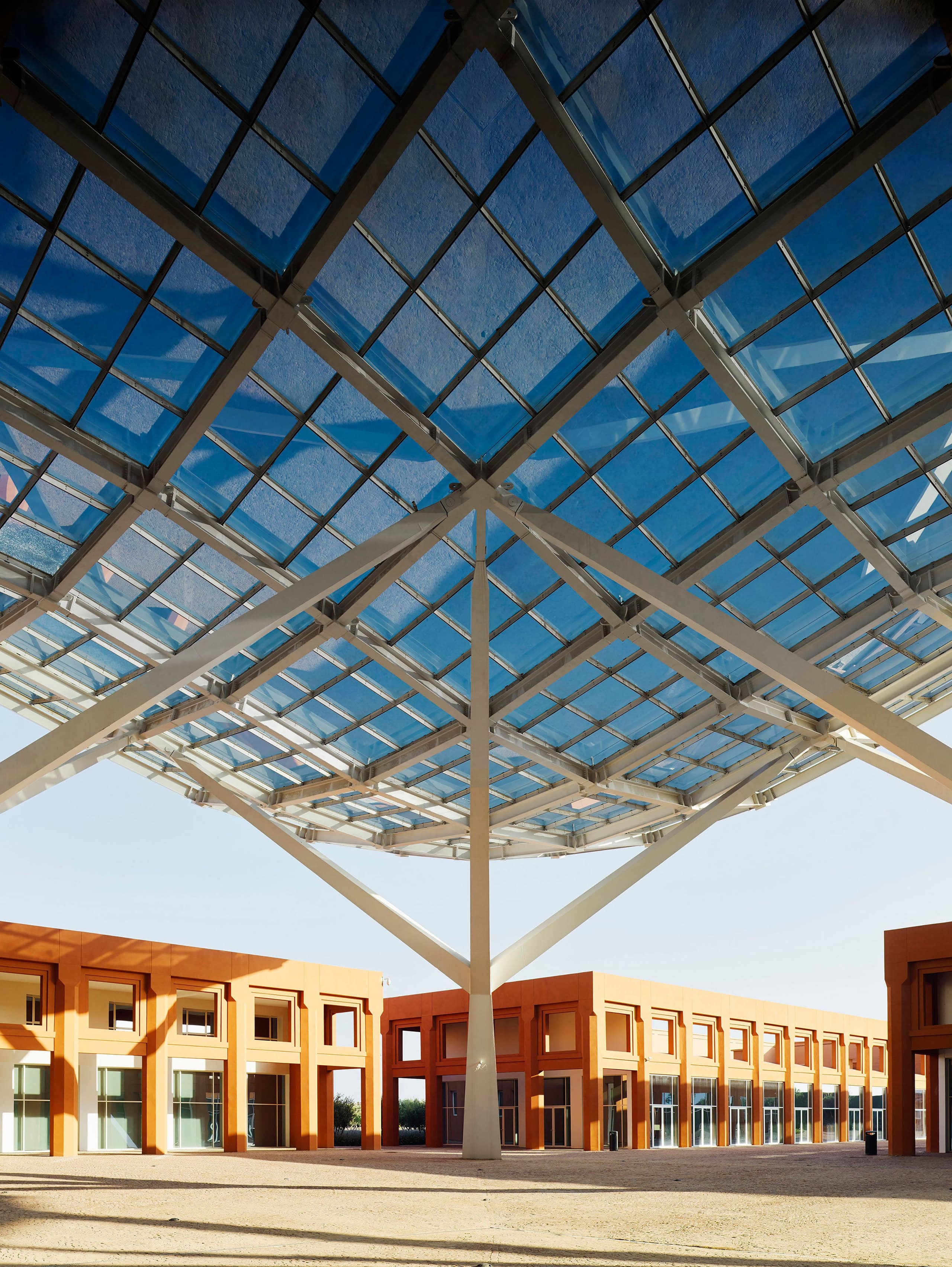
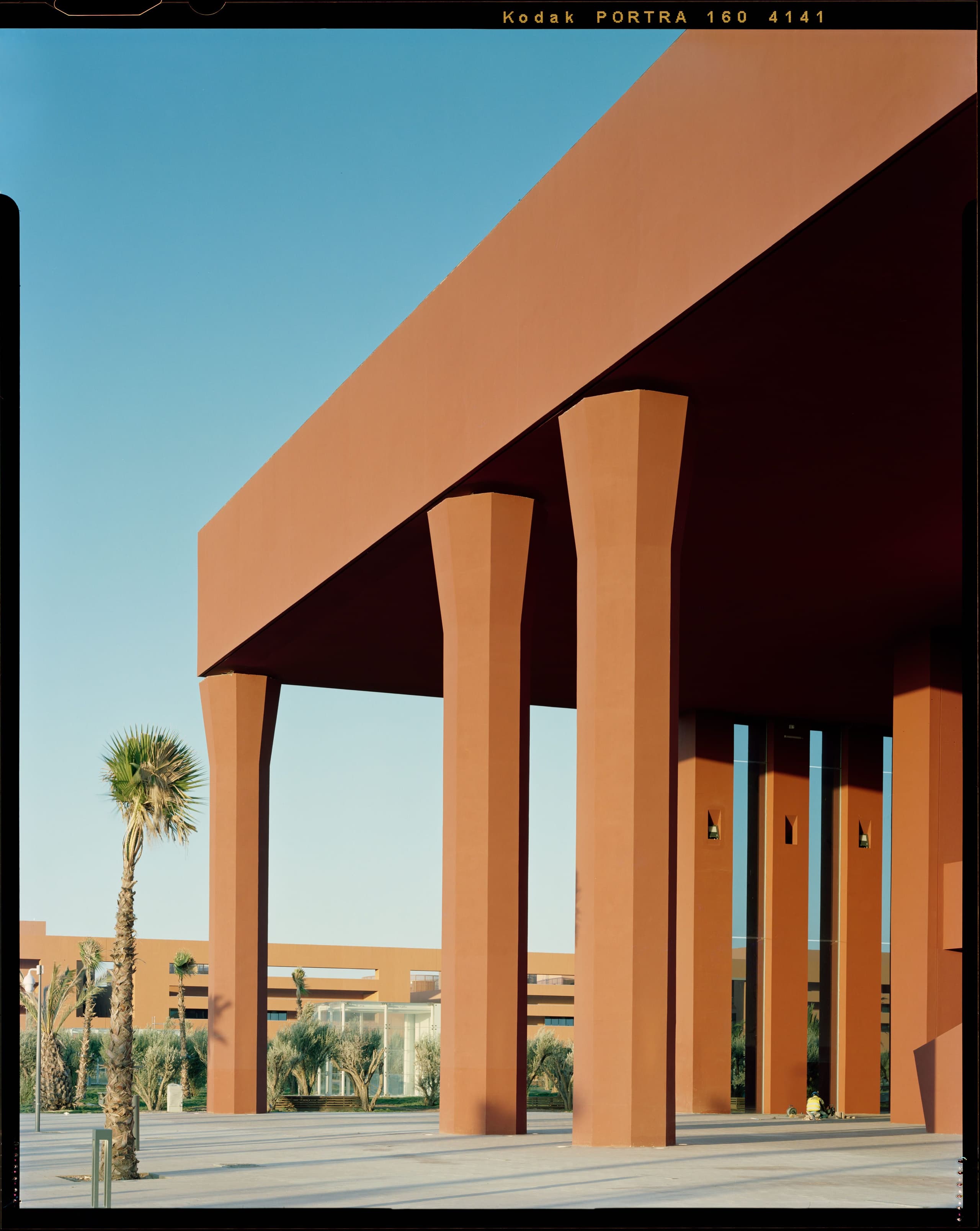
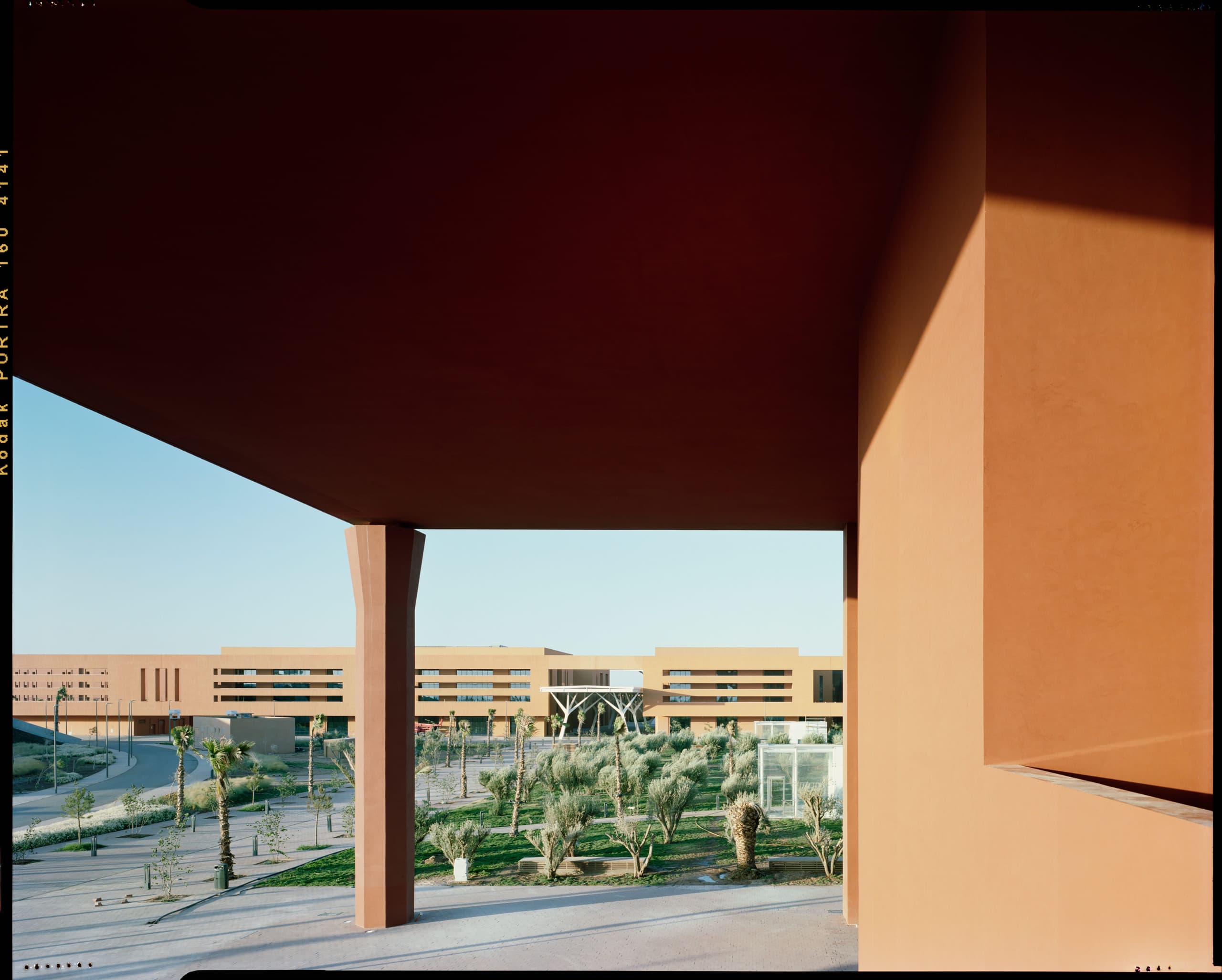
Gregori Civera has been travelling to Ben Guerir to photograph the Mohammed VI Polytechnic University campus since around 2012, though even he is unsure of the exact year. Some twenty-five visits, and counting, have charted the realisation of the masterplan with the accuracy of a historical record. What follows is the latest instalment of images, alongside his thoughts on them.
Morocco feels familiar to me; I used to visit as a kid. My grandad lived there for thirty-something years, and he died there, actually. I love the country. It has changed a lot since then, and the university is a testament to that change. It’s moving towards something more open.
At the beginning the campus felt somewhat like an experiment. Now it has become truly relevant for the future of the country. Even the style of the architecture – the campus itself has evolved, but also affected the design of new buildings and infrastructure in the city.
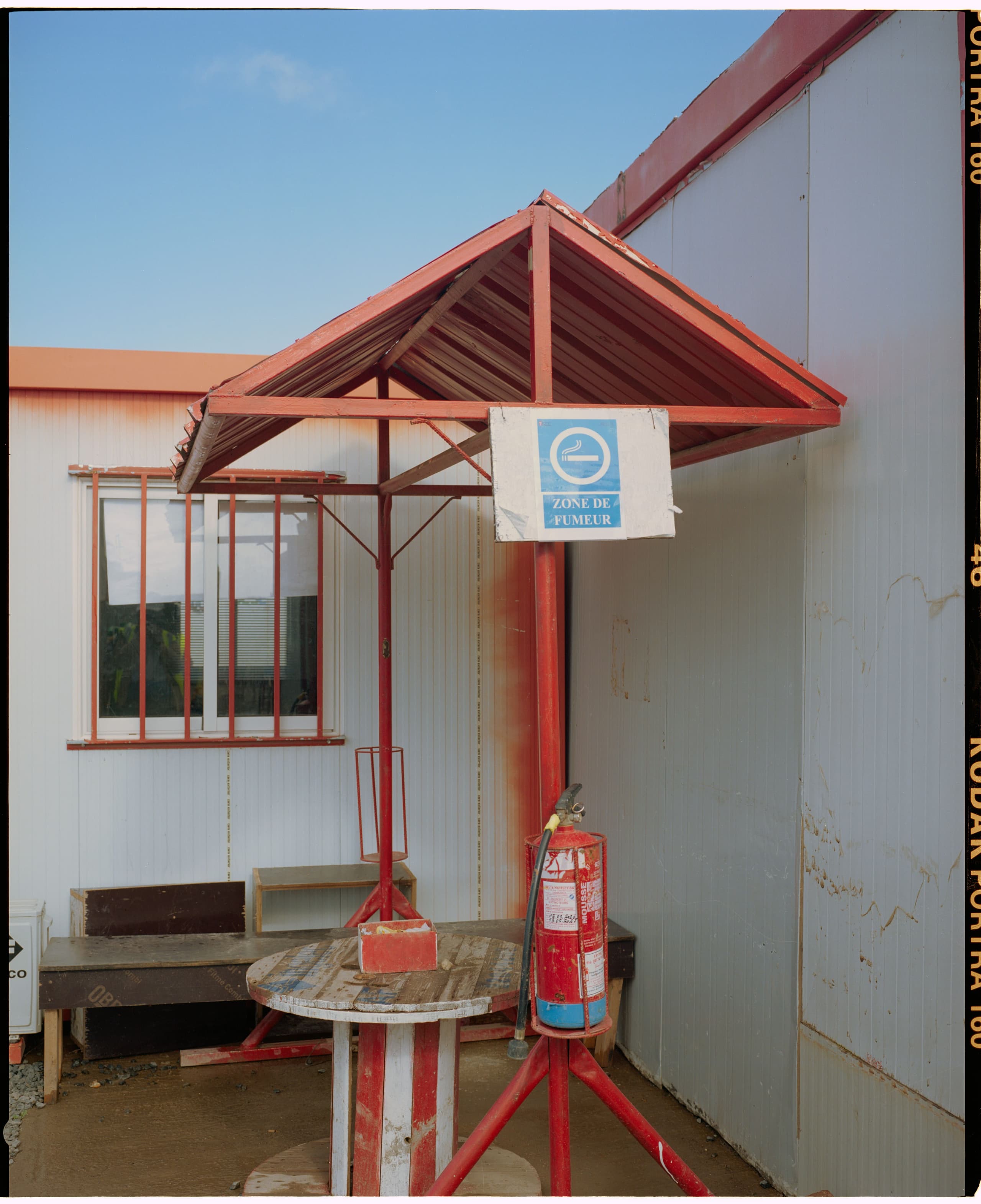
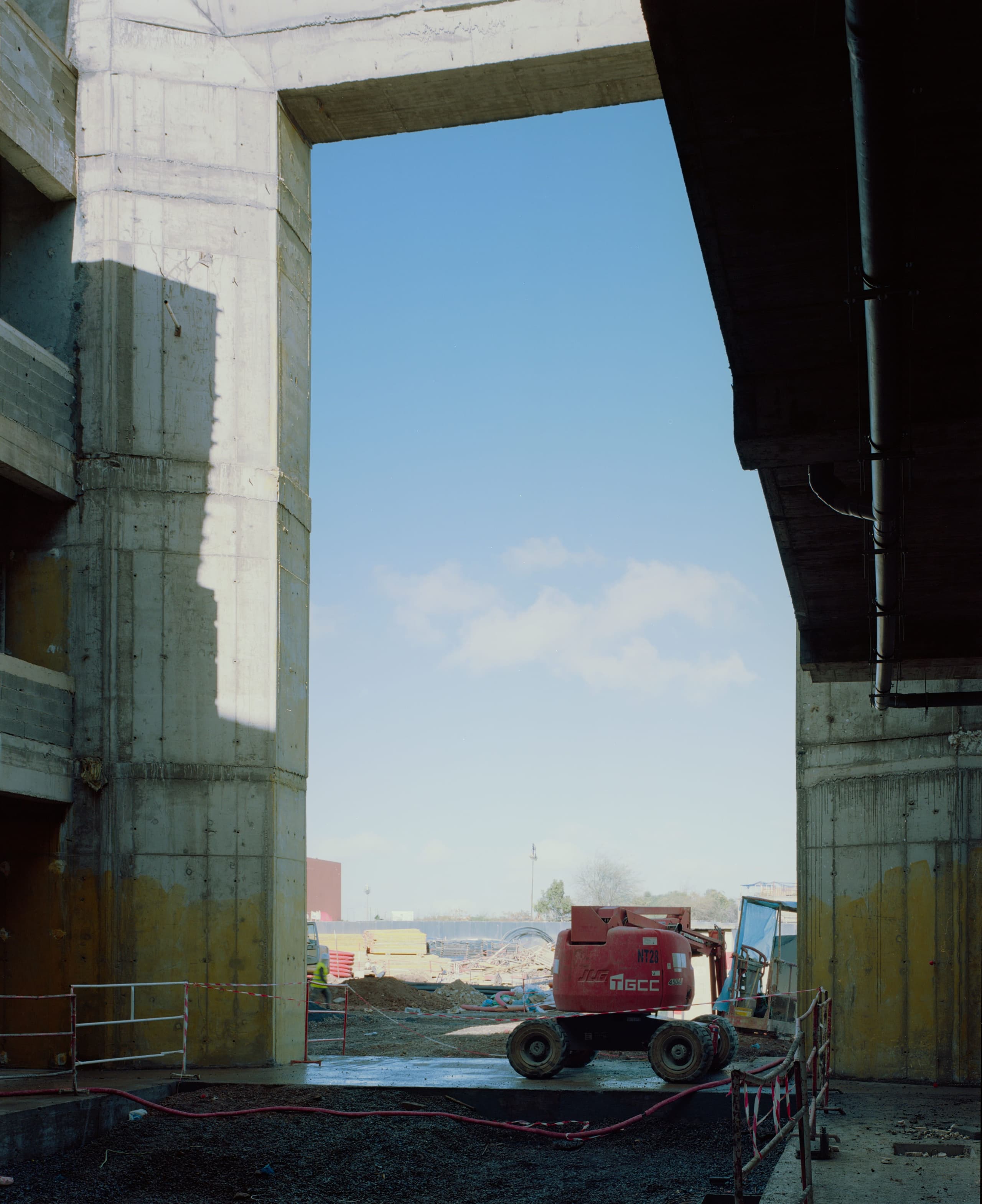
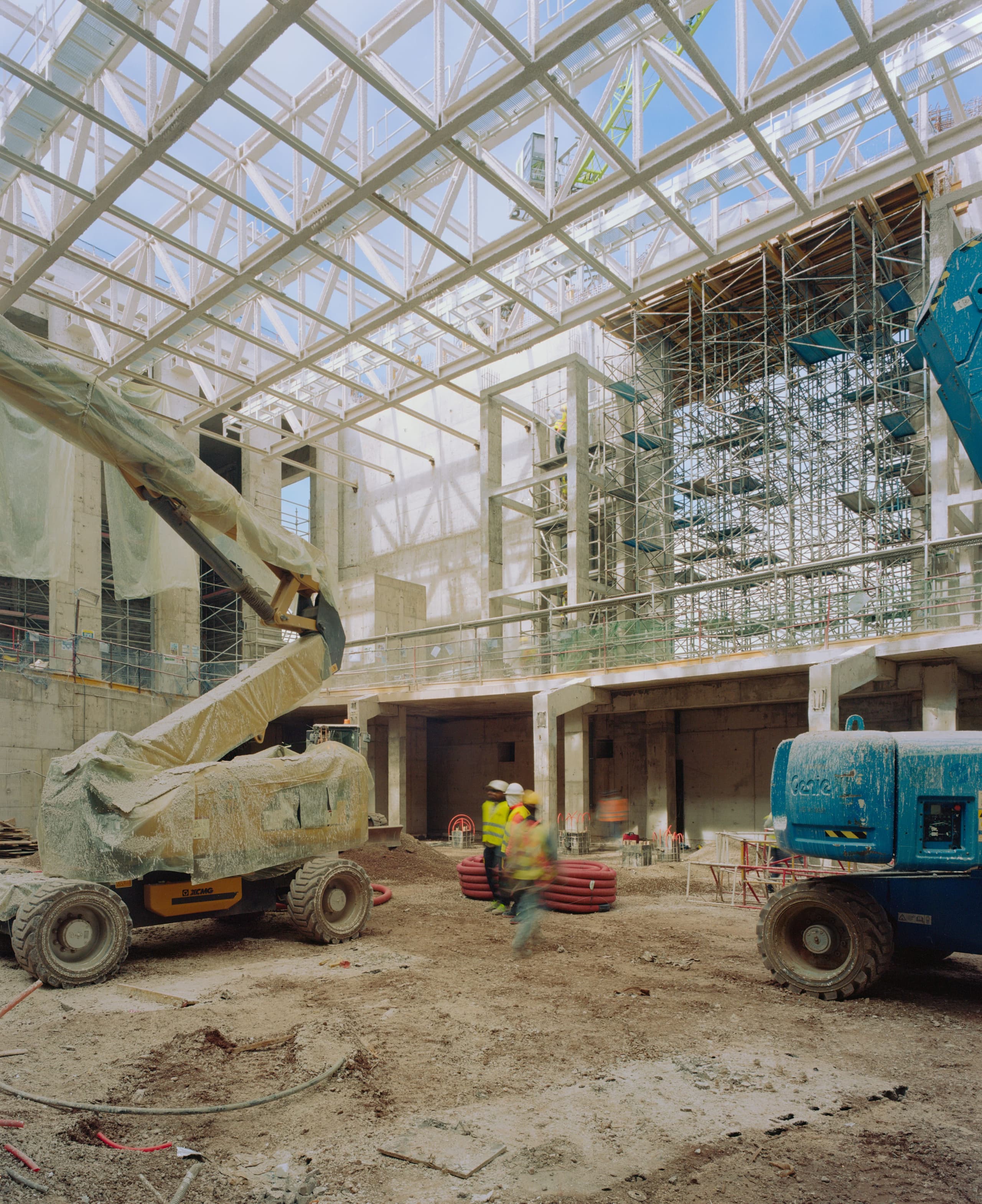
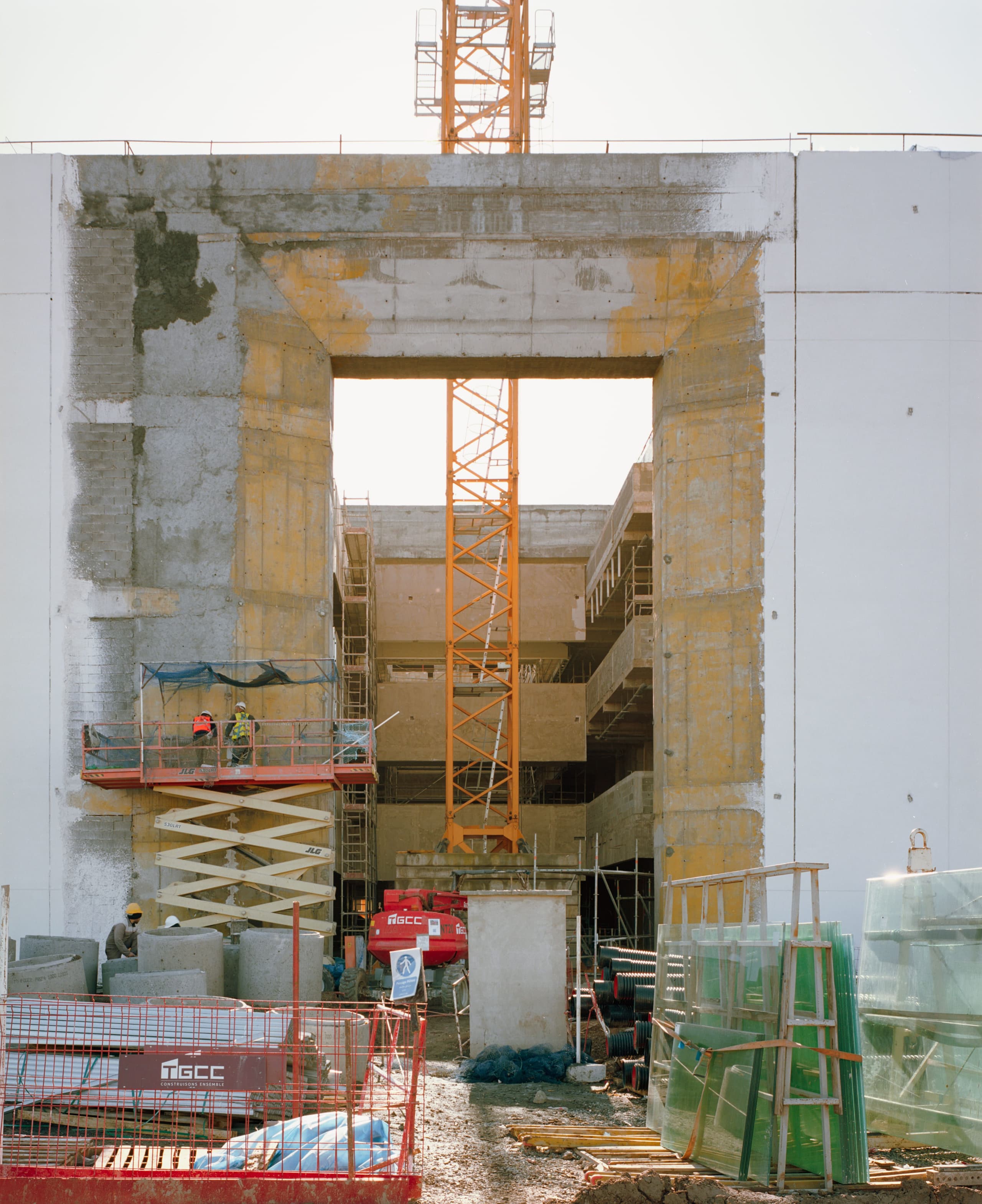
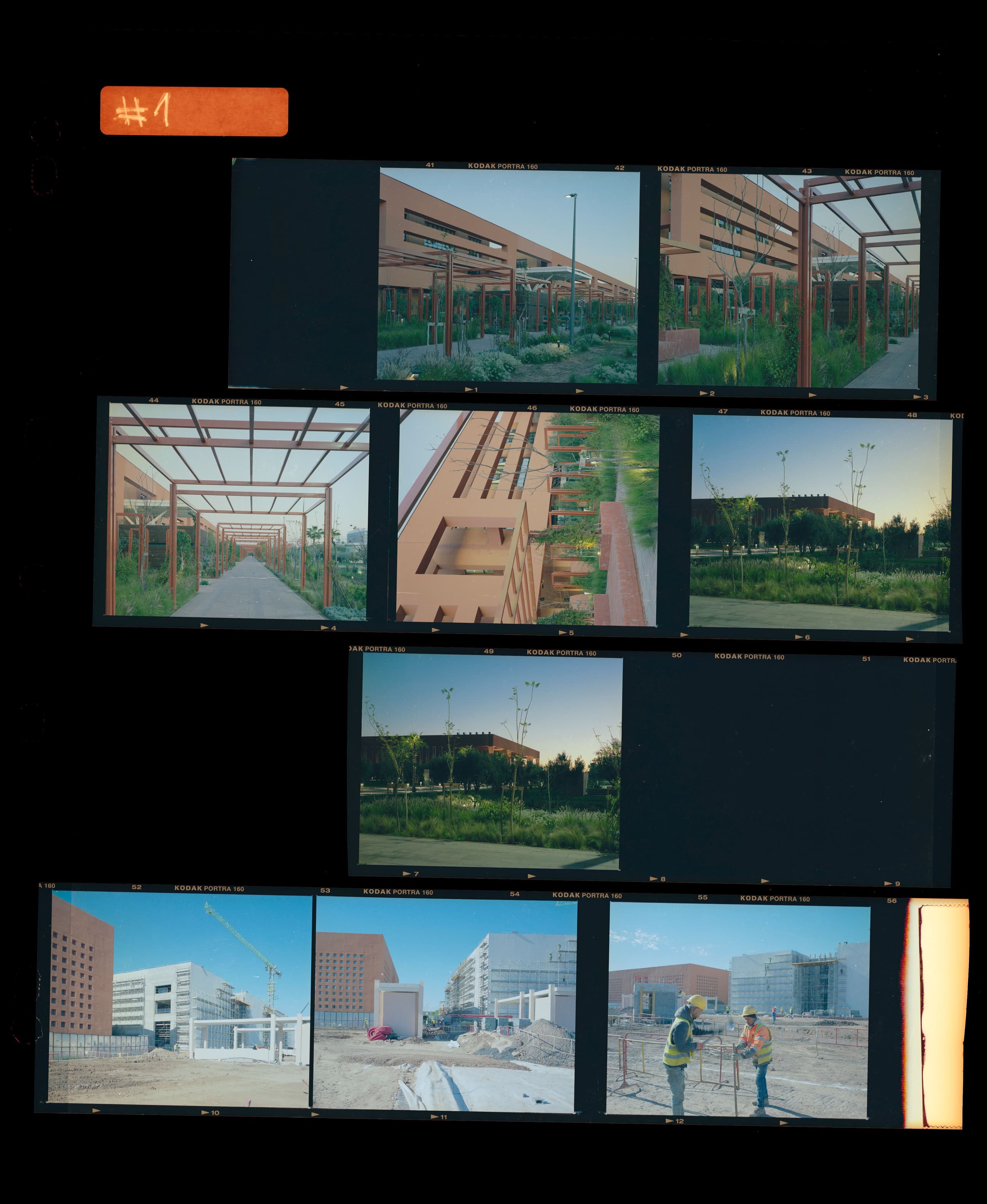
I frequently photograph architectural projects while they’re under construction, and I often find the result more compelling than the final press shots. There’s a saying in the tech world that “code is poetry”… Seeing the blocks that build the digital world, to me, has a similar feeling to photographing architecture under construction: what’s behind the surface?
I also like the fact that construction is a collective process. It interests me in the same way choirs do. Individual voices combine to create something greater than themselves, much as one person’s labour adds to the force of others’ – and somehow I’m mixed into that work too. You get to see the human side, versus the polished architectural side. In Ben Guerir, you’ll find plenty of people doing highly technical, artisan work by hand, alongside the tallest cranes and the latest technology, of course.
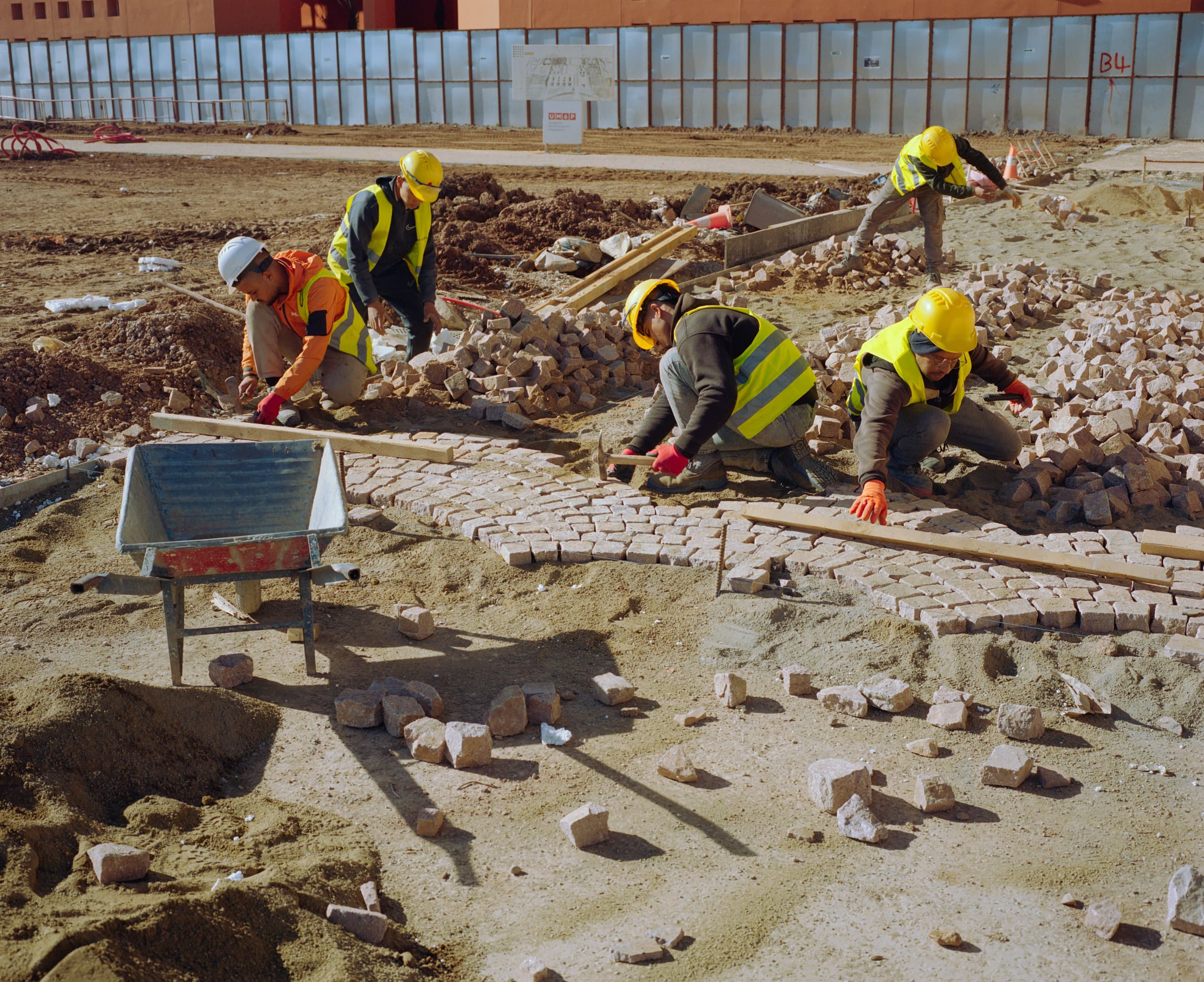
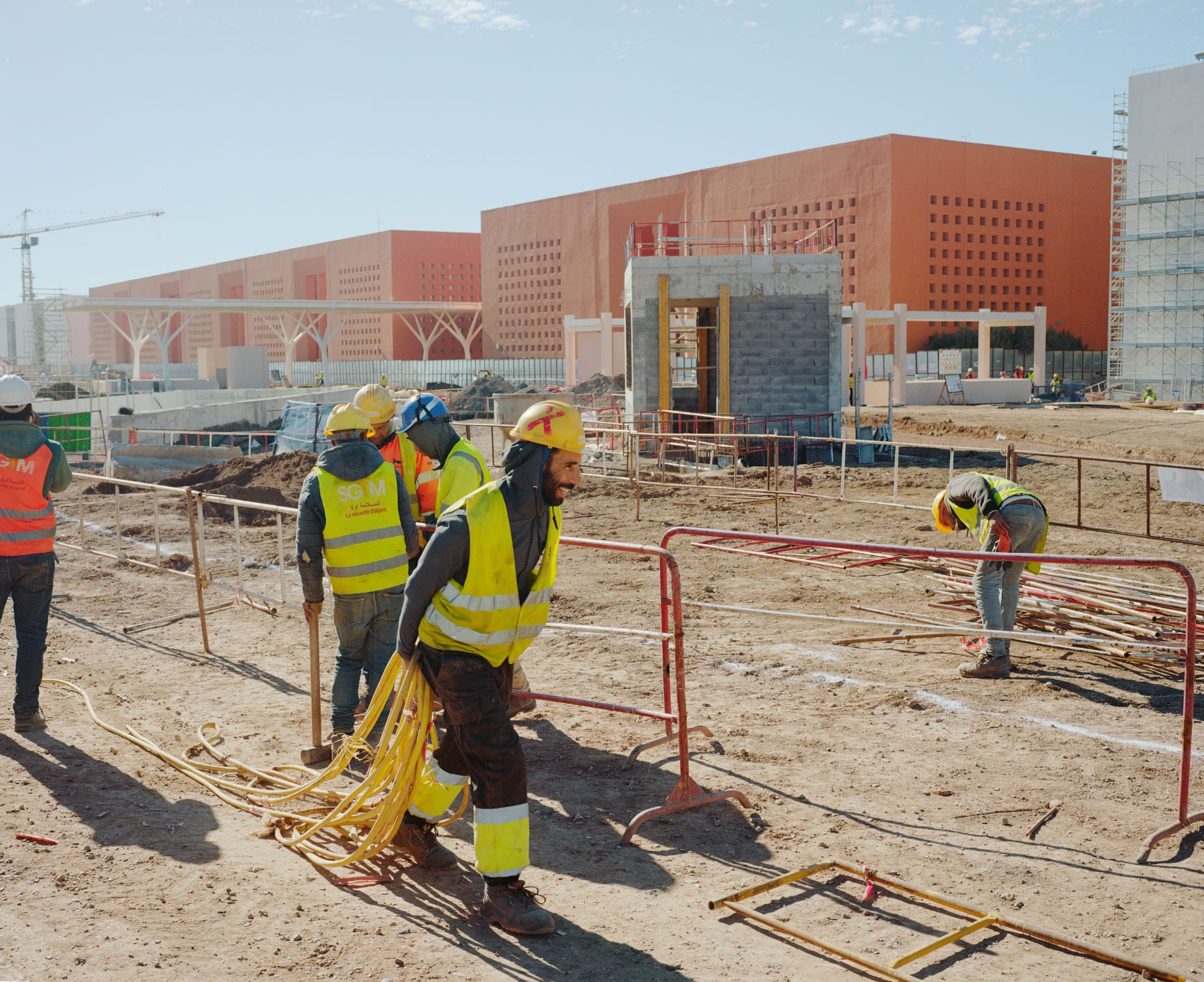
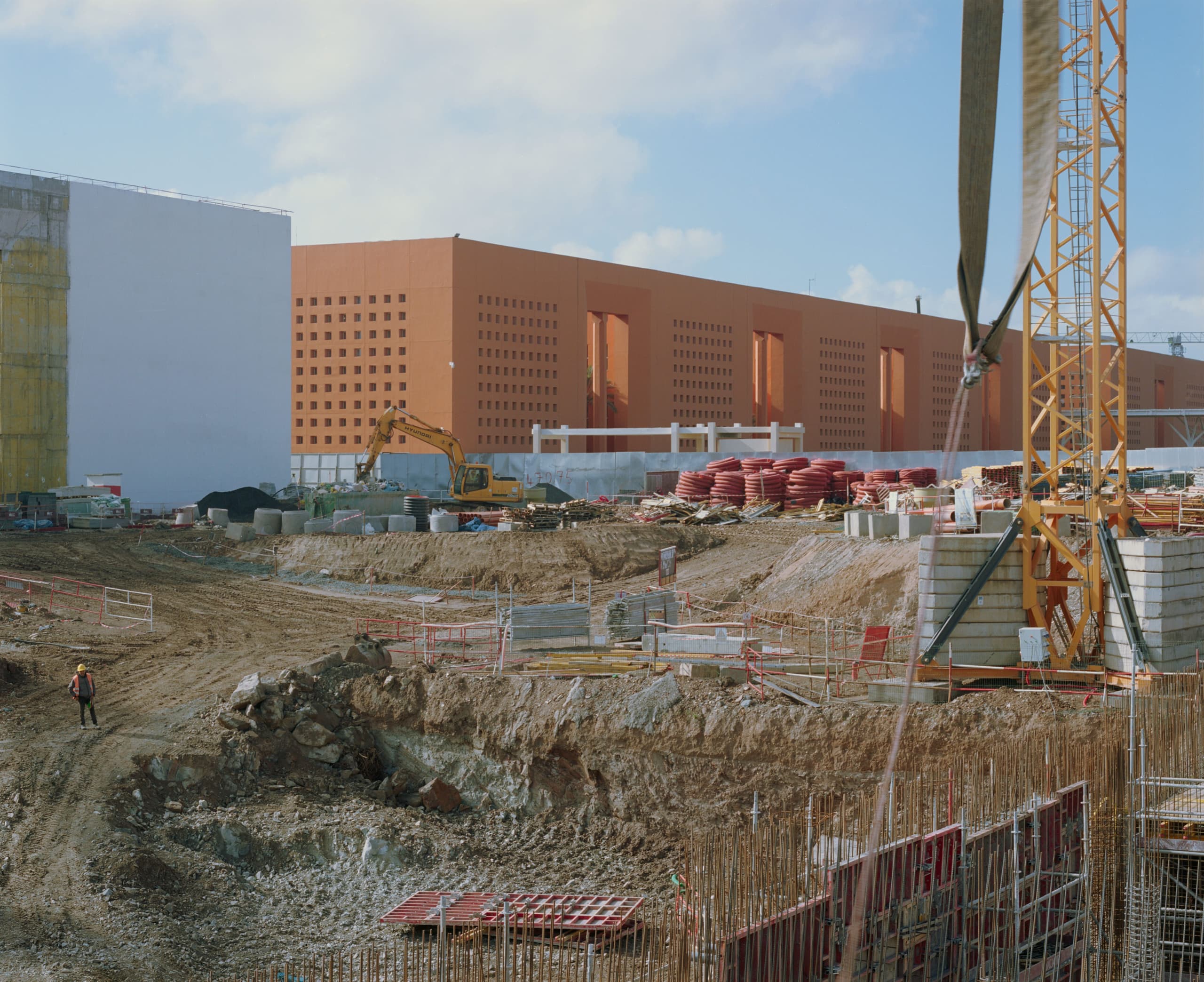
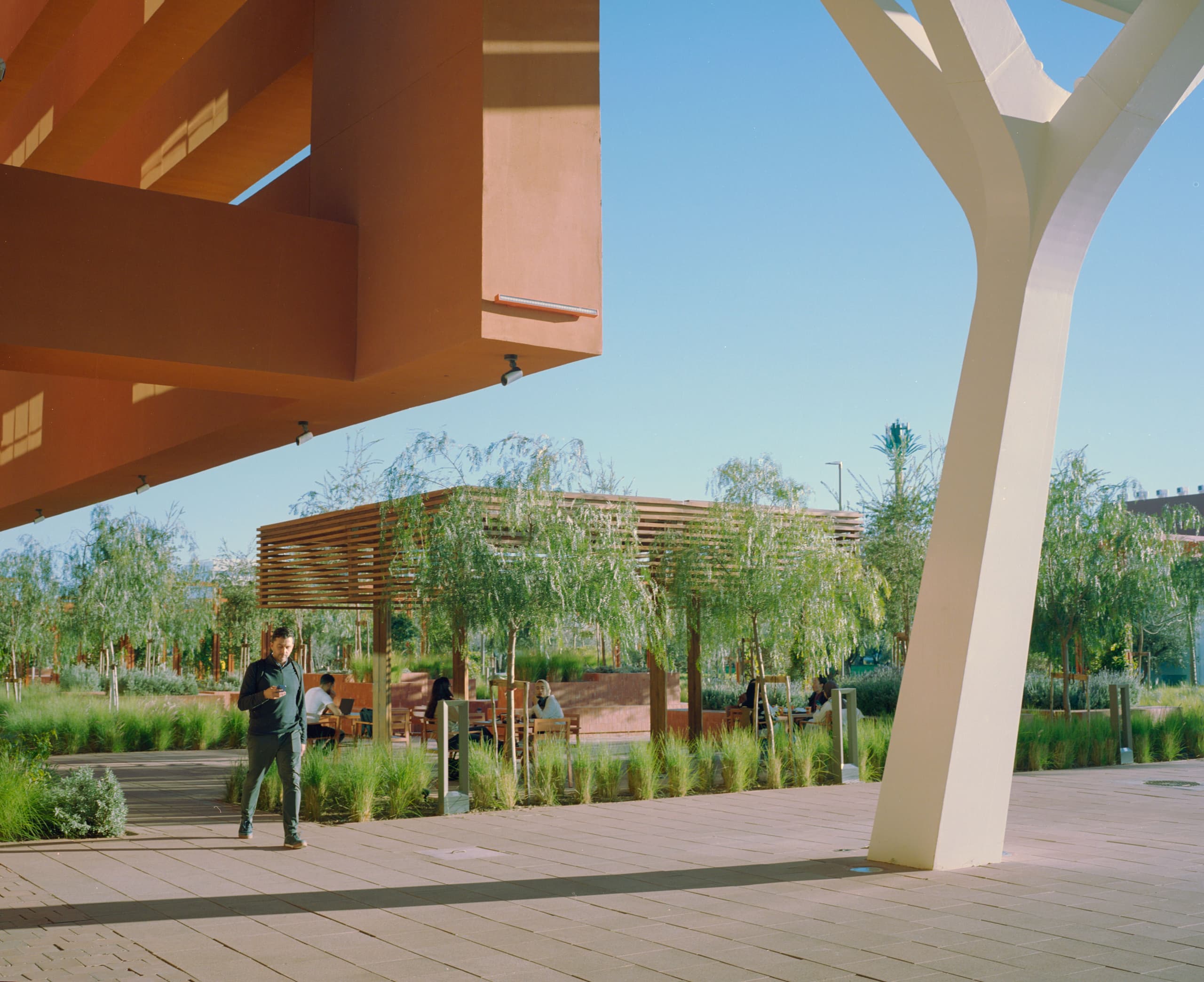
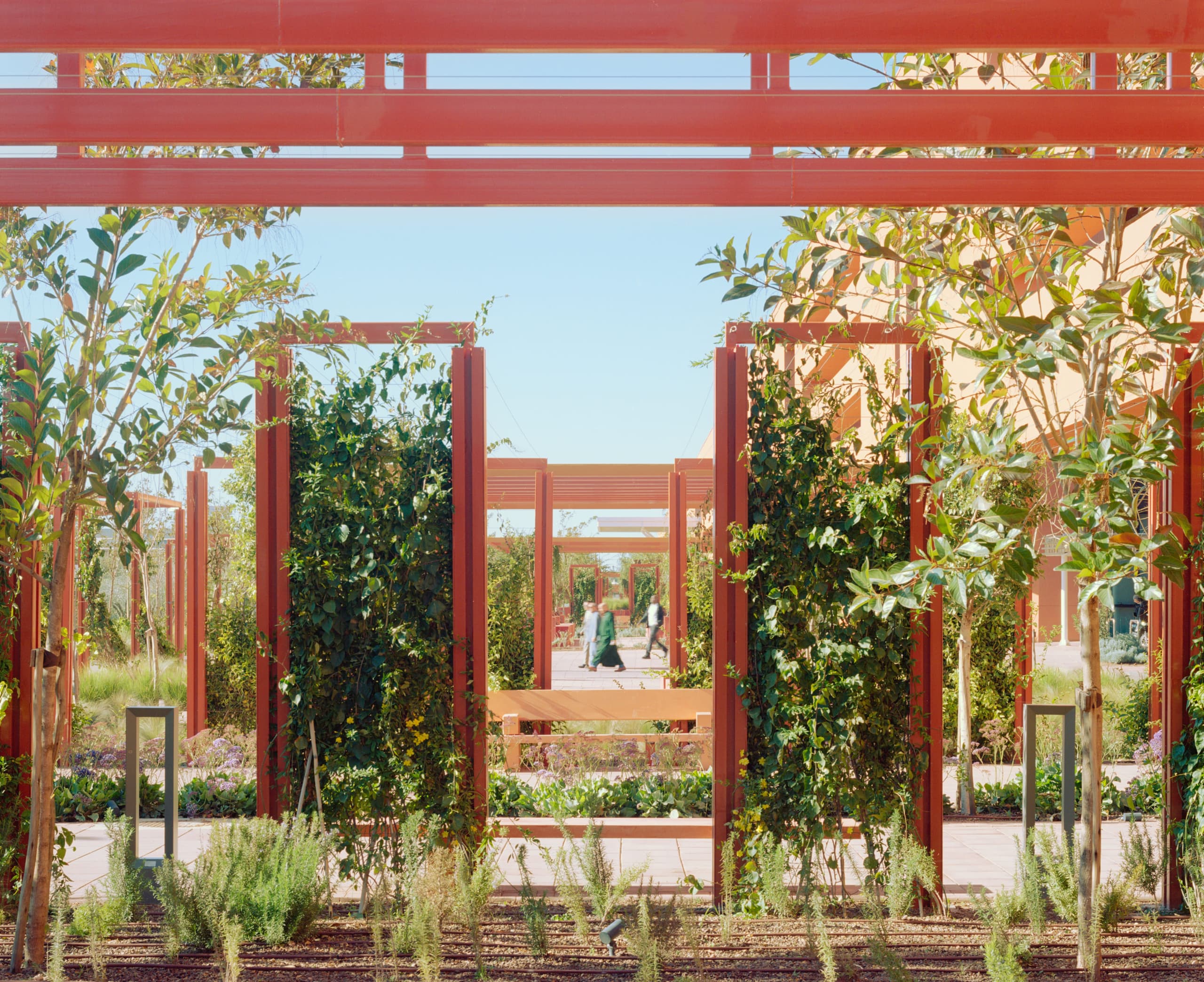
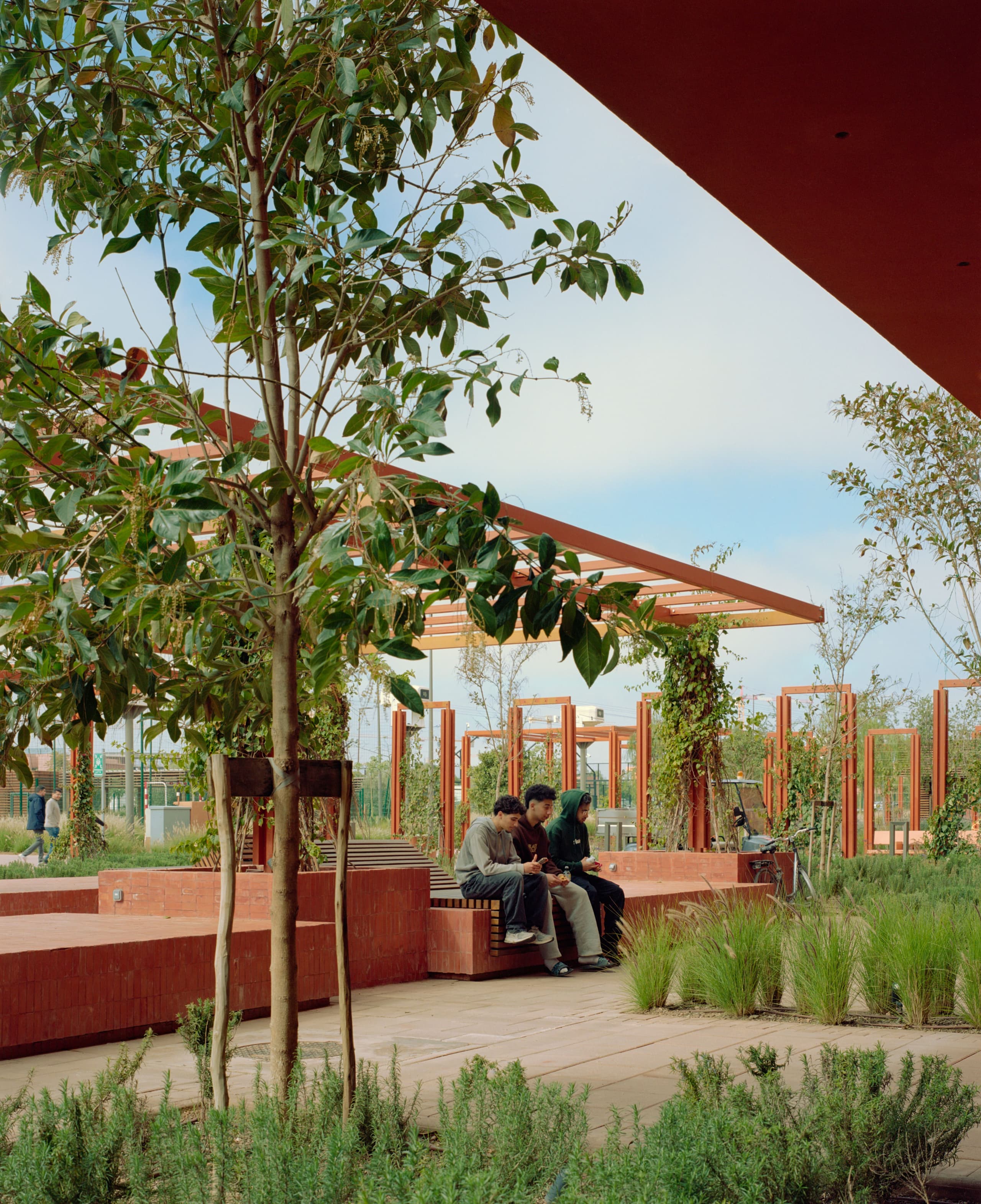
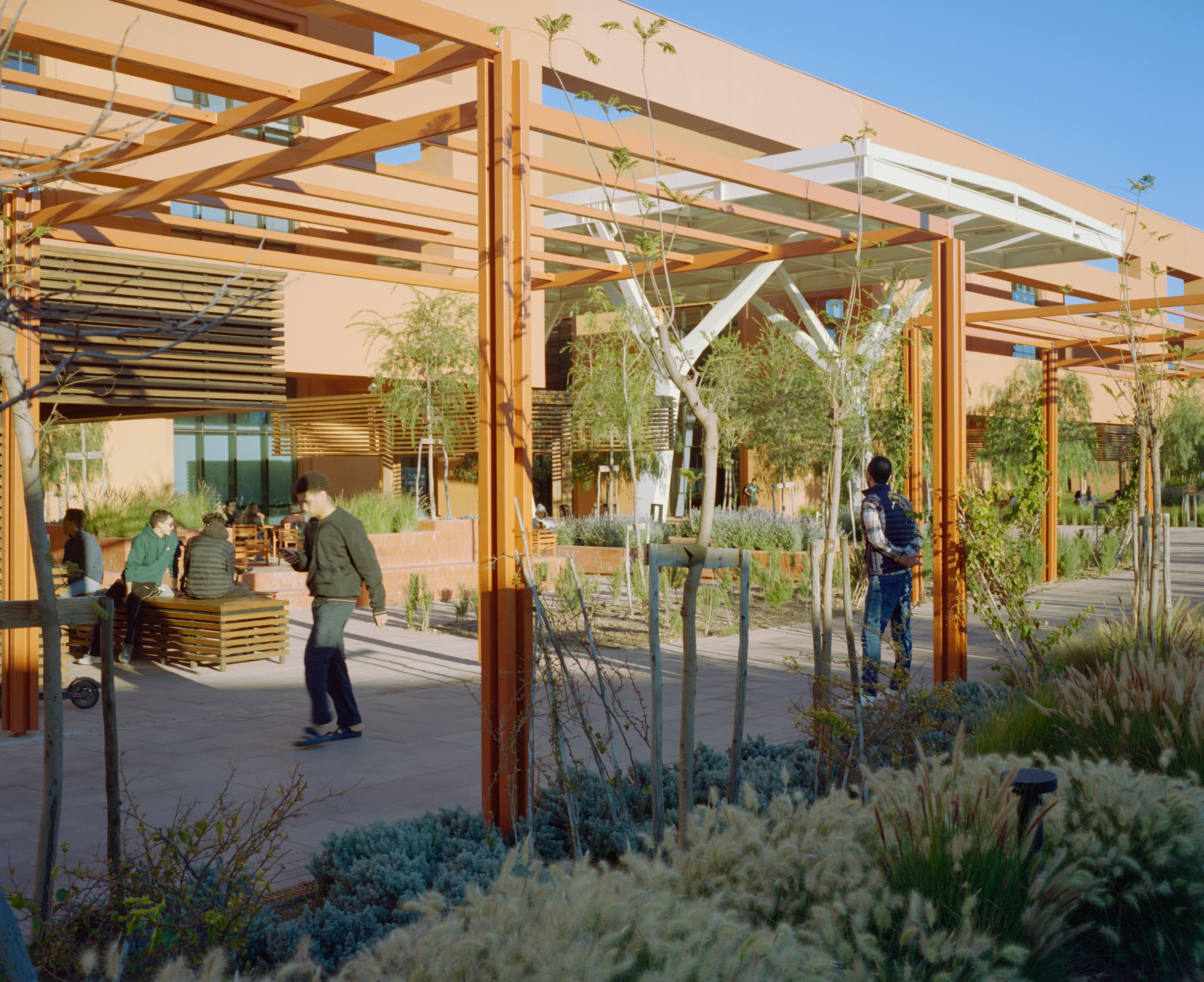
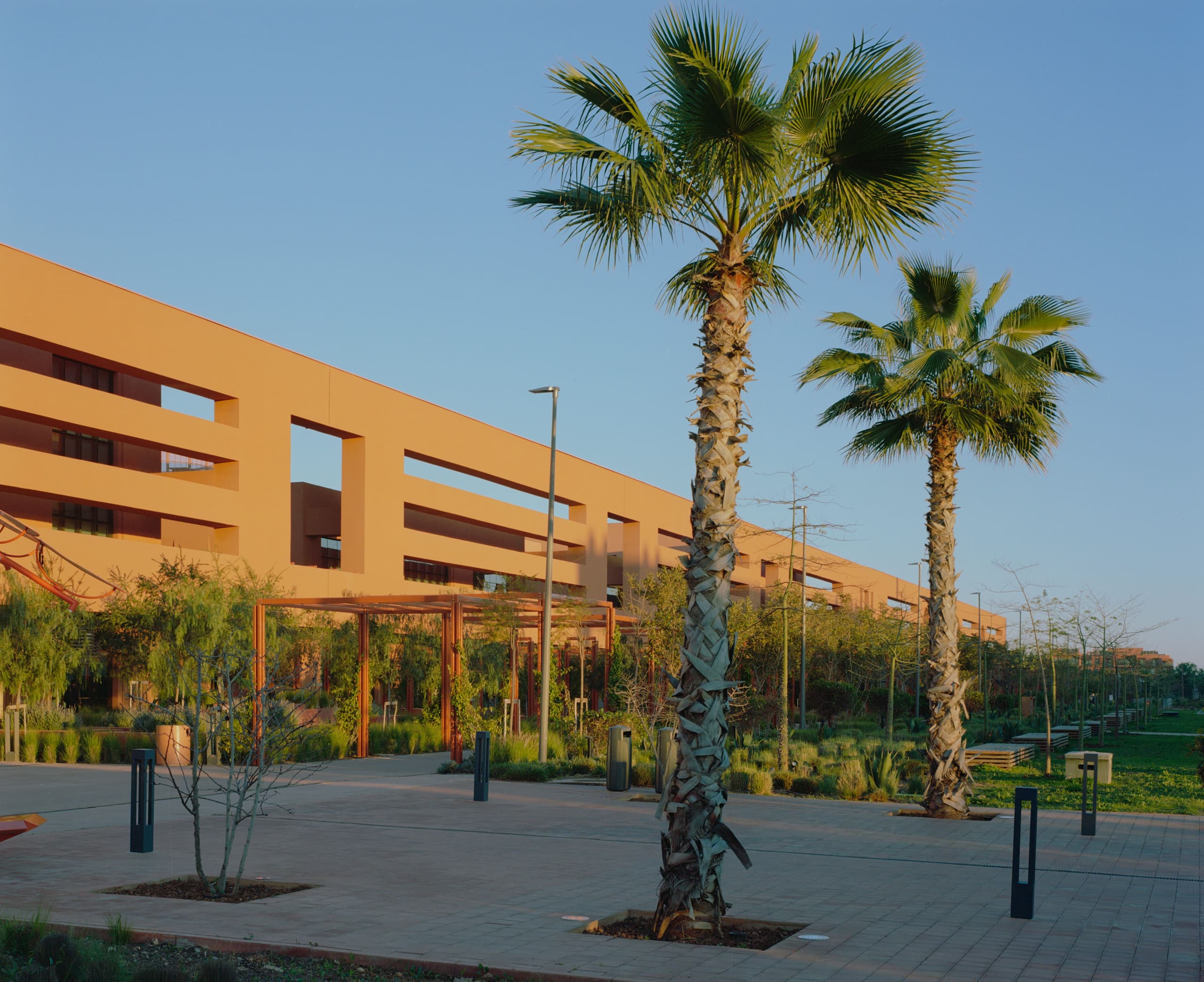
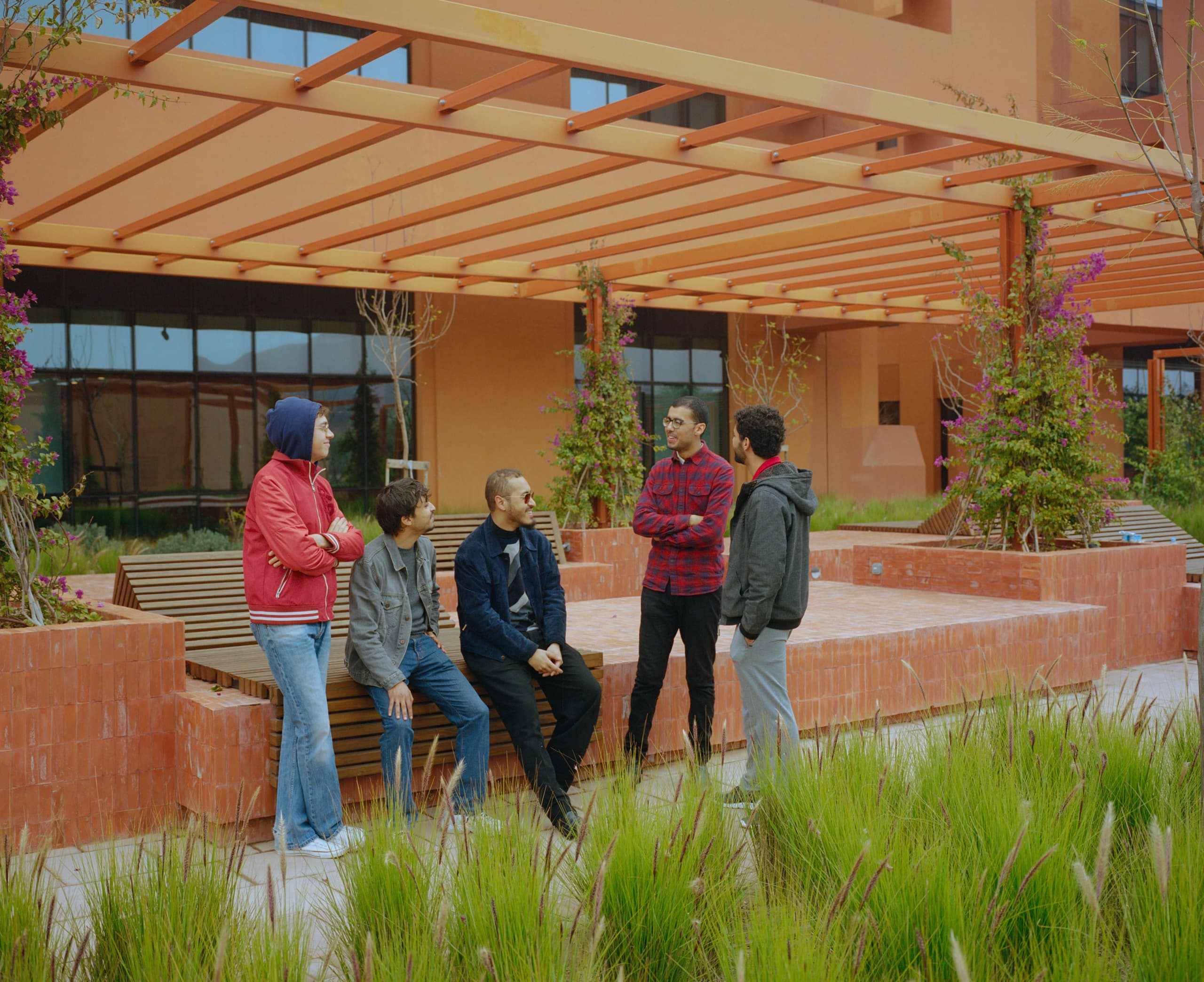
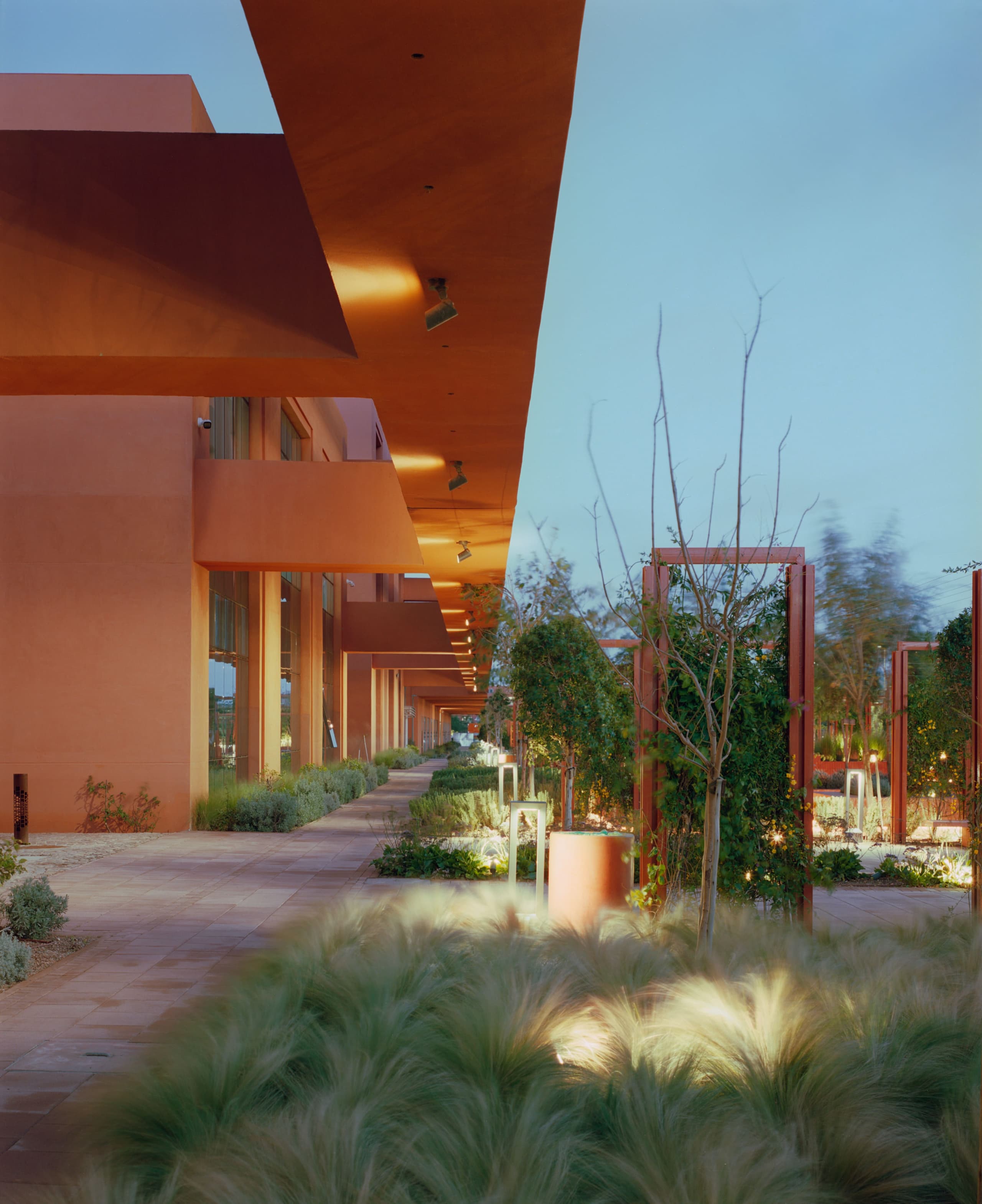
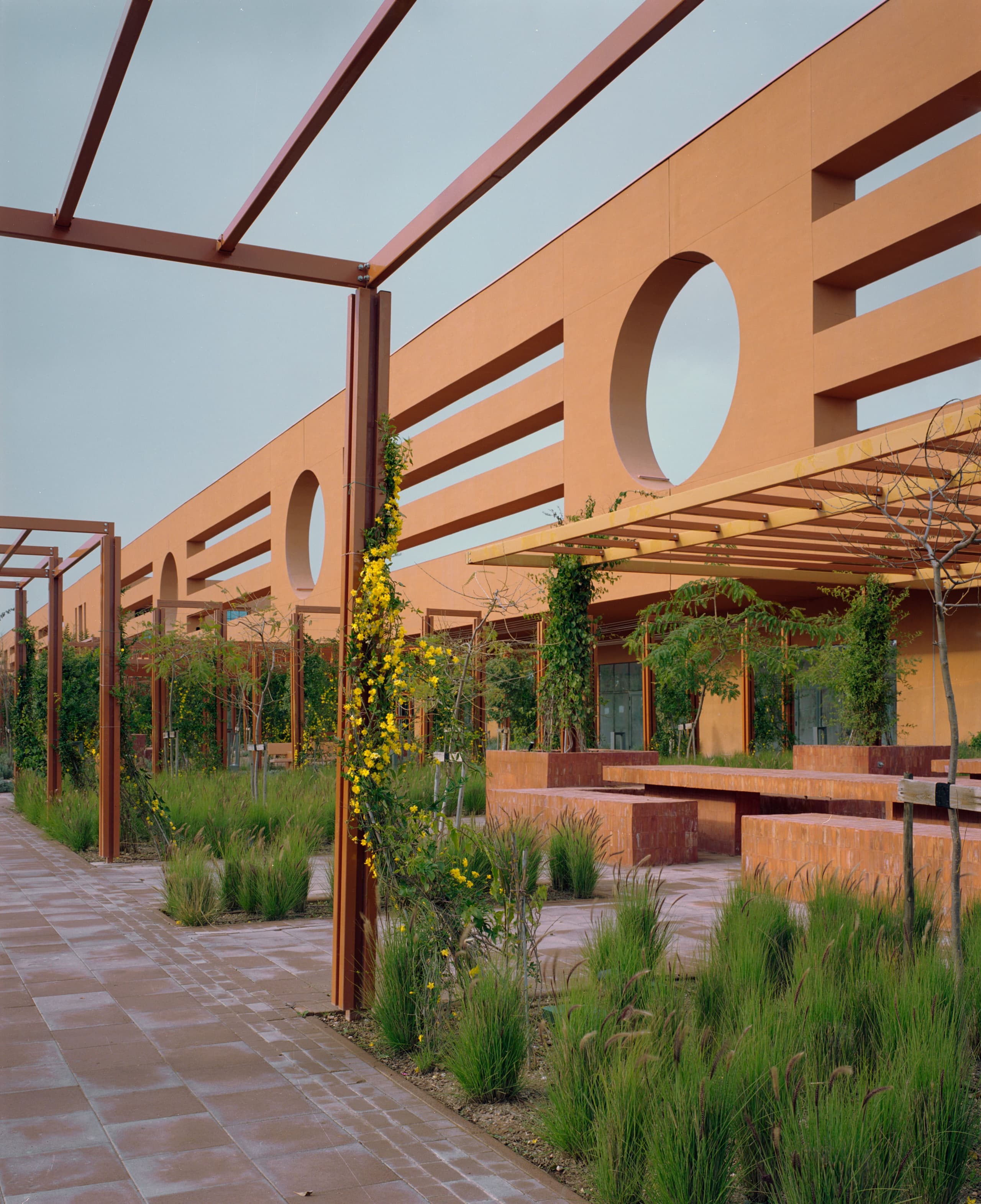
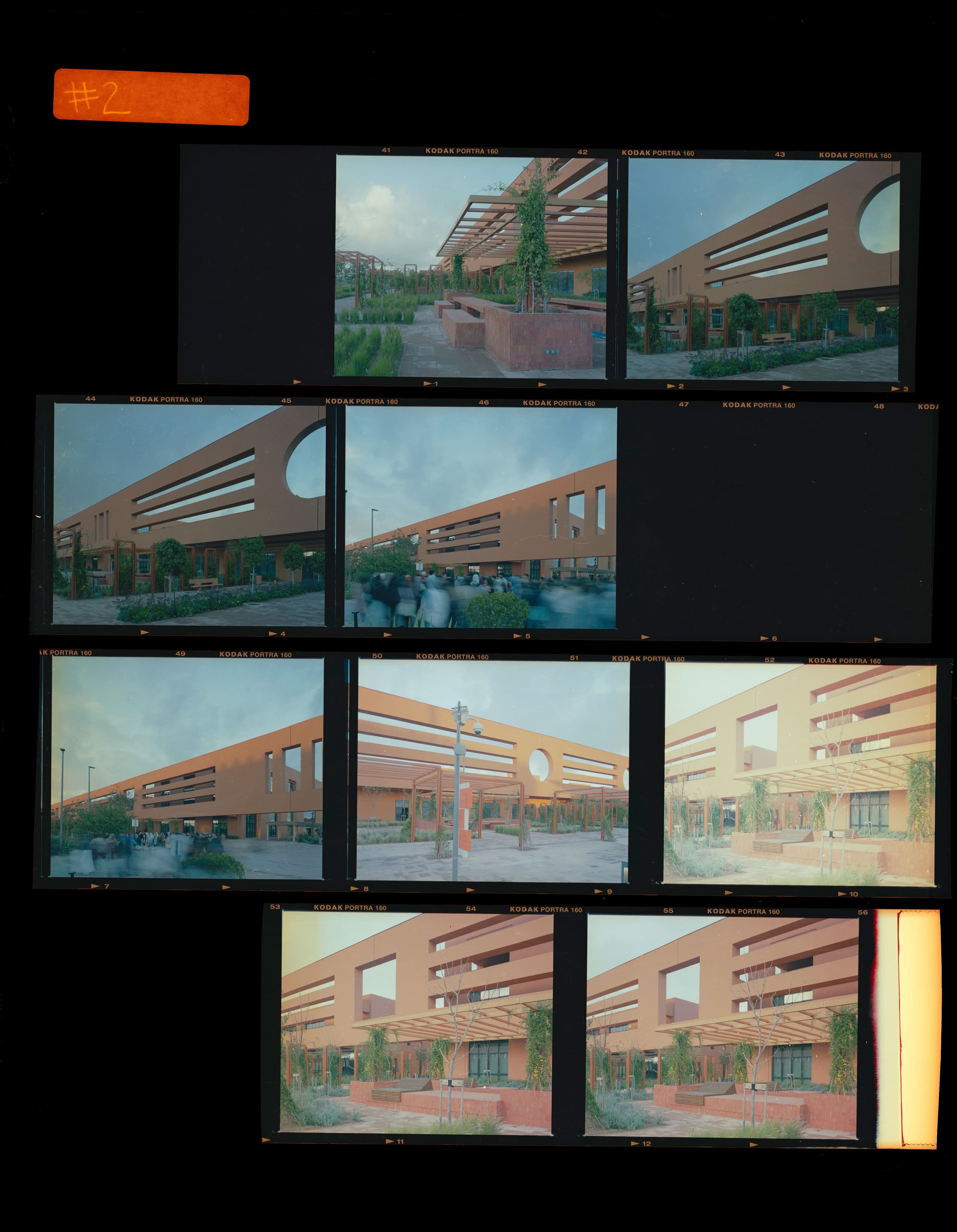
One of the areas that has recently been developed is the huge wall that signals the limit of one development and the beginning of another. It’s about 500 metres long, and for a long time it looked exhausting to walk down under the hot sun. Lining it with pergolas and gardens has now broken that distance up into smaller segments, which look and feel more manageable, and has transformed what was essentially a thoroughfare into a space containing opportunities for lots of different activities.
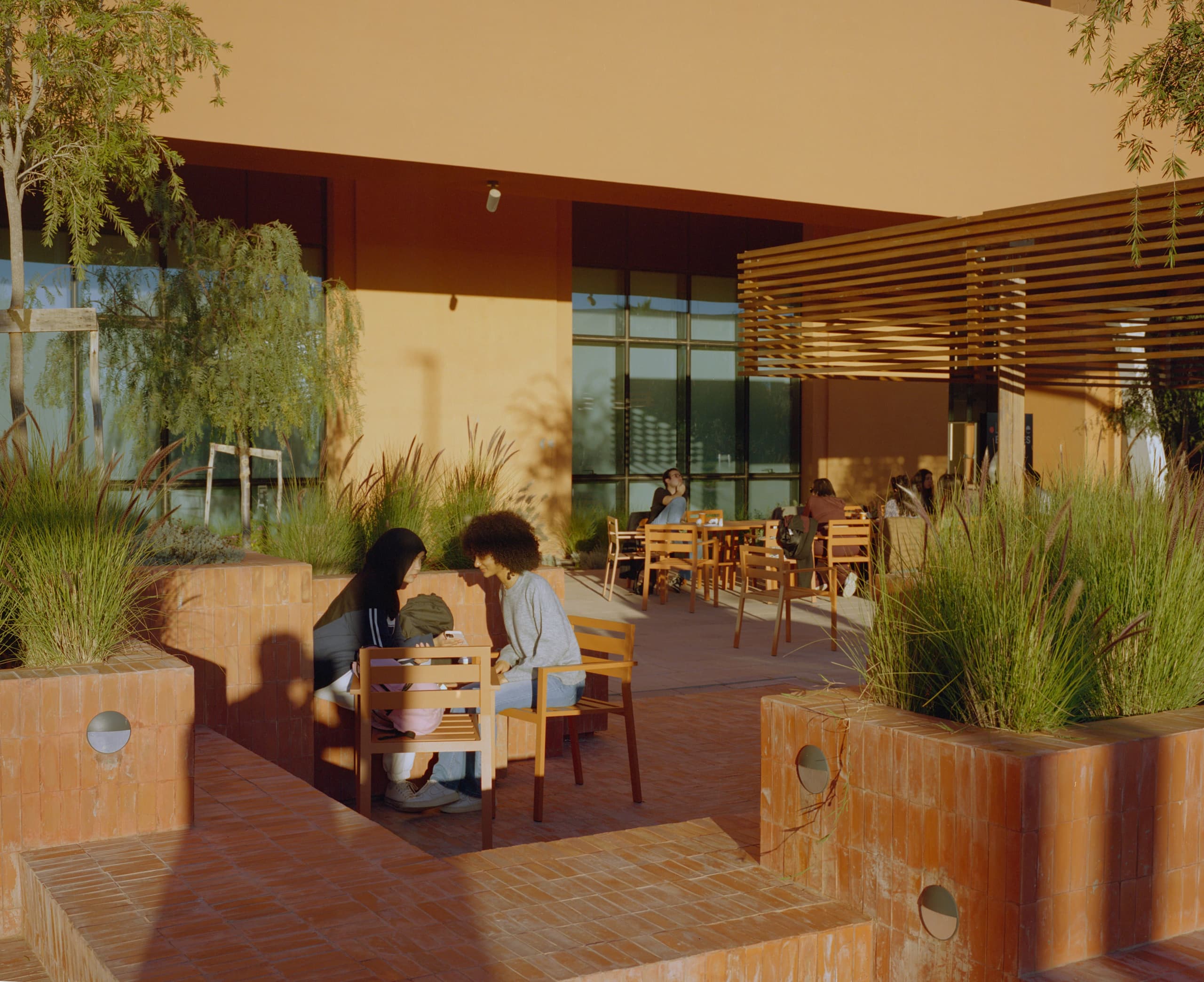
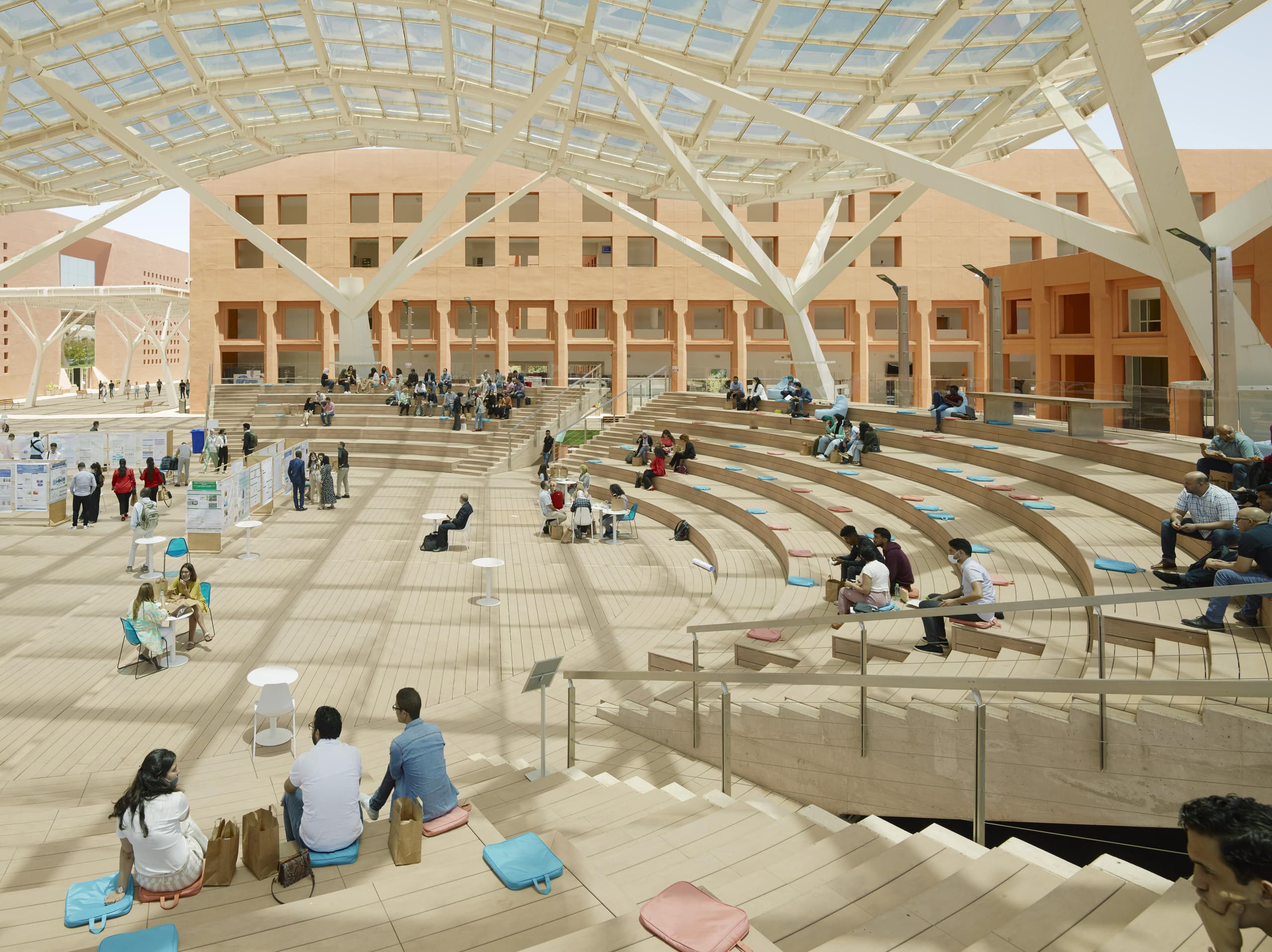
If you look at the Taller’s projects, historical and contemporary, the provision of public space for people to gather is a central idea. It could be Barrio Gaudí, Walden, Abraxas; there’s the same sense here that besides its core function – which is educational rather than residential – the university wants to serve the community. What I witnessed was that people had immediately started using the spaces for lunch, or for meeting outside of class, which can only be a good thing. I talked to a few students and they were very excited. There was even a kind of pride. I felt the students were proud to be part of this new chapter.